Human Resources Management IIA by ProfessorBurgerQueen
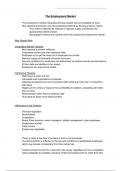
The Employment Market
- The employment market comprises all those people who are available for work.
- Neo-classical economies view this potential workforce as forming a labour market
- The market is affected by national or regional supply, and demand for
appropriately skilled workers
- Demographic factors and cultural norms also impact the employment market
Why People Work
Competitive Market Theories
- Neo-classical economic influence
- Employees choose jobs that maximise utility
- Employers try to get the most out of employees for as little
- Balance supply and demand of human resources
- Pay and conditions for employees are determined by relative scarcity and abundance
of their skills and abilities in the market
- Employees are object to be traded
Institutional Theories
- Main focus is within the firm
- Individuals and organisations cooperate
- Individual employees are more concerned with achieving a fair rate in comparison
with peers
- Wages set for variety of reasons from profitability to tradition; competing with other
firms is minor
- Remuneration within firms is relatively rigid
- Tech leads to fewer more skilled workers
Influences on Job Creation
- Financial legislation
- Shareholders
- Competitors
- Board, Exec directors, senior managers, middle management, other employees
- Employment market
- Trade unions
- Employment legislation
- There is rarely a free flow of workers in and out of a business
- The disconnection is reflected in the pay and conditions of established employees,
which may deviate considerably from the market rate
- Insiders will tend to push for a premium rate of pay, regardless of more competitive
rates acceptable to outsiders, because of their perceived power to retain their jobs
The Employment Market
- The employment market comprises all those people who are available for work.
- Neo-classical economies view this potential workforce as forming a labour market
- The market is affected by national or regional supply, and demand for
appropriately skilled workers
- Demographic factors and cultural norms also impact the employment market
Why People Work
Competitive Market Theories
- Neo-classical economic influence
- Employees choose jobs that maximise utility
- Employers try to get the most out of employees for as little
- Balance supply and demand of human resources
- Pay and conditions for employees are determined by relative scarcity and abundance
of their skills and abilities in the market
- Employees are object to be traded
Institutional Theories
- Main focus is within the firm
- Individuals and organisations cooperate
- Individual employees are more concerned with achieving a fair rate in comparison
with peers
- Wages set for variety of reasons from profitability to tradition; competing with other
firms is minor
- Remuneration within firms is relatively rigid
- Tech leads to fewer more skilled workers
Influences on Job Creation
- Financial legislation
- Shareholders
- Competitors
- Board, Exec directors, senior managers, middle management, other employees
- Employment market
- Trade unions
- Employment legislation
- There is rarely a free flow of workers in and out of a business
- The disconnection is reflected in the pay and conditions of established employees,
which may deviate considerably from the market rate
- Insiders will tend to push for a premium rate of pay, regardless of more competitive
rates acceptable to outsiders, because of their perceived power to retain their jobs