EED2601
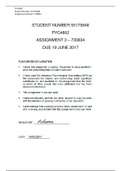
ASSIGNMENT 3
2023
EED2601 ASSIGNMENT 3 2023
, ASSESSMENT 03
MARKS: 100
This assessment is ELECTIVE and contributes 25% to your final mark for this
module.
Answer ALL the questions.
Open date: 26 June 2023, 08:00.
Due date: 2 August 2023, 18:0
1.1 Environmental education (EE) processes need to take into consideration
the history and context behind certain environmental issues and their
implications for communities and their lived context.
1.1.1 State any three environmental issues faced by the South African citizens.
(3)
1. Climate Change: South Africa is already experiencing the impacts of climate
change, such as increased temperatures, droughts, and sea-level rise, which have
adverse effects on agriculture, health, and livelihoods.
2. Water Scarcity: Despite having many rivers, South Africa is one of the most water-
scarce countries in the world. The lack of access to clean drinking water affects
many communities, particularly in rural and poor areas.
3. Biodiversity Loss: South Africa is one of the most biodiverse countries in the world,
with unique flora and fauna. However, habitat loss, climate change, and invasive
species are threatening its biodiversity and ecosystems.
1.1.2 Discuss the implications of the above-mentioned environmental
challenges. (6)
1. Climate change can worsen droughts and floods, leading to crop failures, water
shortages, and increased food prices. This could result in economic losses for
people and communities that depend on agriculture for their livelihoods.
2. Water scarcity can lead to conflicts between communities and economic sectors
that depend on water, such as agriculture, mining, and tourism. It can also result in
health problems, particularly for vulnerable groups like children and the elderly, who
may not have access to clean drinking water.
3. Biodiversity loss can have serious consequences for ecosystem functions, which
provide vital services like pollination, water purification, and carbon sequestration.
This can affect the overall health of the ecosystem, which can lead to more frequent
and severe natural disasters. It can also affect tourism, which is one of the country's
main sources of income.
ASSIGNMENT 3
2023
EED2601 ASSIGNMENT 3 2023
, ASSESSMENT 03
MARKS: 100
This assessment is ELECTIVE and contributes 25% to your final mark for this
module.
Answer ALL the questions.
Open date: 26 June 2023, 08:00.
Due date: 2 August 2023, 18:0
1.1 Environmental education (EE) processes need to take into consideration
the history and context behind certain environmental issues and their
implications for communities and their lived context.
1.1.1 State any three environmental issues faced by the South African citizens.
(3)
1. Climate Change: South Africa is already experiencing the impacts of climate
change, such as increased temperatures, droughts, and sea-level rise, which have
adverse effects on agriculture, health, and livelihoods.
2. Water Scarcity: Despite having many rivers, South Africa is one of the most water-
scarce countries in the world. The lack of access to clean drinking water affects
many communities, particularly in rural and poor areas.
3. Biodiversity Loss: South Africa is one of the most biodiverse countries in the world,
with unique flora and fauna. However, habitat loss, climate change, and invasive
species are threatening its biodiversity and ecosystems.
1.1.2 Discuss the implications of the above-mentioned environmental
challenges. (6)
1. Climate change can worsen droughts and floods, leading to crop failures, water
shortages, and increased food prices. This could result in economic losses for
people and communities that depend on agriculture for their livelihoods.
2. Water scarcity can lead to conflicts between communities and economic sectors
that depend on water, such as agriculture, mining, and tourism. It can also result in
health problems, particularly for vulnerable groups like children and the elderly, who
may not have access to clean drinking water.
3. Biodiversity loss can have serious consequences for ecosystem functions, which
provide vital services like pollination, water purification, and carbon sequestration.
This can affect the overall health of the ecosystem, which can lead to more frequent
and severe natural disasters. It can also affect tourism, which is one of the country's
main sources of income.