

Leading Self
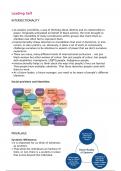
INTERSECTIONALITY
• an analytic sensibility, a way of thinking about identity and its relationship to
power. Originally articulated on behalf of black women, the term brought to
light the invisibility of many constituents within groups that claim them as
members but often fail to represent them
• Intersectionality draws attention to invisibilities that exist in feminism, in anti-
racism, in class politics, so, obviously, it takes a lot of work to consistently
challenge ourselves to be attentive to aspects of power that we don't ourselves
experience
• There are many, many di erent kinds of intersectional exclusions - not just
black women but other women of colour. Not just people of colour, but people
with disabilities. Immigrants. LGBTQ people. Indigenous people.
• Intersectionality helps us think about the ways that people’s lives are layered.
That people have multiples identities. That these identities people come with
them to work.
• As a future leader, a future manager, you need to be aware of people’s di erent
identities
Social positions and Identities:
PRIVALAGE
Systemic Whiteness:
• It is important for us think of whiteness
as systemic.
• That while the individual can harbour ill
feels, or not, there is a systems in place
that exists beyond the individual.
ff ff
, Complexity:
• Through intersectionality we understand that whiteness (race) also intersects
with other kinds of identities and positions (gender, sexuality, class) and
creates all kinds of multi-layered lives for people that creates various
trajectories
Summary:
• Apartheid legacies continue to shape South African lives
• As future managers and leaders you need to be aware and work against privilege
• Privilege shapes people’s experiences
• Privilege is also intersectional, think of white male vs. white female experience
in the same workplace
UNCONCIOUS BIAS
Contributing factors:
•Workplace Culture
•Governance and Processes
•Personal Background
•Social Stereotypes
INTERSECTIONALITY
• an analytic sensibility, a way of thinking about identity and its relationship to
power. Originally articulated on behalf of black women, the term brought to
light the invisibility of many constituents within groups that claim them as
members but often fail to represent them
• Intersectionality draws attention to invisibilities that exist in feminism, in anti-
racism, in class politics, so, obviously, it takes a lot of work to consistently
challenge ourselves to be attentive to aspects of power that we don't ourselves
experience
• There are many, many di erent kinds of intersectional exclusions - not just
black women but other women of colour. Not just people of colour, but people
with disabilities. Immigrants. LGBTQ people. Indigenous people.
• Intersectionality helps us think about the ways that people’s lives are layered.
That people have multiples identities. That these identities people come with
them to work.
• As a future leader, a future manager, you need to be aware of people’s di erent
identities
Social positions and Identities:
PRIVALAGE
Systemic Whiteness:
• It is important for us think of whiteness
as systemic.
• That while the individual can harbour ill
feels, or not, there is a systems in place
that exists beyond the individual.
ff ff
, Complexity:
• Through intersectionality we understand that whiteness (race) also intersects
with other kinds of identities and positions (gender, sexuality, class) and
creates all kinds of multi-layered lives for people that creates various
trajectories
Summary:
• Apartheid legacies continue to shape South African lives
• As future managers and leaders you need to be aware and work against privilege
• Privilege shapes people’s experiences
• Privilege is also intersectional, think of white male vs. white female experience
in the same workplace
UNCONCIOUS BIAS
Contributing factors:
•Workplace Culture
•Governance and Processes
•Personal Background
•Social Stereotypes


