
Nervous System Notes
Terminology:
● Nervous System = a network of nerve cells + fibres which transmits nerve impulses between
parts of the body
● Stimulus = any physical/chemical change in our environment (internal/external) that is
capable of causing a response in an organism
● Impulse = electrical signal created by receptor organs in response to stimuli
● Receptor = receives internal/external stimuli + converts it into impulses
● Nerve = collection of neurons
● Neuron = specialised cells which transmit impulses
● Effector = muscles/glands that bring about a response to the stimulus body received
Intro:
Sense organs = responsible 4 picking up stimuli to respond to our environment
Nervous system = faster response. Done through impulses travelling along nerves
Endocrine system = slower response because it is brought about through hormones released
into the blood
Both systems work together to respond to changes in the environment, also to control
conditions in the body
Stimuli:
● Physical/chemical changes in the environment (internal/external) that are capable of causing a
response in the organism
● E.g. light changes in, temp changes, pH, blood pressure, CO2 levels
● Sensory organs of the body = skin, ears, nose, tongue, eyes
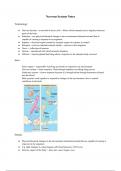
,Nervous System Components:
● Central Nervous System = brain and spinal cord
● Peripheral Nervous System = nerves that network through the body + conduct impulses to and
from the central nervous system
How the CNS is protected:
● Protected + nourished by three membranes
○ Meninges
○ Cerebrospinal fluid = found between the membranes
○ Function = cushions the brain against shock, helps maintain even pressure in +
around the brain + spinal cord. Keeps nervous tissue moist, removes waste
○ Cranium and vertebral column
, Functions of the nervous system:
● Sensory function (sensory receptors) = detects changes in internal + external
environment
● Integrative function (central nervous system - brain + spinal cord) = receives info +
‘decides’ which effectors need to react
● Motor function (effectors) = muscles + glands cause an appropriate response
Terminology:
● Nervous System = a network of nerve cells + fibres which transmits nerve impulses between
parts of the body
● Stimulus = any physical/chemical change in our environment (internal/external) that is
capable of causing a response in an organism
● Impulse = electrical signal created by receptor organs in response to stimuli
● Receptor = receives internal/external stimuli + converts it into impulses
● Nerve = collection of neurons
● Neuron = specialised cells which transmit impulses
● Effector = muscles/glands that bring about a response to the stimulus body received
Intro:
Sense organs = responsible 4 picking up stimuli to respond to our environment
Nervous system = faster response. Done through impulses travelling along nerves
Endocrine system = slower response because it is brought about through hormones released
into the blood
Both systems work together to respond to changes in the environment, also to control
conditions in the body
Stimuli:
● Physical/chemical changes in the environment (internal/external) that are capable of causing a
response in the organism
● E.g. light changes in, temp changes, pH, blood pressure, CO2 levels
● Sensory organs of the body = skin, ears, nose, tongue, eyes
,Nervous System Components:
● Central Nervous System = brain and spinal cord
● Peripheral Nervous System = nerves that network through the body + conduct impulses to and
from the central nervous system
How the CNS is protected:
● Protected + nourished by three membranes
○ Meninges
○ Cerebrospinal fluid = found between the membranes
○ Function = cushions the brain against shock, helps maintain even pressure in +
around the brain + spinal cord. Keeps nervous tissue moist, removes waste
○ Cranium and vertebral column
, Functions of the nervous system:
● Sensory function (sensory receptors) = detects changes in internal + external
environment
● Integrative function (central nervous system - brain + spinal cord) = receives info +
‘decides’ which effectors need to react
● Motor function (effectors) = muscles + glands cause an appropriate response


