LABOUR LAW NOTES
DISMISSAL
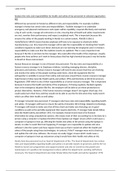
S186(1)(a-f) tell us that dismissal means that:
- An employer terminated a contract of employment with or without notice;
- Employee reasonably expected fixed term contract to be renewed on same or similar terms but
was offered renewal on less favourable terms or not at all;
- Employer refused to allow employee to return to work after maternity leave or was absent from
work for up to four weeks before the expected date, and up to eight weeks after the actual
date, of the birth of her child;
- Employer dismissed a number of employees for same/similar reasons and offered to reemploy
some but not others;
- Employee terminated contract because work was made intolerable by employer; or
- Employee after transfer of business was provided with substantially less favourable conditions
and so terminated their contract of employment.
Item 2(1) of Code – A dismissal is unfair where it is not effected for a fair reason and in accordance with
a fair procedure.
2(2) – Three grounds are recognised for fair dismissals. Conduct, capacity and operational requirements
(backed by s188(1)).
2(4) and 192(2) – an employer must show that the reason is related to conduct of employee, capacity or
operational requirements. Failure to prove this substance or failure to do so in a fair procedure justifies
unfair dismissal (see s188(1) for further substance).
Item 4 sets out the general fair procedure but there are added items for specific offences
AUTOMATICALLY UNFAIR DISMISSAL
Regulated by s187 of the LRA.
Dismissals can be fair, unfair or automatically unfair.
Item 2(3) of Code – A dismissal is automatically unfair where reason amounts to a fundamental
infringement of fundamental rights of employees/trade unions or if the reason is listed in s187.
Automatic Unfair Dismissals relate to very serious types of dismissals. They are fundamentally linked to
rights in the constitution (ie right to strike). Very serious remedies come about as a result.
Employers cannot raise any defences to an AUD
What is an AUD?
,S187(1) Where an empoyer dismisses an employee acting contrary to s5. S5 confers rights on employees
relating to freedom of association (joining unions, forming unions etc). This is freedom of association as
found in the constitution.
Or reason falls within the listed despicable reasons in the LRA 187(1)(a-h):
S187(1) (a) and (b) relates to the right to strike. Cant dismiss an employee for participating, supporting
or indicating their intention to participate in a legal strike.
Essential services cannot strike.
Can only dismiss an employee participating in a strike for misconduct or operational requirements.
Cannot dismiss someone for refusing to do work of someone who would ordinarily do that but they are
on strike unless necessary to prevent danger to life, personal safety or health. (187(b)).
S187(c) – refusal of an employee to accept a demand of mutual interest (something that does not yet
exist in the form of a right, not pre-existing). A wage consultation for instance is an interest, does not
exist. Dismissing someone to enforce a demand is an AUD.
Fry’s Metal v NUMSA (LAC)
- Employer wanted to change the shift system to improve productivity. Employees refuse and are
dismissed.
- Went before the court under automatically unfair dismissal.
- Court said they were dismissed for operational requirements and not for being compelled to
accept a matter of mutual interest.
- New legislation may have overridden this case because the word ‘relation’ is much broader than
‘compel’.
S187(d) – that the employee took action or indicated an intention to take action against the employer by
exercising any rights conferred by the Act or participated in any proceeding in terms of the LRA.
Rights in the LRA are important and so the broadness of this section is warranted.
S187(e) – Anything related to the pregnancy of an employee, intended pregnancy or reason related
(freedom and security of the person, equality).
Mashava v Cuzen Woods Attorneys (2000)
A candidate attorney did not disclose her pregnancy to a law firm. They found out and dismissed her on
the basis that she failed to disclose this. Court said it was an automatically unfair dismissal as the real
reason was her pregnancy.
S187(f) – an employee discriminated against on any arbitrary ground including …. Indirectly or directly,
will make the dismissal AU.
, If a job requires a person of a particular race, gender, age etc that is fair discrimination (s187(2)(a)).
Also fair to discriminate where a person has reached an agreed to retirement age or a normal one for
the industry (Rubin Sportswear v SACTWU) (s187(2)(b)).
187(g) – where there is a transfer of business, the dismissal of employees for reasons related to a
transfer in s197 or 197A will be AUD.
187(h) – where an employee is dismissed for making a disclosure in terms of the protected disclosures
Act will be an AUD.
Where to refer an AUD dispute? Refer to conciliation in terms of s191(1)(a). Thereafter refer to the
Labour court in terms of s191(5)(b).
Remedies
In terms of s193(1), you can be reinstated and receive backpay from the date of dismissal; Can be re-
employed in the same work or in any other reasonably suitable work on any terms and not from a date
earlier than the dismissal or order payment of compensation.
193(2) There are certain times where an employee must not order to be reinstated
- Employee does not wish to be
- Circumstances would be intolerable
- Not practical to do so
- The dismissal was only unfair because of a failure to follow a fair procedure.
S194(3) – You can get at max two years of compensation for an AUD (only 12 months for UD). Must be
determined based on the circumstances as being just and equitable.
DISMISSAL FOR OPERATIONAL REQUIREMENTS
So we remember that there are only 3 reasons why someone can fairly dismiss someone (s188).
S213 defines operational requirements as: requirements based on the economic, technological,
structural or similar needs of an employer.
Economic – financial reasons like the employer losing money or wanting to make more profit.
Technological – new technology is introduced and makes an employee redundant.
Structural – where the employer is restructuring the business (like outsourcing a section of the
business).
Must follow fair dismissal process (substantive and procedurally fair)
DISMISSAL
S186(1)(a-f) tell us that dismissal means that:
- An employer terminated a contract of employment with or without notice;
- Employee reasonably expected fixed term contract to be renewed on same or similar terms but
was offered renewal on less favourable terms or not at all;
- Employer refused to allow employee to return to work after maternity leave or was absent from
work for up to four weeks before the expected date, and up to eight weeks after the actual
date, of the birth of her child;
- Employer dismissed a number of employees for same/similar reasons and offered to reemploy
some but not others;
- Employee terminated contract because work was made intolerable by employer; or
- Employee after transfer of business was provided with substantially less favourable conditions
and so terminated their contract of employment.
Item 2(1) of Code – A dismissal is unfair where it is not effected for a fair reason and in accordance with
a fair procedure.
2(2) – Three grounds are recognised for fair dismissals. Conduct, capacity and operational requirements
(backed by s188(1)).
2(4) and 192(2) – an employer must show that the reason is related to conduct of employee, capacity or
operational requirements. Failure to prove this substance or failure to do so in a fair procedure justifies
unfair dismissal (see s188(1) for further substance).
Item 4 sets out the general fair procedure but there are added items for specific offences
AUTOMATICALLY UNFAIR DISMISSAL
Regulated by s187 of the LRA.
Dismissals can be fair, unfair or automatically unfair.
Item 2(3) of Code – A dismissal is automatically unfair where reason amounts to a fundamental
infringement of fundamental rights of employees/trade unions or if the reason is listed in s187.
Automatic Unfair Dismissals relate to very serious types of dismissals. They are fundamentally linked to
rights in the constitution (ie right to strike). Very serious remedies come about as a result.
Employers cannot raise any defences to an AUD
What is an AUD?
,S187(1) Where an empoyer dismisses an employee acting contrary to s5. S5 confers rights on employees
relating to freedom of association (joining unions, forming unions etc). This is freedom of association as
found in the constitution.
Or reason falls within the listed despicable reasons in the LRA 187(1)(a-h):
S187(1) (a) and (b) relates to the right to strike. Cant dismiss an employee for participating, supporting
or indicating their intention to participate in a legal strike.
Essential services cannot strike.
Can only dismiss an employee participating in a strike for misconduct or operational requirements.
Cannot dismiss someone for refusing to do work of someone who would ordinarily do that but they are
on strike unless necessary to prevent danger to life, personal safety or health. (187(b)).
S187(c) – refusal of an employee to accept a demand of mutual interest (something that does not yet
exist in the form of a right, not pre-existing). A wage consultation for instance is an interest, does not
exist. Dismissing someone to enforce a demand is an AUD.
Fry’s Metal v NUMSA (LAC)
- Employer wanted to change the shift system to improve productivity. Employees refuse and are
dismissed.
- Went before the court under automatically unfair dismissal.
- Court said they were dismissed for operational requirements and not for being compelled to
accept a matter of mutual interest.
- New legislation may have overridden this case because the word ‘relation’ is much broader than
‘compel’.
S187(d) – that the employee took action or indicated an intention to take action against the employer by
exercising any rights conferred by the Act or participated in any proceeding in terms of the LRA.
Rights in the LRA are important and so the broadness of this section is warranted.
S187(e) – Anything related to the pregnancy of an employee, intended pregnancy or reason related
(freedom and security of the person, equality).
Mashava v Cuzen Woods Attorneys (2000)
A candidate attorney did not disclose her pregnancy to a law firm. They found out and dismissed her on
the basis that she failed to disclose this. Court said it was an automatically unfair dismissal as the real
reason was her pregnancy.
S187(f) – an employee discriminated against on any arbitrary ground including …. Indirectly or directly,
will make the dismissal AU.
, If a job requires a person of a particular race, gender, age etc that is fair discrimination (s187(2)(a)).
Also fair to discriminate where a person has reached an agreed to retirement age or a normal one for
the industry (Rubin Sportswear v SACTWU) (s187(2)(b)).
187(g) – where there is a transfer of business, the dismissal of employees for reasons related to a
transfer in s197 or 197A will be AUD.
187(h) – where an employee is dismissed for making a disclosure in terms of the protected disclosures
Act will be an AUD.
Where to refer an AUD dispute? Refer to conciliation in terms of s191(1)(a). Thereafter refer to the
Labour court in terms of s191(5)(b).
Remedies
In terms of s193(1), you can be reinstated and receive backpay from the date of dismissal; Can be re-
employed in the same work or in any other reasonably suitable work on any terms and not from a date
earlier than the dismissal or order payment of compensation.
193(2) There are certain times where an employee must not order to be reinstated
- Employee does not wish to be
- Circumstances would be intolerable
- Not practical to do so
- The dismissal was only unfair because of a failure to follow a fair procedure.
S194(3) – You can get at max two years of compensation for an AUD (only 12 months for UD). Must be
determined based on the circumstances as being just and equitable.
DISMISSAL FOR OPERATIONAL REQUIREMENTS
So we remember that there are only 3 reasons why someone can fairly dismiss someone (s188).
S213 defines operational requirements as: requirements based on the economic, technological,
structural or similar needs of an employer.
Economic – financial reasons like the employer losing money or wanting to make more profit.
Technological – new technology is introduced and makes an employee redundant.
Structural – where the employer is restructuring the business (like outsourcing a section of the
business).
Must follow fair dismissal process (substantive and procedurally fair)