Summary book 1ZEUB0
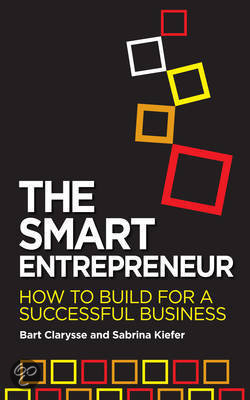
References: Clarysse, B., & Kiefer, S. (2011). The Smart Entrepreneur: How to Build for a
Successful Business. Elliot & Thompson Limited.
Chapter 1
Starting points for new venture ideas typically fall into two broad categories:
• The demand–pull idea: arises in response to a customer need or problem, whereby
the entrepreneur needs to create a profitable, innovative solution to meet a need.
• The ‘knowledge–push’ idea: typically involves a new technology or competence,
whereby an innovative solution itself may seem like an opportunity but the
entrepreneur must seek a profitable area of application and market – that is, a
problem seeking that solution.
Chapter 2
The six phases of your idea generation exercise are:
1. Seek and observe unsolved problems.
o Analyze current trends in social and business environment
o Conduct PEST analysis
o Consult experts about problems that affect their industry
2. Explain and define problems.
o Use the five Ws to start exploring the full context of the problem: who suffers
from the problem, what happens when the problem arises, when does it
happen, where and why?
o Look at chain of causes.
3. Brainstorm ideas and solutions.
4. Organise and synthesise your ideas (categorize ideas).
5. Evaluate and select ideas (use decision matrix)
6. Plan how to implement selected ideas.
Chapter 3
After research and collected data → organize and analyze collected data.
1. What does your technology do?
2. What are the alternatives?
3. Map out the alternatives, the industries and possible markets.
o For each industry that seems promising, arrange the information in a
knowledge/application matrix that shows, for each industry, both your
technology and alternative methods in use.
4. Compare advantages for the customer.
o Once you’ve identified a set of key criteria, create an individual evaluation
matrix.
5. Compare advantages for your business.
o Consider which applications are most interesting for you as a business.
, Chapter 4
If you don’t know who your customers are and can’t identify their defining characteristics,
you won’t know how to reach them, whether you’re creating a product that’s adequately
tailored to their needs or through what channel you can sell it to them. And, more importantly
at this stage, you cannot begin to quantify the realistic size of your market to make a credible
business case.
A new product or business often is potentially appealing to several different target markets,
but start-ups with limited resources can better employ their effort and money to solidly
address and acquire one market segment at a time, building up reputation and business
momentum at each step, rather than spreading their resources too widely and thinly from the
start.
Direct witness: represent firms or customer groups to which you already hope to sell or with
which you hope to work.
Indirect witness: have regular contact with and knowledge of your target customers, such
as vendors (retail or wholesale), consultants, technical experts, people from government
bodies or trade federations.
To obtain a satisfactory sale and build a mutually satisfying and lasting client relationship, all
four of the buying influences should be consulted, catered to and persuaded.
Buying influences:
1. Economic buyer: this person controls the company or departmental purse, directly
signs off important purchases and decides on procurement policies in general. For
large or expensive purchases, he may be the company’s general manager, finance
director or similar; for smaller purchases, someone with divisional authority may have
discretion within the confines of a departmental budget. The economic buyer’s
purchasing criteria will focus on the business impact of a purchase, such as return on
investment in a new product, cost-saving, revenue enhancement and switching
costs, as well as the relative size and importance or critical nature of any such
impacts compared with other spending decisions. This person may be the most
difficult to obtain an interview from, but his viewpoint cannot be ignored.
2. Technical buyer: this person’s job includes screening out suppliers on the basis of
technical specifications. A company technology manager may be the first person we
imagine as a technical buyer, but in truth, technical specifications could include any
aspect of a purchasing relationship, from a product’s technical features to any legal,
contractual or regulatory requirements, logistics, credit terms and so on. Thus,
depending on the nature of your offering, technical buyers could include purchasing
agents, production managers, technology managers, legal counsels, accountants,
facilities managers and so on. A technical buyer will want to know the measurable,
quantifiable benefits that would be derived from adopting your product. He may also,
however, veto a purchase simply because the innovation ‘wasn’t invented here’ and
the product could thus overshadow his own competences. If a technical buyer
opposes a new purchase on the basis of technicalities, an economic buyer will
frequently take his advice.
3. User buyer: this person will have to use your product herself or supervise its use by
other employees. Her role will be to judge the day-to-day impact of your product on
operations, or more specifically on the job she and her colleagues perform. Does she
perceive your product as a tool that will enhance or hinder her personal success in
getting the job done? Although user buyers may seem lower in the company
References: Clarysse, B., & Kiefer, S. (2011). The Smart Entrepreneur: How to Build for a
Successful Business. Elliot & Thompson Limited.
Chapter 1
Starting points for new venture ideas typically fall into two broad categories:
• The demand–pull idea: arises in response to a customer need or problem, whereby
the entrepreneur needs to create a profitable, innovative solution to meet a need.
• The ‘knowledge–push’ idea: typically involves a new technology or competence,
whereby an innovative solution itself may seem like an opportunity but the
entrepreneur must seek a profitable area of application and market – that is, a
problem seeking that solution.
Chapter 2
The six phases of your idea generation exercise are:
1. Seek and observe unsolved problems.
o Analyze current trends in social and business environment
o Conduct PEST analysis
o Consult experts about problems that affect their industry
2. Explain and define problems.
o Use the five Ws to start exploring the full context of the problem: who suffers
from the problem, what happens when the problem arises, when does it
happen, where and why?
o Look at chain of causes.
3. Brainstorm ideas and solutions.
4. Organise and synthesise your ideas (categorize ideas).
5. Evaluate and select ideas (use decision matrix)
6. Plan how to implement selected ideas.
Chapter 3
After research and collected data → organize and analyze collected data.
1. What does your technology do?
2. What are the alternatives?
3. Map out the alternatives, the industries and possible markets.
o For each industry that seems promising, arrange the information in a
knowledge/application matrix that shows, for each industry, both your
technology and alternative methods in use.
4. Compare advantages for the customer.
o Once you’ve identified a set of key criteria, create an individual evaluation
matrix.
5. Compare advantages for your business.
o Consider which applications are most interesting for you as a business.
, Chapter 4
If you don’t know who your customers are and can’t identify their defining characteristics,
you won’t know how to reach them, whether you’re creating a product that’s adequately
tailored to their needs or through what channel you can sell it to them. And, more importantly
at this stage, you cannot begin to quantify the realistic size of your market to make a credible
business case.
A new product or business often is potentially appealing to several different target markets,
but start-ups with limited resources can better employ their effort and money to solidly
address and acquire one market segment at a time, building up reputation and business
momentum at each step, rather than spreading their resources too widely and thinly from the
start.
Direct witness: represent firms or customer groups to which you already hope to sell or with
which you hope to work.
Indirect witness: have regular contact with and knowledge of your target customers, such
as vendors (retail or wholesale), consultants, technical experts, people from government
bodies or trade federations.
To obtain a satisfactory sale and build a mutually satisfying and lasting client relationship, all
four of the buying influences should be consulted, catered to and persuaded.
Buying influences:
1. Economic buyer: this person controls the company or departmental purse, directly
signs off important purchases and decides on procurement policies in general. For
large or expensive purchases, he may be the company’s general manager, finance
director or similar; for smaller purchases, someone with divisional authority may have
discretion within the confines of a departmental budget. The economic buyer’s
purchasing criteria will focus on the business impact of a purchase, such as return on
investment in a new product, cost-saving, revenue enhancement and switching
costs, as well as the relative size and importance or critical nature of any such
impacts compared with other spending decisions. This person may be the most
difficult to obtain an interview from, but his viewpoint cannot be ignored.
2. Technical buyer: this person’s job includes screening out suppliers on the basis of
technical specifications. A company technology manager may be the first person we
imagine as a technical buyer, but in truth, technical specifications could include any
aspect of a purchasing relationship, from a product’s technical features to any legal,
contractual or regulatory requirements, logistics, credit terms and so on. Thus,
depending on the nature of your offering, technical buyers could include purchasing
agents, production managers, technology managers, legal counsels, accountants,
facilities managers and so on. A technical buyer will want to know the measurable,
quantifiable benefits that would be derived from adopting your product. He may also,
however, veto a purchase simply because the innovation ‘wasn’t invented here’ and
the product could thus overshadow his own competences. If a technical buyer
opposes a new purchase on the basis of technicalities, an economic buyer will
frequently take his advice.
3. User buyer: this person will have to use your product herself or supervise its use by
other employees. Her role will be to judge the day-to-day impact of your product on
operations, or more specifically on the job she and her colleagues perform. Does she
perceive your product as a tool that will enhance or hinder her personal success in
getting the job done? Although user buyers may seem lower in the company