

HRD3702 – Management of Training and Development
WORKBOOK 2: Developing HRD: Strategies, systems, policies and procedures.
3. A Model for SHRD
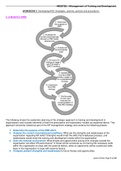
The following shows the systematic planning of the strategic approach to training and development in
organisations and includes elements of both the prescriptive and explanatory models as explained above. This
approach should be viewed as part of the HR management strategy and contains the following phases.
1. Determine the purpose of the HRD effort.
2. Analyse the current circumstances/conditions: What are the strengths and weaknesses of the
organisation regarding HR skills? Strengths would entail the skills that employees possess, and
weaknesses would entail the training and development needs within the organisation.
3. Scan the external environment: What threats and opportunities arising from changes outside the
organisation will affect HR performance? A threat will be construed as not having the necessary skills
within the organisation to cope with the external factors, while an opportunity will be a particular skills
base in the organisation to cope with external factors.
4. Compare present strengths and weaknesses to future threats and opportunities.
Lyana Petzer Page 1 of 12
, HRD3702 – Management of Training and Development
5. Choose a long-term organisational strategy for HRD that will assist individuals in preparing for the
future.
6. Implement the organisational strategy for HRD by means of the following:
• organisational development
• non-employee development
• employee development
• employee education and training.
7. Evaluate the HRD programme.
Step 1: Determine the Purpose of the HRD Effort
The purpose statement must relate to the organisation purpose or mission as reflected in the strategic
business plan. A purpose statement based on these guidelines clarifies what HRD is supposed to do and
why. The purpose statement makes explicit how HRD contributes and supports the organisation’s
purpose and strategic business plan and helps to guide operations, keeping HRD practitioners and
other operating managers on track.
The mission of the organisation is the fundamental reason for its existence. It defines activities the organisation
performs or intends to perform and the kind of organisation it is or intends to be. It does not require much
imagination to see that these questions are applicable to HRD. Without a purpose, HRD practitioners may
embark upon and successfully complete projects, but may never know how they are contributing to the
organisation’s goals or improving job performance.
The following are examples of purpose statements for HRD:
• To provide training and development programmes that will improve productivity and support the
strategic vision of the enterprise.
• To anticipate changing conditions internally and externally, and provide training and development
programmes to help staff cope with changes both nationally and internationally.
• To establish a series of programmes and courses that management can access to ensure that staff
can do their jobs.
Step 2: Assess Present Conditions
The starting point for planning all organised learning events in an organisation is a comprehensive needs
assessment. Training needs assessment is defined as a broad systematic examination of conditions
conducted for the purpose of identifying general differences between what people “should know or do” and
what they “actually know or do”. Comprehensive needs assessment can be viewed as the process of
specifying present gaps between what people should know or do and what they know or do. The gap or
training need identified could be viewed as a weakness, but the assessment should also identify talents,
competencies and skills known as strengths.
Training needs are experienced at three levels:
- macro level needs that are found both nationally and internationally.
- meso level needs that are experienced at organisational level.
- micro level needs that are experienced at the operational level by one person or a very small group (i.e.
emphasizes the content of the incumbent's work and employee performance).
SHRD is an aid to implementing HRD, SBP and the process through which an enterprise is changed.
This change is brought about by planned learning & by assessing the present conditions. Both these
actions should be related to & supported by the enterprise mission statement.
Needs assessment is the second step in the SHRD model. It follows the first step in the model and managers
and supervisors should be well acquainted with present conditions before planning for the future.
To execute a proper assessment of strengths and weaknesses, HRD practitioners and line managers should, at
some point:
identify students and prospective students and determine their location, contact numbers, motivation level,
ability to learn and what the most appropriate learning period would be.
Lyana Petzer Page 2 of 12
WORKBOOK 2: Developing HRD: Strategies, systems, policies and procedures.
3. A Model for SHRD
The following shows the systematic planning of the strategic approach to training and development in
organisations and includes elements of both the prescriptive and explanatory models as explained above. This
approach should be viewed as part of the HR management strategy and contains the following phases.
1. Determine the purpose of the HRD effort.
2. Analyse the current circumstances/conditions: What are the strengths and weaknesses of the
organisation regarding HR skills? Strengths would entail the skills that employees possess, and
weaknesses would entail the training and development needs within the organisation.
3. Scan the external environment: What threats and opportunities arising from changes outside the
organisation will affect HR performance? A threat will be construed as not having the necessary skills
within the organisation to cope with the external factors, while an opportunity will be a particular skills
base in the organisation to cope with external factors.
4. Compare present strengths and weaknesses to future threats and opportunities.
Lyana Petzer Page 1 of 12
, HRD3702 – Management of Training and Development
5. Choose a long-term organisational strategy for HRD that will assist individuals in preparing for the
future.
6. Implement the organisational strategy for HRD by means of the following:
• organisational development
• non-employee development
• employee development
• employee education and training.
7. Evaluate the HRD programme.
Step 1: Determine the Purpose of the HRD Effort
The purpose statement must relate to the organisation purpose or mission as reflected in the strategic
business plan. A purpose statement based on these guidelines clarifies what HRD is supposed to do and
why. The purpose statement makes explicit how HRD contributes and supports the organisation’s
purpose and strategic business plan and helps to guide operations, keeping HRD practitioners and
other operating managers on track.
The mission of the organisation is the fundamental reason for its existence. It defines activities the organisation
performs or intends to perform and the kind of organisation it is or intends to be. It does not require much
imagination to see that these questions are applicable to HRD. Without a purpose, HRD practitioners may
embark upon and successfully complete projects, but may never know how they are contributing to the
organisation’s goals or improving job performance.
The following are examples of purpose statements for HRD:
• To provide training and development programmes that will improve productivity and support the
strategic vision of the enterprise.
• To anticipate changing conditions internally and externally, and provide training and development
programmes to help staff cope with changes both nationally and internationally.
• To establish a series of programmes and courses that management can access to ensure that staff
can do their jobs.
Step 2: Assess Present Conditions
The starting point for planning all organised learning events in an organisation is a comprehensive needs
assessment. Training needs assessment is defined as a broad systematic examination of conditions
conducted for the purpose of identifying general differences between what people “should know or do” and
what they “actually know or do”. Comprehensive needs assessment can be viewed as the process of
specifying present gaps between what people should know or do and what they know or do. The gap or
training need identified could be viewed as a weakness, but the assessment should also identify talents,
competencies and skills known as strengths.
Training needs are experienced at three levels:
- macro level needs that are found both nationally and internationally.
- meso level needs that are experienced at organisational level.
- micro level needs that are experienced at the operational level by one person or a very small group (i.e.
emphasizes the content of the incumbent's work and employee performance).
SHRD is an aid to implementing HRD, SBP and the process through which an enterprise is changed.
This change is brought about by planned learning & by assessing the present conditions. Both these
actions should be related to & supported by the enterprise mission statement.
Needs assessment is the second step in the SHRD model. It follows the first step in the model and managers
and supervisors should be well acquainted with present conditions before planning for the future.
To execute a proper assessment of strengths and weaknesses, HRD practitioners and line managers should, at
some point:
identify students and prospective students and determine their location, contact numbers, motivation level,
ability to learn and what the most appropriate learning period would be.
Lyana Petzer Page 2 of 12


