Human Resources
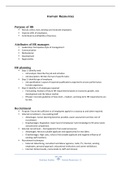
Purpose of HR
▪ Recruit, select, train, develop and motivate employees.
▪ Improve skills of employees.
▪ Contribute to profitability of business.
Attributes of HR manager:
▪ Leadership: Participative style of management.
▪ Communicative
▪ Motivational
▪ Development
▪ Appreciative
HR planning
▪ Step 1: Identify need
o Job analysis: Describe the job and activities.
o Job description: Written format of specific tasks.
▪ Step 2: Identify type of employee
o Job specification: Layout of required qualifications expected to ensure performance.
Include experience.
▪ Step 3: Identify nr of employees required
o Forecasting: Analysis of future HR requirements based on economic growth, new
development and the labour market.
o HR plan: Concrete guideline of how short-, medium- and long-term HR requirements can
be met.
Recruitment
▪ Purpose: Ensure the sufficient nr of employees apply for a vacancy as and when required.
▪ Internal recruitment – Use existing staff
o Advantages: Career planning becomes possible, easier assessment and low cost of
recruitment.
o Disadvantages: Stagnation, lower level of employees’ lack knowledge to fill senior posts
and personal competition.
▪ External recruitment – Find applicants from external sources
o Advantages: Attracts suitable applicant and opportunity for new idees.
o Disadvantages: High costs, risky to find suitable applicant and negative influence of
existing staff members.
▪ Recruitment techniques
o External: Advertising, consultant and labour agencies, radio, TV, internet, existing
employees, personal approach, educational institutions and career exhibitions.
o Internal: Notice boards, memoranda to staff and intranet.
Business Studies Human Resources | 1
Purpose of HR
▪ Recruit, select, train, develop and motivate employees.
▪ Improve skills of employees.
▪ Contribute to profitability of business.
Attributes of HR manager:
▪ Leadership: Participative style of management.
▪ Communicative
▪ Motivational
▪ Development
▪ Appreciative
HR planning
▪ Step 1: Identify need
o Job analysis: Describe the job and activities.
o Job description: Written format of specific tasks.
▪ Step 2: Identify type of employee
o Job specification: Layout of required qualifications expected to ensure performance.
Include experience.
▪ Step 3: Identify nr of employees required
o Forecasting: Analysis of future HR requirements based on economic growth, new
development and the labour market.
o HR plan: Concrete guideline of how short-, medium- and long-term HR requirements can
be met.
Recruitment
▪ Purpose: Ensure the sufficient nr of employees apply for a vacancy as and when required.
▪ Internal recruitment – Use existing staff
o Advantages: Career planning becomes possible, easier assessment and low cost of
recruitment.
o Disadvantages: Stagnation, lower level of employees’ lack knowledge to fill senior posts
and personal competition.
▪ External recruitment – Find applicants from external sources
o Advantages: Attracts suitable applicant and opportunity for new idees.
o Disadvantages: High costs, risky to find suitable applicant and negative influence of
existing staff members.
▪ Recruitment techniques
o External: Advertising, consultant and labour agencies, radio, TV, internet, existing
employees, personal approach, educational institutions and career exhibitions.
o Internal: Notice boards, memoranda to staff and intranet.
Business Studies Human Resources | 1