Sonnet 71
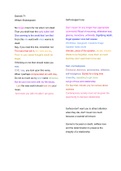
William Shakespeare Self-indulgent tone
No longer mourn for me when I am dead Don’t mourn for any longer than appropriate
Than you shall hear the surly sullen bell (command) Ritual of mourning, alliteration-sad,
Give warning to the world that I am fled gloomy, monotone, unfriendly, Signifying death,
From this vile world with vilest worms to forget speaker once bell ceases
dwell: Worthless, repugnant, macabre image
Nay, if you read this line, remember not Speaker hates world
The hand that writ it, for I love you so, Intimate, piece of the speaker, simple, sincere
That I in your sweet thoughts would be Wants to be forgotten, loves them so much
forgot, that they don’t want them to be sad
If thinking on me then should make you
woe. Sad, onomatopoeia
O! if, I say, you look upon this verse, Emotional utterance, pensiveness, reflection,
When I perhaps compounded am with clay, self-indulgence, Buried for a long time
Do not so much as my poor name rehearse; Unworthy, repeating to get close
But let your love even with my life decay; Let go of love and relationship
Lest the wise world should look into your For fear that, intrude, pry, be curious about
moan, sadness
And mock you with me after I am gone. Contemporary society must not be given the
opportunity to demean relationship
Surface-don't want you to attract attention
when they die, don't mourn too much
because a scandal will ensure
Sonnet is focused on death, selfless love
and the determination to preserve the
integrity of a relationship
William Shakespeare Self-indulgent tone
No longer mourn for me when I am dead Don’t mourn for any longer than appropriate
Than you shall hear the surly sullen bell (command) Ritual of mourning, alliteration-sad,
Give warning to the world that I am fled gloomy, monotone, unfriendly, Signifying death,
From this vile world with vilest worms to forget speaker once bell ceases
dwell: Worthless, repugnant, macabre image
Nay, if you read this line, remember not Speaker hates world
The hand that writ it, for I love you so, Intimate, piece of the speaker, simple, sincere
That I in your sweet thoughts would be Wants to be forgotten, loves them so much
forgot, that they don’t want them to be sad
If thinking on me then should make you
woe. Sad, onomatopoeia
O! if, I say, you look upon this verse, Emotional utterance, pensiveness, reflection,
When I perhaps compounded am with clay, self-indulgence, Buried for a long time
Do not so much as my poor name rehearse; Unworthy, repeating to get close
But let your love even with my life decay; Let go of love and relationship
Lest the wise world should look into your For fear that, intrude, pry, be curious about
moan, sadness
And mock you with me after I am gone. Contemporary society must not be given the
opportunity to demean relationship
Surface-don't want you to attract attention
when they die, don't mourn too much
because a scandal will ensure
Sonnet is focused on death, selfless love
and the determination to preserve the
integrity of a relationship