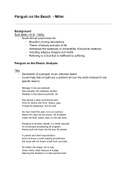
Penguin on the Beach - Miller
Background
Ruth Miller (1919 - 1969):
- South African poet known for:
- Beautiful, moving descriptions
- Theme of beauty and pain of life
- Addresses the weakness or vulnerability of physical creatures
- Including religious imagery and motifs
- Referring to a God that is indifferent to suffering
Penguin on the Beach: Analysis
Title:
- Description of a penguin on an unknown beach
- Could imply that oil spills are a problem all over the world (instead of one
specific beach)
Stranger in his own element,
Sea-casualty, the castaway manikin
Waddles in his tailored coat-tails. Oil
Has spread a deep commercial stain
Over his downy shirt front. Sleazy, grey,
It clogs the sleekness. Far too well
He must recall the past, to be so cautious:
Watch him step into the waves. He shudders
Under the froth; slides, slips, on the wet sand,
Escaping to dryness, dearth, in a white cascade,
An involuntary shouldering off of gleam.
Hands push him back into the sea. He stands
In pained and silent expostulation.
Once he knew a sunlit, leaping smoothness,
But close with his head’s small knoll, and dark,
He retains the image: Oil on sea,
Green slicks, black lassoos of sludge
Sleeving the breakers in a stain-spread scarf.
, He shudders now from the clean flinching wave,
Turns and plods back up the yellow sand,
Ineffably wary, triumphantly sad.
He is immensely wise: he trusts nobody. His senses
Are clogged with experience. He eats
Fish from the Saviour’s hands, and it tastes black.
Structure:
- 8 stanzas
- 3 lines each
- No formal rhyme scheme
- Enjambment (often running across stanzas)
- Emphasises certain words, especially those at the end of lines
- Creates a series of connected events which are at the same time
discrete descriptions
Theme:
- Unnatural effect of humankind on the natural world
Overall Tone:
- Melancholic or sad
E.g. “caualty”, “grey”, “shudders”, “pained and silent”, “wary”, “sad”
Figures of Speech:
- Sibilance is used throughout the poem
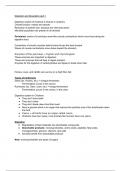
Stanza 1
PERSONIFICATION:
The penguin is Stranger in his own element, The penguin is out of place in the very
described in human environment in which he is supposed to feel
terms safe/comfortable
- The diction - His relationship with his environment is
reinforces the compromised
bird’s PARADOX: It seems impossible that the
displacement penguin would be a “stranger” in the very place
which causes where it should feel safe
the reader to - BUT oil spills have altered the sea (his
empathise with “element”) and thus he is wary of the ocean
the penguin
Sea-casualty, the castaway manikin Casualty: Someone/something killed or injured
or negatively affected by an accident/war/event
Sea-casualty: He is a victim of events
happening at sea
Manikin: A very small man
Coat-tails: The part below the waist at the back
Background
Ruth Miller (1919 - 1969):
- South African poet known for:
- Beautiful, moving descriptions
- Theme of beauty and pain of life
- Addresses the weakness or vulnerability of physical creatures
- Including religious imagery and motifs
- Referring to a God that is indifferent to suffering
Penguin on the Beach: Analysis
Title:
- Description of a penguin on an unknown beach
- Could imply that oil spills are a problem all over the world (instead of one
specific beach)
Stranger in his own element,
Sea-casualty, the castaway manikin
Waddles in his tailored coat-tails. Oil
Has spread a deep commercial stain
Over his downy shirt front. Sleazy, grey,
It clogs the sleekness. Far too well
He must recall the past, to be so cautious:
Watch him step into the waves. He shudders
Under the froth; slides, slips, on the wet sand,
Escaping to dryness, dearth, in a white cascade,
An involuntary shouldering off of gleam.
Hands push him back into the sea. He stands
In pained and silent expostulation.
Once he knew a sunlit, leaping smoothness,
But close with his head’s small knoll, and dark,
He retains the image: Oil on sea,
Green slicks, black lassoos of sludge
Sleeving the breakers in a stain-spread scarf.
, He shudders now from the clean flinching wave,
Turns and plods back up the yellow sand,
Ineffably wary, triumphantly sad.
He is immensely wise: he trusts nobody. His senses
Are clogged with experience. He eats
Fish from the Saviour’s hands, and it tastes black.
Structure:
- 8 stanzas
- 3 lines each
- No formal rhyme scheme
- Enjambment (often running across stanzas)
- Emphasises certain words, especially those at the end of lines
- Creates a series of connected events which are at the same time
discrete descriptions
Theme:
- Unnatural effect of humankind on the natural world
Overall Tone:
- Melancholic or sad
E.g. “caualty”, “grey”, “shudders”, “pained and silent”, “wary”, “sad”
Figures of Speech:
- Sibilance is used throughout the poem
Stanza 1
PERSONIFICATION:
The penguin is Stranger in his own element, The penguin is out of place in the very
described in human environment in which he is supposed to feel
terms safe/comfortable
- The diction - His relationship with his environment is
reinforces the compromised
bird’s PARADOX: It seems impossible that the
displacement penguin would be a “stranger” in the very place
which causes where it should feel safe
the reader to - BUT oil spills have altered the sea (his
empathise with “element”) and thus he is wary of the ocean
the penguin
Sea-casualty, the castaway manikin Casualty: Someone/something killed or injured
or negatively affected by an accident/war/event
Sea-casualty: He is a victim of events
happening at sea
Manikin: A very small man
Coat-tails: The part below the waist at the back