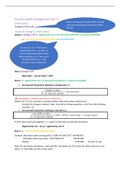
Current asset management (LA 7)
Means 2% discount if paid within 10 days,
Credit policy
otherwise should pay full amount within
Example 2/10 net 30
30 days
Impact of change in credit policy
Impact = change in GP +/- opportunity cost in incremental investment in accounts receivable
+/- cost of marginal debt (bad debts) +/- cost of discount
Do we use + or -? If the cost is
reduced then it’s a + as this is a
cost saving (e.g decrease in bad
debts would be a +). If the cost is
increased then it’s a – (e.g
increase in cost of discount)
Step 1: change in GP
(New sales – current sales) * GP%
Step 2: +/- opportunity cost in incremental investment in accounts receivable
➢ Incremental investment relating to existing sales (x)
𝑐ℎ𝑎𝑛𝑔𝑒 𝑖𝑛 𝑑𝑎𝑦𝑠
∗ 𝑐𝑢𝑟𝑟𝑒𝑛𝑡 𝑠𝑎𝑙𝑒𝑠
𝑛𝑟. 𝑜𝑓 𝑑𝑎𝑦𝑠 𝑝𝑒𝑟 𝑎𝑛𝑛𝑢𝑚
NB! Use debtors’ collection period not credit terms
(Refer to Q 12.23 to see how to calculate debtors days when given credit terms)
First get the change in debtors’ days. From 40 to 30 days would be a +10, from 30 to 40 days
would be -10.
➢ Incremental investment relating to new sales (y)
𝑛𝑒𝑤 𝑑𝑒𝑏𝑡𝑜𝑟𝑠 𝑑𝑎𝑦𝑠
∗ (100 − 𝐺𝑃%) ∗ (𝑛𝑒𝑤 𝑠𝑎𝑙𝑒𝑠 − 𝑐𝑢𝑟𝑟𝑒𝑛𝑡 𝑠𝑎𝑙𝑒𝑠)
𝑛𝑟. 𝑜𝑓 𝑑𝑎𝑦𝑠 𝑝𝑒𝑟 𝑎𝑛𝑛𝑢𝑚
Put the above formulae together: x + y which is the total incremental investment
Opportunity cost = (x+y) * opportunity cost %
Step 3: +/- cost of marginal debt (bad debts)
Example: Bad debts under existing policy = R240 mil*30%*2%* = R1440 000
Bad debts under new policy = R270*40%*3% =R2160 000
Change = -R720 000 Increase in cost
Note: for the above calculations, read carefully “bad debts are 2% of sales for which discount is not
taken” or “bad debts are 2% of total sales”
Means 2% discount if paid within 10 days,
Credit policy
otherwise should pay full amount within
Example 2/10 net 30
30 days
Impact of change in credit policy
Impact = change in GP +/- opportunity cost in incremental investment in accounts receivable
+/- cost of marginal debt (bad debts) +/- cost of discount
Do we use + or -? If the cost is
reduced then it’s a + as this is a
cost saving (e.g decrease in bad
debts would be a +). If the cost is
increased then it’s a – (e.g
increase in cost of discount)
Step 1: change in GP
(New sales – current sales) * GP%
Step 2: +/- opportunity cost in incremental investment in accounts receivable
➢ Incremental investment relating to existing sales (x)
𝑐ℎ𝑎𝑛𝑔𝑒 𝑖𝑛 𝑑𝑎𝑦𝑠
∗ 𝑐𝑢𝑟𝑟𝑒𝑛𝑡 𝑠𝑎𝑙𝑒𝑠
𝑛𝑟. 𝑜𝑓 𝑑𝑎𝑦𝑠 𝑝𝑒𝑟 𝑎𝑛𝑛𝑢𝑚
NB! Use debtors’ collection period not credit terms
(Refer to Q 12.23 to see how to calculate debtors days when given credit terms)
First get the change in debtors’ days. From 40 to 30 days would be a +10, from 30 to 40 days
would be -10.
➢ Incremental investment relating to new sales (y)
𝑛𝑒𝑤 𝑑𝑒𝑏𝑡𝑜𝑟𝑠 𝑑𝑎𝑦𝑠
∗ (100 − 𝐺𝑃%) ∗ (𝑛𝑒𝑤 𝑠𝑎𝑙𝑒𝑠 − 𝑐𝑢𝑟𝑟𝑒𝑛𝑡 𝑠𝑎𝑙𝑒𝑠)
𝑛𝑟. 𝑜𝑓 𝑑𝑎𝑦𝑠 𝑝𝑒𝑟 𝑎𝑛𝑛𝑢𝑚
Put the above formulae together: x + y which is the total incremental investment
Opportunity cost = (x+y) * opportunity cost %
Step 3: +/- cost of marginal debt (bad debts)
Example: Bad debts under existing policy = R240 mil*30%*2%* = R1440 000
Bad debts under new policy = R270*40%*3% =R2160 000
Change = -R720 000 Increase in cost
Note: for the above calculations, read carefully “bad debts are 2% of sales for which discount is not
taken” or “bad debts are 2% of total sales”