-
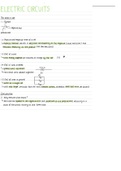
The electric cell
1. 1
Symbol
←
negative end
y
positive end
1. 2 Positive and ends of cell
negative a
> chemical reaction results in electrons
accumulating at the
negative ( extra electrons ) and
(too few electrons)
electrons
depleting at the
positive
1. 3 Emf of a cell
(V ) *
total
energy supplied per coloumb of charge by the cell
>
1.4 Emf of cells in series
ZVZVZV
>
greater emf obtained
individual cells added
together
>
Gv
ZV
ZV
1.5 Emf of cells in
parallel ZV
cell
> same as a
single
ZV
cells last longer because each cell has smaller current therefore does less work per second
> a
, ,
Electron flow
2. 1
Why electron flow occurs ?
and attracted to the end
electrons repelled at the
negative end positive
>
are
, resulting in a
chain of electrons moving at the same rate
, 2.2 Short circuits
ends cell are connected
> a
by a simple conductor of low resistance
>
very big electric current (no resistor / will flow rapidly and the cell will be flat
Resistance (constant voltage # ,
F) (r )
↳ material 's
opposition to the flow of electric current
3.1 Functions :
→ potential difference
1. Control the current resistance R= I
2. Provide useful energy transfer > current
3.2
Types of resistors
>
simple rheostatvariable ) lightbulb
, , ,
motor , heater ,
Speaker
'
NN
resistor resistor rheostat lightbulb
3.3 Factors of
affecting resistance a resistor
1.
Type of material
2. Thickness of conductor
Length of conductor
3.
4. Temperature of conductor
3.4 Resistors in series ( voltage dividers )
>
adding a resistor in series increases the total resistance fnresistance -
-
recurrent )
> Rt -_
ritrz
The electric cell
1. 1
Symbol
←
negative end
y
positive end
1. 2 Positive and ends of cell
negative a
> chemical reaction results in electrons
accumulating at the
negative ( extra electrons ) and
(too few electrons)
electrons
depleting at the
positive
1. 3 Emf of a cell
(V ) *
total
energy supplied per coloumb of charge by the cell
>
1.4 Emf of cells in series
ZVZVZV
>
greater emf obtained
individual cells added
together
>
Gv
ZV
ZV
1.5 Emf of cells in
parallel ZV
cell
> same as a
single
ZV
cells last longer because each cell has smaller current therefore does less work per second
> a
, ,
Electron flow
2. 1
Why electron flow occurs ?
and attracted to the end
electrons repelled at the
negative end positive
>
are
, resulting in a
chain of electrons moving at the same rate
, 2.2 Short circuits
ends cell are connected
> a
by a simple conductor of low resistance
>
very big electric current (no resistor / will flow rapidly and the cell will be flat
Resistance (constant voltage # ,
F) (r )
↳ material 's
opposition to the flow of electric current
3.1 Functions :
→ potential difference
1. Control the current resistance R= I
2. Provide useful energy transfer > current
3.2
Types of resistors
>
simple rheostatvariable ) lightbulb
, , ,
motor , heater ,
Speaker
'
NN
resistor resistor rheostat lightbulb
3.3 Factors of
affecting resistance a resistor
1.
Type of material
2. Thickness of conductor
Length of conductor
3.
4. Temperature of conductor
3.4 Resistors in series ( voltage dividers )
>
adding a resistor in series increases the total resistance fnresistance -
-
recurrent )
> Rt -_
ritrz