
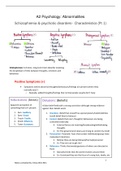
A2 Psychology: Abnormalities
Schizophrenia & psychotic disorders- Characteristics (Pt 1)
Schizophrenia: A chronic, long-term brain disorder involving
the breakdown of links between thoughts, emotions and
behaviour
Positive Symptoms (+)
• Symptoms where abnormal thoughts/behaviours/feelings are present where they
normally aren’t
o Basically, added thoughts/feelings that normal people usually don’t have
Hallucinations: (Senses) Delusions: (Beliefs)
Apparent perception of A false belief held with a strong conviction although strong evidence
something that isn’t present against their beliefs exists
1. Ears- Auditory 1. Grandeur- Belief that oneself has special powers/talent/abilities
2. Eyes- Visual (could belief they’re famous)
3. Touch- Tactile 2. Control- Beliefs that one’s thoughts/ behaviours are being
4. Smell- Olfactory controlled externally
5. Taste- Gustatory • External forces are inserting/broadcasting/withdrawing
thoughts
• Ex: The government/ aliens are trying to control my mind!
3. Persecution- Paranoid. Fears that certain individuals/groups have
malevolent intentions
• Believe they are being followed/harmed/poisoned
• Ex: They are out to get me!
4. Reference- Thinks that words/gestures of others are directed at
them
• Basically thinks that the world revolves around them
• Ex: Convinced they are the focus of a song lyric, books, etc
1
Notes compiled by: Chew Wen Min
, Negative Symptoms (-)
• Symptoms where normal thoughts/behaviours/feeling are not present when they should be
1. Avolition- Lack of motivation
• Ex: Hobbies, school work, social activity
Vvv
2. Asociality- Less Social initiative
• Ex: Poor social skills, little interest in being around others
3. Blunted effect- Lack of outward expression/emotion
• Ex: No facial expression (vacant staring, lifeless eyes), No voice expression
4. Alogia- Less speech
• Ex: Doesn’t talk much, replies in short, curt sentences
5. Anhedonia- Less experience of pleasure
a) Consummatory pleasure- eating
b) Anticipatory pleasure- excited
Disorganised Symptoms
• A decline in everyday functioning
Disorganised Behaviour Disorganised Speech
• Experiencing unpredictable & • Having trouble organising thoughts & speaking coherently
inappropriate emotional o Impacts ability to perceive the meaning of words
responses 1. Neologism- Make up own words
• Symptoms: Dressing unusually, o Can be non-existent (fabberlug)
hoarding food, collecting o Give new meaning to words (handshoe-
garbage means glove)
• They lose the ability to organize 2. Derailment/ Loose Associations- Shifting from topic
their behaviour & conform to to topic with no apparent connection
community standards o Ex: “Hey I like your shoes! I want to visit
London one day. Oh, i love pink!”
3. Tangentiality- Wandering from the topic and never
returning to it
o Ex: When others talk about England- “My
dog’s from England. They have good fish and
chips there. Fish breathe through gills!”
Movement Symptoms
• Can be (+) or (-), so doesn’t fit into any of the categories above
Catatonia- Severe motor abnormalities [(+) symptom]
• Symptoms: Gesturing repeatedly, using complex hand/finger movements that seem to
mean something to them
• Full of energy all the time, excited, flailing of limbs
Catatonic immobility- People adopt unusual postures and maintain them for very long periods
of time [ (-) symptom]
• Waxy flexibility- Another person can move the patient’s limbs into positions, and the
patient will stay that way for hours
2
Notes compiled by: Chew Wen Min


