

ENGLISH:THE POETRY OF SENTIMENT
1750 – 1795
Age of sentiment
- 1750 – 1795
- Poetry at the time
o Values feeling
▪ Rather than judgement or reason
- Appreciate horror as well as pleasure
- The focus on emotional responses opened space for previously marginalised voices
o Poetry became more diverse
- Age which in its focus on feeling
o Encourage people to consider the concept of universal human rights (race and gender)
- Understand what it is like to be vulnerable
Sentimentalism
- Philosophically
o Opposite of rationalism
- While the 18th century rationalism corresponded itself with the development of the analytic mind & saw
judgement as the basis for acquiring truth
o Sentimentalism hinged upon an intrinsic human capacity to feel and how this leads to truth
▪ The truths were seen as more valuable than the scientific truths
Difference between sentimentalism and rationalism
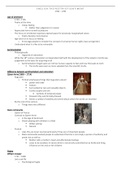
Queen Anne (1665 – 1714)
- Augustan:
o Portrait emphasizes things that Augustans valued
▪ power and order
▪ Indoors
▪ Surrounded by rare and valuable objects
▪ Carries sceptre and ore
• Symbols of temporal power
▪ Dressed richly and formally dressed
▪ Seems a symbol of stability and centre about which the world can revolved
- By the end of the century
o Things were very different
Marie Antoinette
- Queen of France
- Contrast to Queen Anne
o In the Age of Sentiment
o Shown playing with children in a field
▪ Wilder setting
▪ Natural
- Portrait
o Likes this are never neutral particularly if they are of important people
o Marie Antoinette wanted people to understand that she is not simply a person of authority and
power but as well as
▪ Mother with a mother’s heart and affectionate feelings
▪ Loves to be outdoors in nature which is not strictly controlled but as fertile and living
influence on her and on her children
Poetry
William Cowper
- 1731 – 1800
- Led a sad life
o Psychological fragile
, o Suffered several breakdowns
o Was suicidal
o Withdrew to the country life
▪ Led a quiet and domestic life
- His poem emphasises his sad life
o Highly personal
o Describes his pet hare, Tiney, and his relationship
o “Epitaph of a Hare”
Thomas Gray
- 1716 – 1771
- Older then William Cowper
- Famous for elegy written in a country courtyard
- “ode on the death of a favourite cat drowned in a tub of goldfishes”
o In between poem
o Looks ahead in the sentiment poetry but also has features of an Augustan poetry
Elegy
- A poem that mourns a death
Charlotte Smith
- 1749 – 1806
- Female poet
o The emphasise the age of sentiment put on feelings allowed woman to write who lived more
domestic lives
- “Sonnet Written in the Churchyard at Middleton in Sussex”
Phyllis Wheatley
- 1753 – 1784
- Captured into slavery as a young child
- Bought by a man whose wife was suffering from severe depression as their daughter recently died
o Brought up as a child in the house rather than a slave
- She became involved in anti-slavery moment
o Valuable as she was educated and spoke English eloquently
o Removed the lie that there was something innately or barbaric that could justify sending Africans into
slavery
- “On Being Brought From Africa to America”
Epitaph of a Hare
William Cowper
Form of the poem
- No heroic couplets
- Cross rhyme pattern
- Meter
o Alternating lines of iambic tetrameter (4 strong beats) and iambic trimeter (3 strong beats)
▪ The ballad has this exact structure
Here lies, whom hound did ne’er pursue, a
“Here lies”
- By beginning with this Cowper reminds us that the poem is an epitaph upon a hare
- Epitaph is usually written on a tombstone
o Poem is written after the death of his hare
Nor swifter greyhound follow, b
Whose foot ne’er tainted morning dew, a
Nor ear heard huntsman’s hallo’, b
Notice feminine rhyme in first stanza
1750 – 1795
Age of sentiment
- 1750 – 1795
- Poetry at the time
o Values feeling
▪ Rather than judgement or reason
- Appreciate horror as well as pleasure
- The focus on emotional responses opened space for previously marginalised voices
o Poetry became more diverse
- Age which in its focus on feeling
o Encourage people to consider the concept of universal human rights (race and gender)
- Understand what it is like to be vulnerable
Sentimentalism
- Philosophically
o Opposite of rationalism
- While the 18th century rationalism corresponded itself with the development of the analytic mind & saw
judgement as the basis for acquiring truth
o Sentimentalism hinged upon an intrinsic human capacity to feel and how this leads to truth
▪ The truths were seen as more valuable than the scientific truths
Difference between sentimentalism and rationalism
Queen Anne (1665 – 1714)
- Augustan:
o Portrait emphasizes things that Augustans valued
▪ power and order
▪ Indoors
▪ Surrounded by rare and valuable objects
▪ Carries sceptre and ore
• Symbols of temporal power
▪ Dressed richly and formally dressed
▪ Seems a symbol of stability and centre about which the world can revolved
- By the end of the century
o Things were very different
Marie Antoinette
- Queen of France
- Contrast to Queen Anne
o In the Age of Sentiment
o Shown playing with children in a field
▪ Wilder setting
▪ Natural
- Portrait
o Likes this are never neutral particularly if they are of important people
o Marie Antoinette wanted people to understand that she is not simply a person of authority and
power but as well as
▪ Mother with a mother’s heart and affectionate feelings
▪ Loves to be outdoors in nature which is not strictly controlled but as fertile and living
influence on her and on her children
Poetry
William Cowper
- 1731 – 1800
- Led a sad life
o Psychological fragile
, o Suffered several breakdowns
o Was suicidal
o Withdrew to the country life
▪ Led a quiet and domestic life
- His poem emphasises his sad life
o Highly personal
o Describes his pet hare, Tiney, and his relationship
o “Epitaph of a Hare”
Thomas Gray
- 1716 – 1771
- Older then William Cowper
- Famous for elegy written in a country courtyard
- “ode on the death of a favourite cat drowned in a tub of goldfishes”
o In between poem
o Looks ahead in the sentiment poetry but also has features of an Augustan poetry
Elegy
- A poem that mourns a death
Charlotte Smith
- 1749 – 1806
- Female poet
o The emphasise the age of sentiment put on feelings allowed woman to write who lived more
domestic lives
- “Sonnet Written in the Churchyard at Middleton in Sussex”
Phyllis Wheatley
- 1753 – 1784
- Captured into slavery as a young child
- Bought by a man whose wife was suffering from severe depression as their daughter recently died
o Brought up as a child in the house rather than a slave
- She became involved in anti-slavery moment
o Valuable as she was educated and spoke English eloquently
o Removed the lie that there was something innately or barbaric that could justify sending Africans into
slavery
- “On Being Brought From Africa to America”
Epitaph of a Hare
William Cowper
Form of the poem
- No heroic couplets
- Cross rhyme pattern
- Meter
o Alternating lines of iambic tetrameter (4 strong beats) and iambic trimeter (3 strong beats)
▪ The ballad has this exact structure
Here lies, whom hound did ne’er pursue, a
“Here lies”
- By beginning with this Cowper reminds us that the poem is an epitaph upon a hare
- Epitaph is usually written on a tombstone
o Poem is written after the death of his hare
Nor swifter greyhound follow, b
Whose foot ne’er tainted morning dew, a
Nor ear heard huntsman’s hallo’, b
Notice feminine rhyme in first stanza


