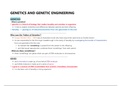
GENETICS AND GENETIC ENGINEERING
GENETICS
- What is genetics?
^ genetics is a branch of biology that studies heredity and variation in organisms
it tries to explain similarities and differences between parents and their offspring
> heredity --> passing on of traits/characteristics from one generation to the next
______________________________________________________________________________
Who was the 'Father of Genetics'?
Gregor Mendel (1822 - 1884) was an Australian monk who lived around the same time as Charles Darwin
he was responsible for the first major breakthrough in the study of heredity by investigating the transfer of characteristics
from one generation the the next
he realised that 'something' is passed from the parent to the offspring
and that sexual reproduction combines these 'somethings' from each parent
- What are these 'somethings'?
these 'somethings' are genes which are part of DNA molecules in chromosomes
________________________________________________________________________________
GENES
each chromatid is made up of one helical DNA molecule
each DNA molecule is made up of a series of genes
^ a gene is a sections of DNA (nucleotides) that controls a hereditary characteristic
it is the basic unit of heredity in living organisms
, each chromosome has between several hundred and several thousand genes
the total number of genes in humans is between 20 000 and 25 000
nearly all somatic cells have an exact copy of all the genes in that organism
mature red blood cells have no nuclei --> no chromosomes and no genes
there are two of each kind of chromosome (maternal and paternal)
each cell contains two of each kind of gene (before replication)
these versions of a gene are known as alleles
the gene pool is the set of all genes (genetic information) in a population of sexually reproducing organisms
large gene pool --> high genetic diversity and increased chances of survival
small gene pool --> low genetic diversity and increased probability of extinction
- How active are genes?
, although each cell contains a full complement of DNA, only the genes needed are activated
the others are suppressed
different genes are activated in different cells --> creating specific proteins that give a cell type its character
bone cells, brain cells and skin cells
some genes play a role in early development of the embryo and are inactive thereafter
some genes are active in many types of cells, making proteins needed for basic function
housekeeping genes
other genes are inactive most of the time
high proportion of genes are non-coding genes
2% of DNA codes for proteins
master control of genes that determines the way the body develops from a single zygote are called hox genes
the control of genes is called epigenetics
the Human Epigenome Project aims to document what switches genes on and off
________________________________________________________________________________
ALLELES
^ alleles are responsible for controlling different versions of a characteristic found in the same locus (position) on
homologous chromosomes
an allele is a variant form of a gene --> one of two or more forms of a gene (allelomorph: alternative form)
gene determining coat colour in cattle
one allele --> black coat
other allele --> white coat
- How are alleles represented?
alleles are represented by means of letters
GENETICS
- What is genetics?
^ genetics is a branch of biology that studies heredity and variation in organisms
it tries to explain similarities and differences between parents and their offspring
> heredity --> passing on of traits/characteristics from one generation to the next
______________________________________________________________________________
Who was the 'Father of Genetics'?
Gregor Mendel (1822 - 1884) was an Australian monk who lived around the same time as Charles Darwin
he was responsible for the first major breakthrough in the study of heredity by investigating the transfer of characteristics
from one generation the the next
he realised that 'something' is passed from the parent to the offspring
and that sexual reproduction combines these 'somethings' from each parent
- What are these 'somethings'?
these 'somethings' are genes which are part of DNA molecules in chromosomes
________________________________________________________________________________
GENES
each chromatid is made up of one helical DNA molecule
each DNA molecule is made up of a series of genes
^ a gene is a sections of DNA (nucleotides) that controls a hereditary characteristic
it is the basic unit of heredity in living organisms
, each chromosome has between several hundred and several thousand genes
the total number of genes in humans is between 20 000 and 25 000
nearly all somatic cells have an exact copy of all the genes in that organism
mature red blood cells have no nuclei --> no chromosomes and no genes
there are two of each kind of chromosome (maternal and paternal)
each cell contains two of each kind of gene (before replication)
these versions of a gene are known as alleles
the gene pool is the set of all genes (genetic information) in a population of sexually reproducing organisms
large gene pool --> high genetic diversity and increased chances of survival
small gene pool --> low genetic diversity and increased probability of extinction
- How active are genes?
, although each cell contains a full complement of DNA, only the genes needed are activated
the others are suppressed
different genes are activated in different cells --> creating specific proteins that give a cell type its character
bone cells, brain cells and skin cells
some genes play a role in early development of the embryo and are inactive thereafter
some genes are active in many types of cells, making proteins needed for basic function
housekeeping genes
other genes are inactive most of the time
high proportion of genes are non-coding genes
2% of DNA codes for proteins
master control of genes that determines the way the body develops from a single zygote are called hox genes
the control of genes is called epigenetics
the Human Epigenome Project aims to document what switches genes on and off
________________________________________________________________________________
ALLELES
^ alleles are responsible for controlling different versions of a characteristic found in the same locus (position) on
homologous chromosomes
an allele is a variant form of a gene --> one of two or more forms of a gene (allelomorph: alternative form)
gene determining coat colour in cattle
one allele --> black coat
other allele --> white coat
- How are alleles represented?
alleles are represented by means of letters