

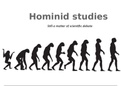
Hominid studies
Still a matter of scientific debate
, Hominid studies depends on 3
things
• Fossil remains
• Genetic evidence
• Archaeology (the study of human activity through the recovery and analysis
material culture…tools) -> tools show that there was some sense of culture
can only come about with a certain brain size / intelligence
**the split between great apes and hominids occurred approximately 7 mya
**studying 3 species of the hominin genus= Ardipithecus, Australopithecus, H
**Bonobos = human like characteristics (sex for pleasure)
**Pan (chimpanzee) = closest living relative to homo sapiens
**great apes = orangutan, gorilla, chimpanzee
,Anatomical similarities / differences between a
and
Common humans Different (not in apes but only humans)
Opposable toes (apes) / thumbs (humans) to grip branches Habitually bipedal
powerfully (power grip)
Fingers and toes with broad pads to grip branches and Reduction in body hair
other objects (power grip)
Flat nails to protect the pads Omnivorous = survive in a variety of habitats
Powerful hind limbs to allow for standing up (bipedalism in Highly developed and large brains for making tool
humans)
Good vision For using and controlling fire
Binocular vision to have 3D perception For using sophisticated language and complex syn
Large brains **the 4 major differences (in order) that set huma
from other arboreals
Complex social behaviour -> one offspring at a time to
provide extended parental care for young to increase
chances of survival of species
**free rotating arms, rotation around elbow joints, long
upper arms = arboreal characteristics
, Fossil remains
Palaeontologists look at 5 features of fossils for clues:
1. Bipedalism
2. Dentition and palate shape
3. Brain size
4. Prognathism
5. Cranial and brow ridges
**level of advancement of these features show when a species exist
Still a matter of scientific debate
, Hominid studies depends on 3
things
• Fossil remains
• Genetic evidence
• Archaeology (the study of human activity through the recovery and analysis
material culture…tools) -> tools show that there was some sense of culture
can only come about with a certain brain size / intelligence
**the split between great apes and hominids occurred approximately 7 mya
**studying 3 species of the hominin genus= Ardipithecus, Australopithecus, H
**Bonobos = human like characteristics (sex for pleasure)
**Pan (chimpanzee) = closest living relative to homo sapiens
**great apes = orangutan, gorilla, chimpanzee
,Anatomical similarities / differences between a
and
Common humans Different (not in apes but only humans)
Opposable toes (apes) / thumbs (humans) to grip branches Habitually bipedal
powerfully (power grip)
Fingers and toes with broad pads to grip branches and Reduction in body hair
other objects (power grip)
Flat nails to protect the pads Omnivorous = survive in a variety of habitats
Powerful hind limbs to allow for standing up (bipedalism in Highly developed and large brains for making tool
humans)
Good vision For using and controlling fire
Binocular vision to have 3D perception For using sophisticated language and complex syn
Large brains **the 4 major differences (in order) that set huma
from other arboreals
Complex social behaviour -> one offspring at a time to
provide extended parental care for young to increase
chances of survival of species
**free rotating arms, rotation around elbow joints, long
upper arms = arboreal characteristics
, Fossil remains
Palaeontologists look at 5 features of fossils for clues:
1. Bipedalism
2. Dentition and palate shape
3. Brain size
4. Prognathism
5. Cranial and brow ridges
**level of advancement of these features show when a species exist



