Genetics and Engineering
Monday, 04 March 2019 09:58
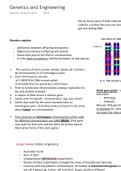
Not all Genes (part of DNA molecule
code for a protein because you also
get non-coding DNA
Genetics explains
- Similarities between offspring and parents
- Differences between offspring and parents
- Genes form part of the DNA in chromosomes
- It is the basis of evolution and the formation of new species
1. The nucleus of every human somatic (body cell ) contains
46 chromosomes in 23 homologous pairs.
2. Each chromosome consists
of 2 IDENTICAL DNA strands called
chromatids that are joined by a centromere
3. Prior to cell division chromosomes undergo replication to
become double stranded Small gene pools = d
4. A section of DNA strand is called a gene. extinction
5. Genes code for specific characteristics. (eg. eye colour) - Wild dogs
6. Genes that code for the same characteristics on - Cheetahs
homologous pairs of chromosomes are found in the same Because little geneti
place (Locus) on a chromosome. to diseases etc. whic
increases the chance
7. Pairs of genes on homologous chromosomes which code
for different characteristics are called Alleles. (One gene
may code for blue eyes and the other for brown eyes ie.
Alternative forms of the same gene)
Gregor Mendel (father of genetics)
- Australian monk
- Born in 1822
- Initiated plant hybridization experiments
- Results of these experiments changed the views of heredity permanently
- Came up with the patterns of inheritance. He looked at characteristics/genes (no
we call it genes) eg. Colour, tall and short, shape, position of flower
Monday, 04 March 2019 09:58
Not all Genes (part of DNA molecule
code for a protein because you also
get non-coding DNA
Genetics explains
- Similarities between offspring and parents
- Differences between offspring and parents
- Genes form part of the DNA in chromosomes
- It is the basis of evolution and the formation of new species
1. The nucleus of every human somatic (body cell ) contains
46 chromosomes in 23 homologous pairs.
2. Each chromosome consists
of 2 IDENTICAL DNA strands called
chromatids that are joined by a centromere
3. Prior to cell division chromosomes undergo replication to
become double stranded Small gene pools = d
4. A section of DNA strand is called a gene. extinction
5. Genes code for specific characteristics. (eg. eye colour) - Wild dogs
6. Genes that code for the same characteristics on - Cheetahs
homologous pairs of chromosomes are found in the same Because little geneti
place (Locus) on a chromosome. to diseases etc. whic
increases the chance
7. Pairs of genes on homologous chromosomes which code
for different characteristics are called Alleles. (One gene
may code for blue eyes and the other for brown eyes ie.
Alternative forms of the same gene)
Gregor Mendel (father of genetics)
- Australian monk
- Born in 1822
- Initiated plant hybridization experiments
- Results of these experiments changed the views of heredity permanently
- Came up with the patterns of inheritance. He looked at characteristics/genes (no
we call it genes) eg. Colour, tall and short, shape, position of flower