Grade 11 Trigonometric Functions
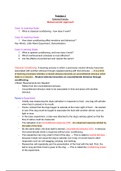
Document 4: Combined Period and other Transformations:
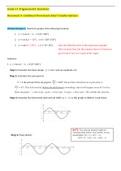
Worked Example 1: Sketch the graphs of the following functions:
1. 𝑦 = 2 sin 2𝑥 − 1, 𝑥 ∈ [0°; 360°]
2. 𝑦 = cos 2(𝑥 − 15°) , 𝑥 ∈ [−120°; 150°]
3. 𝑦 = tan(3𝑥 + 30°) , 𝑥 ∈ [−25°; 50°] Note the difference here in this important example!
Hint: factorise first, but the common factor of 3 does not
go in front of ‘tan’ as it is part of the ‘angle’
Solutions:
1. 𝑦 = 2 sin 2𝑥 − 1, 𝑥 ∈ [0°; 360°]
Step 1: Consider the basic shape: 𝑦 = sin 𝑥 with an amplitude of 2
Step 2: Calculate the new period
360°
𝑘 = 2 the period of this sin graph is 2
= 180°. It is useful to divide the new period by 4:
180°
= 45°. This tells me that (before the shift down) something critical will happen every 45° for the
4
basic sin graph: “ 𝑥 𝑖𝑛𝑡𝑒𝑟𝑐𝑒𝑝𝑡, 𝑝𝑒𝑎𝑘, 𝑥 𝑖𝑛𝑡𝑒𝑟𝑐𝑒𝑝𝑡, 𝑡𝑟𝑜𝑢𝑔ℎ, 𝑥 𝑖𝑛𝑡𝑒𝑟𝑐𝑒𝑝𝑡 “. We call this the step size.
Step 3: Consider the horizontal and vertical shifts: 𝑞 = −1 so the graph is shifted 1 unit down
NOTE: You may be asked to label all
Turning points and/or ‘end’ points, so you
Step 4: Final sketch: would label (45°; 1); (135°; −3);
(225°; 1); (315; −3); (360; −1)
Document 4: Combined Period and other Transformations:
Worked Example 1: Sketch the graphs of the following functions:
1. 𝑦 = 2 sin 2𝑥 − 1, 𝑥 ∈ [0°; 360°]
2. 𝑦 = cos 2(𝑥 − 15°) , 𝑥 ∈ [−120°; 150°]
3. 𝑦 = tan(3𝑥 + 30°) , 𝑥 ∈ [−25°; 50°] Note the difference here in this important example!
Hint: factorise first, but the common factor of 3 does not
go in front of ‘tan’ as it is part of the ‘angle’
Solutions:
1. 𝑦 = 2 sin 2𝑥 − 1, 𝑥 ∈ [0°; 360°]
Step 1: Consider the basic shape: 𝑦 = sin 𝑥 with an amplitude of 2
Step 2: Calculate the new period
360°
𝑘 = 2 the period of this sin graph is 2
= 180°. It is useful to divide the new period by 4:
180°
= 45°. This tells me that (before the shift down) something critical will happen every 45° for the
4
basic sin graph: “ 𝑥 𝑖𝑛𝑡𝑒𝑟𝑐𝑒𝑝𝑡, 𝑝𝑒𝑎𝑘, 𝑥 𝑖𝑛𝑡𝑒𝑟𝑐𝑒𝑝𝑡, 𝑡𝑟𝑜𝑢𝑔ℎ, 𝑥 𝑖𝑛𝑡𝑒𝑟𝑐𝑒𝑝𝑡 “. We call this the step size.
Step 3: Consider the horizontal and vertical shifts: 𝑞 = −1 so the graph is shifted 1 unit down
NOTE: You may be asked to label all
Turning points and/or ‘end’ points, so you
Step 4: Final sketch: would label (45°; 1); (135°; −3);
(225°; 1); (315; −3); (360; −1)