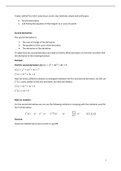
Today’s (Wed/Thur 8 & 9 July) lesson covers two relatively simple and brief topics:
Second derivatives
and finding the equation of the tangent to a curve at a point
Second derivatives
The second derivative is:
The rate of change of the derivative
The gradient of the curve of the derivative
The derivative of the derivative.
To determine the second derivative we need to find the (first) derivative of a function and then find
the derivative of the resulting function:
Example:
Find the second derivative of 𝒇(𝒙) = 𝒙𝟑 + 𝟐𝒙𝟐 + 𝟒𝒙 + 𝟕.
𝑓(𝑥) = 𝑥 3 + 2𝑥 2 + 4𝑥 + 7
𝑓′(𝑥) = 3𝑥 2 + 4𝑥 + 4
Now we need a different notation to distinguish between the first and second derivative, we will use
𝑓′′(𝑥), same symbol as the first derivative, but with two dashes.
𝑓′(𝑥) = 3𝑥 2 + 4𝑥 + 4
𝑓′′(𝑥) = 6𝑥 + 4
Note on notation:
For the second derivatives we can use the following notations in keeping with the notations used for
the first derivative:
𝑑2 𝑦
𝑓 ′′ (𝑥) 𝑜𝑟 𝑦′′ 𝑜𝑟 𝑓 (2) (𝑥) 𝑜𝑟 𝑜𝑟 𝐷𝑥2 [ 𝑓(𝑥)]
𝑑𝑥 2
Exercise:
Classroom Mathematics Exercise 8.8 no. pg 208
1
, Finding the equation of a tangent line to a function
The equation of any straight line is given in the form 𝑦 = 𝑚𝑥 + 𝑐 or 𝑦 − 𝑦1 = 𝑚(𝑥 − 𝑥1 )
But we know that 𝑚 = 𝑓′(𝑥)
This means that we need to find the derivative at the point of interest, substitute in the derivative as
the gradient along with the 𝑥 𝑎𝑛𝑑 𝑦 values from the coordinates of the point of interest, and then
we can solve for 𝑐. Lets give it a whirl…
Example:
Determine the equation of the tangent to 𝒇(𝒙) = 𝒙𝟐 + 𝟒𝒙 + 𝟑 at (𝟐; 𝟏𝟓).
We want 𝑦 = 𝑚𝑥 + 𝑐, where we have 𝑥 = 2 𝑎𝑛𝑑 𝑦 = 15, the remaining variables will be 𝑚 and
𝑐. We know that 𝑚 = 𝑓 ′ (𝑥) 𝑎𝑡 𝑥 = 2…
𝑓(𝑥) = 𝑥 2 + 4𝑥 + 3
𝑓′(𝑥) = 2𝑥 + 4
𝑓′(2) = 2(2) + 4
∴ 𝑚 = 𝑓′(𝑥) = 8
Now we only have 1 unknown, therefore we can substitute in and solve for 𝑐. *
𝑦 = 𝑚𝑥 + 𝑐
15 = 8 × 2 + 𝑐
15 = 16 + 𝑐
∴ 𝑐 = 15 − 16 = −1
Now we have 𝑚 = 8 and 𝑐 = −1, our equation is as follows:
𝑦 = 8𝑥 − 1
*Alternatively we use 𝑦 − 𝑦1 = 𝑚(𝑥 − 𝑥1 ) once we have our gradient we can substitute in:
𝑦 − 15 = 8(𝑥 − 2)
Then simplify and put in standard form:
𝑦 = 8𝑥 − 16 + 15
𝑦 = 8𝑥 − 1
This example was a nice one, for two main reasons, the function was a simple one so the derivative
was easy to find, and they gave us the full coordinates of the point of contact between the function
and the tangent, very often we will only be given the 𝑥 −value, and will have to substitute the given
𝑥 − value into the 𝑓(𝑥) to find the corresponding 𝑦 −value.
2
Second derivatives
and finding the equation of the tangent to a curve at a point
Second derivatives
The second derivative is:
The rate of change of the derivative
The gradient of the curve of the derivative
The derivative of the derivative.
To determine the second derivative we need to find the (first) derivative of a function and then find
the derivative of the resulting function:
Example:
Find the second derivative of 𝒇(𝒙) = 𝒙𝟑 + 𝟐𝒙𝟐 + 𝟒𝒙 + 𝟕.
𝑓(𝑥) = 𝑥 3 + 2𝑥 2 + 4𝑥 + 7
𝑓′(𝑥) = 3𝑥 2 + 4𝑥 + 4
Now we need a different notation to distinguish between the first and second derivative, we will use
𝑓′′(𝑥), same symbol as the first derivative, but with two dashes.
𝑓′(𝑥) = 3𝑥 2 + 4𝑥 + 4
𝑓′′(𝑥) = 6𝑥 + 4
Note on notation:
For the second derivatives we can use the following notations in keeping with the notations used for
the first derivative:
𝑑2 𝑦
𝑓 ′′ (𝑥) 𝑜𝑟 𝑦′′ 𝑜𝑟 𝑓 (2) (𝑥) 𝑜𝑟 𝑜𝑟 𝐷𝑥2 [ 𝑓(𝑥)]
𝑑𝑥 2
Exercise:
Classroom Mathematics Exercise 8.8 no. pg 208
1
, Finding the equation of a tangent line to a function
The equation of any straight line is given in the form 𝑦 = 𝑚𝑥 + 𝑐 or 𝑦 − 𝑦1 = 𝑚(𝑥 − 𝑥1 )
But we know that 𝑚 = 𝑓′(𝑥)
This means that we need to find the derivative at the point of interest, substitute in the derivative as
the gradient along with the 𝑥 𝑎𝑛𝑑 𝑦 values from the coordinates of the point of interest, and then
we can solve for 𝑐. Lets give it a whirl…
Example:
Determine the equation of the tangent to 𝒇(𝒙) = 𝒙𝟐 + 𝟒𝒙 + 𝟑 at (𝟐; 𝟏𝟓).
We want 𝑦 = 𝑚𝑥 + 𝑐, where we have 𝑥 = 2 𝑎𝑛𝑑 𝑦 = 15, the remaining variables will be 𝑚 and
𝑐. We know that 𝑚 = 𝑓 ′ (𝑥) 𝑎𝑡 𝑥 = 2…
𝑓(𝑥) = 𝑥 2 + 4𝑥 + 3
𝑓′(𝑥) = 2𝑥 + 4
𝑓′(2) = 2(2) + 4
∴ 𝑚 = 𝑓′(𝑥) = 8
Now we only have 1 unknown, therefore we can substitute in and solve for 𝑐. *
𝑦 = 𝑚𝑥 + 𝑐
15 = 8 × 2 + 𝑐
15 = 16 + 𝑐
∴ 𝑐 = 15 − 16 = −1
Now we have 𝑚 = 8 and 𝑐 = −1, our equation is as follows:
𝑦 = 8𝑥 − 1
*Alternatively we use 𝑦 − 𝑦1 = 𝑚(𝑥 − 𝑥1 ) once we have our gradient we can substitute in:
𝑦 − 15 = 8(𝑥 − 2)
Then simplify and put in standard form:
𝑦 = 8𝑥 − 16 + 15
𝑦 = 8𝑥 − 1
This example was a nice one, for two main reasons, the function was a simple one so the derivative
was easy to find, and they gave us the full coordinates of the point of contact between the function
and the tangent, very often we will only be given the 𝑥 −value, and will have to substitute the given
𝑥 − value into the 𝑓(𝑥) to find the corresponding 𝑦 −value.
2