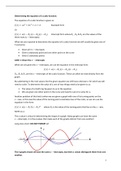
Determining the equation of a cubic function:
The equation of a cubic function is given as:
𝑓(𝑥) = 𝑎𝑥 3 + 𝑏𝑥 2 + 𝑐𝑥 + 𝑑 Standard form
Or
𝑓(𝑥) = 𝑎(𝑥 − 𝑅1 )(𝑥 − 𝑅2 )(𝑥 − 𝑅3 ) Intercept form where 𝑅1 , 𝑅2 & 𝑅3 are the values of the
three roots (𝑥 −intercepts).
When we are required to determine the equation of a cubic function we will usually be given one of
3 scenarios:
Given all 3 𝑥 −intercepts
Given a stationary point and one other point on the curve
Given 2 stationary points
CASE 1: Given the 𝒙 − intercepts
When we are given the 𝑥 −intercepts, we use the equation in the intercept form:
𝑓(𝑥) = 𝑎(𝑥 − 𝑅1 )(𝑥 − 𝑅2 )(𝑥 − 𝑅3 )
𝑅1 , 𝑅2 & 𝑅3 are the 𝑥 −intercepts of the cubic function. These can often be read directly from the
graph.
By substituting in the root values into the given equation we still have unknown 𝑎 for which we will
need to solve. To determine the value of 𝑎 one of two things need to be given to us:
1. The value of 𝑎 itself may be given to us in the question.
2. We are given one other point on the curve and need to sub in to solve for 𝑎.
Another problem of this kind is when we are given a graph with one of its turning points on the
𝑥 −axis, in this case the value of the turning point constitutes two of the roots, so we can use the
equation in the form:
𝑓(𝑥) = 𝑎(𝑥 − 𝑅1 )(𝑥 − 𝑅2 )2 where 𝑅2 is the value of the turning point that lies on the 𝑥 −axis.
NOTE on 𝑎:
The 𝑎 value is critical in determining the shape of a graph. Many graphs can have the same
𝑥 −intercepts, it is the 𝑎values that make each of the graphs distinct from one another!
Long story short: DO NOT FORGET 𝒂!
𝑦
(𝑎; 0) (𝑏; 0) (𝑐; 0) 𝑥
The 3 graphs shown all have the same 𝒙 −intercepts, but their 𝒂 values distinguish them from one
another.
1
, Example:
The graph below has the equation 𝒚 = 𝟐𝒙𝟑 + 𝒃𝒙𝟐 + 𝒄𝒙 + 𝒅.
a) Determine the value of 𝒃, 𝒄 & 𝒅 if the graph has 𝒙 −intercepts of (−𝟏; 𝟎) , (𝟏; 𝟎) and
(𝟐; 𝟎).
b) Determine the 𝒙 −values of the stationary points. Write your answer in simplest surd form.
𝑦
(−1; 0) (1; 0) (2; 0) 𝑥
a) 𝑦 = 𝑎(𝑥 − 𝑅1 )(𝑥 − 𝑅2 )(𝑥 − 𝑅3 )
we know based on the given information in the question that 𝑎 = 2 and that
𝑅1 , 𝑅2 & 𝑅3 are the values of the 𝑥 −intercepts
𝑦 = 2(𝑥 − (−1))(𝑥 − 1)(𝑥 − 2)
𝑦 = 2(𝑥 + 1)(𝑥 − 1)(𝑥 − 2)
𝑦 = 2(𝑥 2 − 1)(𝑥 − 2)
𝑦 = 2(𝑥 3 − 𝑥 − 2𝑥 2 + 2)
𝑦 = 2𝑥 3 − 4𝑥 2 − 2𝑥 + 4
∴ 𝑏 = −4 , 𝑐 = −2 𝑎𝑛𝑑 𝑑 = 4
b) Stationary points at 𝑦 ′ = 0
𝑦 = 2𝑥 3 − 4𝑥 2 − 2𝑥 + 4
𝑦 ′ = 6𝑥 2 − 8𝑥 − 2
∴ 𝑠𝑡𝑎𝑡 𝑝𝑡𝑠 𝑎𝑡 6𝑥 2 − 8𝑥 − 2 = 0
3𝑥 2 − 4𝑥 − 1 = 0
−𝑏±√𝑏2 −4𝑎𝑐
𝑥= 2𝑎
−(−4)±√(−4)2 −4(3)(−1)
𝑥= 2(3)
4±√28
𝑥= 6
2±√7
𝑥= 3
2
The equation of a cubic function is given as:
𝑓(𝑥) = 𝑎𝑥 3 + 𝑏𝑥 2 + 𝑐𝑥 + 𝑑 Standard form
Or
𝑓(𝑥) = 𝑎(𝑥 − 𝑅1 )(𝑥 − 𝑅2 )(𝑥 − 𝑅3 ) Intercept form where 𝑅1 , 𝑅2 & 𝑅3 are the values of the
three roots (𝑥 −intercepts).
When we are required to determine the equation of a cubic function we will usually be given one of
3 scenarios:
Given all 3 𝑥 −intercepts
Given a stationary point and one other point on the curve
Given 2 stationary points
CASE 1: Given the 𝒙 − intercepts
When we are given the 𝑥 −intercepts, we use the equation in the intercept form:
𝑓(𝑥) = 𝑎(𝑥 − 𝑅1 )(𝑥 − 𝑅2 )(𝑥 − 𝑅3 )
𝑅1 , 𝑅2 & 𝑅3 are the 𝑥 −intercepts of the cubic function. These can often be read directly from the
graph.
By substituting in the root values into the given equation we still have unknown 𝑎 for which we will
need to solve. To determine the value of 𝑎 one of two things need to be given to us:
1. The value of 𝑎 itself may be given to us in the question.
2. We are given one other point on the curve and need to sub in to solve for 𝑎.
Another problem of this kind is when we are given a graph with one of its turning points on the
𝑥 −axis, in this case the value of the turning point constitutes two of the roots, so we can use the
equation in the form:
𝑓(𝑥) = 𝑎(𝑥 − 𝑅1 )(𝑥 − 𝑅2 )2 where 𝑅2 is the value of the turning point that lies on the 𝑥 −axis.
NOTE on 𝑎:
The 𝑎 value is critical in determining the shape of a graph. Many graphs can have the same
𝑥 −intercepts, it is the 𝑎values that make each of the graphs distinct from one another!
Long story short: DO NOT FORGET 𝒂!
𝑦
(𝑎; 0) (𝑏; 0) (𝑐; 0) 𝑥
The 3 graphs shown all have the same 𝒙 −intercepts, but their 𝒂 values distinguish them from one
another.
1
, Example:
The graph below has the equation 𝒚 = 𝟐𝒙𝟑 + 𝒃𝒙𝟐 + 𝒄𝒙 + 𝒅.
a) Determine the value of 𝒃, 𝒄 & 𝒅 if the graph has 𝒙 −intercepts of (−𝟏; 𝟎) , (𝟏; 𝟎) and
(𝟐; 𝟎).
b) Determine the 𝒙 −values of the stationary points. Write your answer in simplest surd form.
𝑦
(−1; 0) (1; 0) (2; 0) 𝑥
a) 𝑦 = 𝑎(𝑥 − 𝑅1 )(𝑥 − 𝑅2 )(𝑥 − 𝑅3 )
we know based on the given information in the question that 𝑎 = 2 and that
𝑅1 , 𝑅2 & 𝑅3 are the values of the 𝑥 −intercepts
𝑦 = 2(𝑥 − (−1))(𝑥 − 1)(𝑥 − 2)
𝑦 = 2(𝑥 + 1)(𝑥 − 1)(𝑥 − 2)
𝑦 = 2(𝑥 2 − 1)(𝑥 − 2)
𝑦 = 2(𝑥 3 − 𝑥 − 2𝑥 2 + 2)
𝑦 = 2𝑥 3 − 4𝑥 2 − 2𝑥 + 4
∴ 𝑏 = −4 , 𝑐 = −2 𝑎𝑛𝑑 𝑑 = 4
b) Stationary points at 𝑦 ′ = 0
𝑦 = 2𝑥 3 − 4𝑥 2 − 2𝑥 + 4
𝑦 ′ = 6𝑥 2 − 8𝑥 − 2
∴ 𝑠𝑡𝑎𝑡 𝑝𝑡𝑠 𝑎𝑡 6𝑥 2 − 8𝑥 − 2 = 0
3𝑥 2 − 4𝑥 − 1 = 0
−𝑏±√𝑏2 −4𝑎𝑐
𝑥= 2𝑎
−(−4)±√(−4)2 −4(3)(−1)
𝑥= 2(3)
4±√28
𝑥= 6
2±√7
𝑥= 3
2