Poetry 2021
Poem 1:
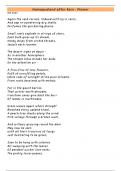
The Cry of South Africa Oliver Schreiner (1855-1920)
Biographical information:
She was born in the eastern caper and raised in a missionary, liberal,
progressive family
She identified as south African rather than British
During the Anglo-Boer war she was expected to take the side of the
British but took the side of the Boers because she resented British
hegemony.
She felt very protective towards the Boers and admired them for their
bravery
She was a feminist and had very strong gender and political beliefs
Author of ‘story of an African farm’
Title
Emotive title
Says ‘cry of south Africa’ rather than ‘cry of the Boers’ because she
doesn’t believe that the British in south Africa are south Africans. So,
when she says south Africa she is referring to the Boers
This title is very broad and less specific to the poem. By just reading the
title not much is given as to what the poem is about
Imagery:
Line 3: ‘breast’ and line 5: ‘sons’; maternal imagery
Line 10: ‘bosom’ ‘my children’ maternal imagery
Figures of speech:
Extended metaphor of south Africa as the mother
Repetition of ‘give back my dead’ this emphasis the pain and grief south
Africa is feeling at the loss of her children, the Boers.
Tone:
Anguish, despair, indignation, grief-stricken, anger, desperation
Towards the British: angry, schreiners and extremely hostile
1
, Towards the Boers: loving, admirable, protective
Mood:
Sympathetic, sorrowful as well as a hostile and angry
Line by line analysis:
Line 1: “Give me back my dead!”
This is a command sentence
By this being a command sentence it conveys a sense of power.
She is speaking with the power of a bereaved mother who mourns the
loss of her children (the Boers).
“my” ,possessive pronoun, shows her (sa) connection to her children. By
doing this it enforced the connection the Boers have with the land of
south Africa and says that south Africa belongs to them.
‘!’ reinforces the intensity of the statement as well as the urgency
Line 2: “ they who by kop and fountain”
‘kop’ Afrikaans word, by using Afrikaans schreiner is giving the poem a
south African setting.
‘kop’ can also refer to a hill
‘fountain’ refers to all rivers and mountains in south Africa- fertility and
abundance
Speaking about two geographical features
Line 3:
‘first saw the light’ refers to birth, saying how south Africa gave birth to
the Boers
‘Breast’ maternal organ - gives milk that nourishes the child to grow.
is also an image of love and tenderness
suggests that the Boers are the sons of the land
‘rocky’ – refers to the diversity of the south African landscape, the
wetland the dessert
She is showing the beauty and fertility of the south African land.
‘!’ sense of urgency
Line 4:
Repetition of line 13
2
, Used to split the stage of the Boers lives, splits birth and childhood
Line 5:
‘sons’ and ‘played’ emphasis how young they are, presumably toddlers.
‘on me’ carrying on the extended metaphor of south African being the
mother.
‘played’ can also show how simple and fun life was, nothing serious or
drastic has come about in their young lives yet
Line 6:
‘childhood’s dews’ can be linked with ‘first saw the light’ (line 3) as dew
is associated with dawn which is the time of day when the sun first starts
to rise, and the first light of the day appears.
‘dews’ symbolizes a new day and birth. It can also be interpreted in the
aspect of water as dew consists of tiny water droplets. Water in this case
is a symbol of innocence and as the day continues and the sun continues
to rise this innocents gets evaporated with the sun.
This means that as these children grow up just like the sun rises their
innocents will be evaporated and slowly taken as they are forced into
war.
‘still rested on their heads’ this refers to the dew that never evaporated
from the children’s heads.
This is saying that the children’s innocents never evaporated and still
rests on their heads as they are dead as a results of war (concentration
camps) and will never get to grow up. They are still with their childhood
innocents
Line 7:
3rd repetition
Each time this line is repeated it accentuates the grief that south Africa is
suffering
Splits their childhood days and them going to war and dying
Line 8:
‘thou’ British diction, indicated that south Africa is directed/speaking
(more shouting out of grief) to the British about the loss of her children.
3
, ‘riven’ – archaic word that means torn apart or severed. The word has
within it connotations of extreme violence. This violence is echoed in
line 9
Line 9:
‘arms’ refers to weaponry used in war fair, as well as it creates imagery
of these British soldiers ripping children away from their mothers with
their arms.
‘loud called’ refers to how the soldiers were called to the army. Also
enforced the old lie in dulce decorum Est
‘from earth farthest bound’ – refers to how these soldier are from
Britain. A from the corner of the earth far from south Africa. Reinforces
the lack of connection of the British to the land of south Africa as well as
reinforcing the strong connection the Boers have to the land.
The British were efficient and cold whereas the Boers fought for the land
that they love and believe is there’s
Line 10:
‘bosom’ like ‘breast’ (line3) however is rather a juxtaposing as instead of
the ‘brest’ in line 3 where it gives the children milk to nourish and grow,
the ‘bosom’ is covered in the blood of her children. These are
contrasting as the milk with ‘breast’ represents life and fertility whereas
the blood in ‘bosom’ represents death.
Antithetical, the thing that gave them life is where they lie to die
‘!’- urgency
Line 11:
Repetition
Emphasis the tragedy and hatred towards the British
Line 12:
This looks at the childhood and death
‘!’ stresses the tragedy
Themes and messages:
4
Poem 1:
The Cry of South Africa Oliver Schreiner (1855-1920)
Biographical information:
She was born in the eastern caper and raised in a missionary, liberal,
progressive family
She identified as south African rather than British
During the Anglo-Boer war she was expected to take the side of the
British but took the side of the Boers because she resented British
hegemony.
She felt very protective towards the Boers and admired them for their
bravery
She was a feminist and had very strong gender and political beliefs
Author of ‘story of an African farm’
Title
Emotive title
Says ‘cry of south Africa’ rather than ‘cry of the Boers’ because she
doesn’t believe that the British in south Africa are south Africans. So,
when she says south Africa she is referring to the Boers
This title is very broad and less specific to the poem. By just reading the
title not much is given as to what the poem is about
Imagery:
Line 3: ‘breast’ and line 5: ‘sons’; maternal imagery
Line 10: ‘bosom’ ‘my children’ maternal imagery
Figures of speech:
Extended metaphor of south Africa as the mother
Repetition of ‘give back my dead’ this emphasis the pain and grief south
Africa is feeling at the loss of her children, the Boers.
Tone:
Anguish, despair, indignation, grief-stricken, anger, desperation
Towards the British: angry, schreiners and extremely hostile
1
, Towards the Boers: loving, admirable, protective
Mood:
Sympathetic, sorrowful as well as a hostile and angry
Line by line analysis:
Line 1: “Give me back my dead!”
This is a command sentence
By this being a command sentence it conveys a sense of power.
She is speaking with the power of a bereaved mother who mourns the
loss of her children (the Boers).
“my” ,possessive pronoun, shows her (sa) connection to her children. By
doing this it enforced the connection the Boers have with the land of
south Africa and says that south Africa belongs to them.
‘!’ reinforces the intensity of the statement as well as the urgency
Line 2: “ they who by kop and fountain”
‘kop’ Afrikaans word, by using Afrikaans schreiner is giving the poem a
south African setting.
‘kop’ can also refer to a hill
‘fountain’ refers to all rivers and mountains in south Africa- fertility and
abundance
Speaking about two geographical features
Line 3:
‘first saw the light’ refers to birth, saying how south Africa gave birth to
the Boers
‘Breast’ maternal organ - gives milk that nourishes the child to grow.
is also an image of love and tenderness
suggests that the Boers are the sons of the land
‘rocky’ – refers to the diversity of the south African landscape, the
wetland the dessert
She is showing the beauty and fertility of the south African land.
‘!’ sense of urgency
Line 4:
Repetition of line 13
2
, Used to split the stage of the Boers lives, splits birth and childhood
Line 5:
‘sons’ and ‘played’ emphasis how young they are, presumably toddlers.
‘on me’ carrying on the extended metaphor of south African being the
mother.
‘played’ can also show how simple and fun life was, nothing serious or
drastic has come about in their young lives yet
Line 6:
‘childhood’s dews’ can be linked with ‘first saw the light’ (line 3) as dew
is associated with dawn which is the time of day when the sun first starts
to rise, and the first light of the day appears.
‘dews’ symbolizes a new day and birth. It can also be interpreted in the
aspect of water as dew consists of tiny water droplets. Water in this case
is a symbol of innocence and as the day continues and the sun continues
to rise this innocents gets evaporated with the sun.
This means that as these children grow up just like the sun rises their
innocents will be evaporated and slowly taken as they are forced into
war.
‘still rested on their heads’ this refers to the dew that never evaporated
from the children’s heads.
This is saying that the children’s innocents never evaporated and still
rests on their heads as they are dead as a results of war (concentration
camps) and will never get to grow up. They are still with their childhood
innocents
Line 7:
3rd repetition
Each time this line is repeated it accentuates the grief that south Africa is
suffering
Splits their childhood days and them going to war and dying
Line 8:
‘thou’ British diction, indicated that south Africa is directed/speaking
(more shouting out of grief) to the British about the loss of her children.
3
, ‘riven’ – archaic word that means torn apart or severed. The word has
within it connotations of extreme violence. This violence is echoed in
line 9
Line 9:
‘arms’ refers to weaponry used in war fair, as well as it creates imagery
of these British soldiers ripping children away from their mothers with
their arms.
‘loud called’ refers to how the soldiers were called to the army. Also
enforced the old lie in dulce decorum Est
‘from earth farthest bound’ – refers to how these soldier are from
Britain. A from the corner of the earth far from south Africa. Reinforces
the lack of connection of the British to the land of south Africa as well as
reinforcing the strong connection the Boers have to the land.
The British were efficient and cold whereas the Boers fought for the land
that they love and believe is there’s
Line 10:
‘bosom’ like ‘breast’ (line3) however is rather a juxtaposing as instead of
the ‘brest’ in line 3 where it gives the children milk to nourish and grow,
the ‘bosom’ is covered in the blood of her children. These are
contrasting as the milk with ‘breast’ represents life and fertility whereas
the blood in ‘bosom’ represents death.
Antithetical, the thing that gave them life is where they lie to die
‘!’- urgency
Line 11:
Repetition
Emphasis the tragedy and hatred towards the British
Line 12:
This looks at the childhood and death
‘!’ stresses the tragedy
Themes and messages:
4