HUMAN REPRODUCTION
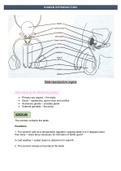
Male reproductive organs
What makes up the reproductive organs?
• Primary sex organs – the testis
• Ducts – epididymis, sperm duct and urethra
• Accessory glands – prostate gland
• External genitalia – the penis
SCROTUM
The scrotum contains the testis
Functions
1. The scrotum acts as a temperature regulator, keeping testis 2 to 3 degrees lower
than body – lower temp necessary for formation of fertile sperm
In cold weather = pulled closer to abdomen for warmth
2. The scrotum houses and protects the testis
, HUMAN REPRODUCTION
TESTIS
Two oval structures, suspended outside the body in the scrotum
In embryonic stage the testis are in the abdominal cavity just below kidneys
Before birth they descend into the scrotum
- Consist of many compartments or lobules which contain highly convoluted
tubules, the seminiferous tubules (250m per testis)
- Germinal epithelium lines the tubules
- Between the tubules are groups of endocrine cells, the interstitial cells or cells
of Leydig
Functions
The testis produce:
1. Sperm (male gamete) by germinal layer
2. Testosterone by interstitial cells
, HUMAN REPRODUCTION
DUCTS
The ducts include the:
a. Epididymis
b. Sperm duct
c. Urethra
a. Epididymis
Seminiferous tubules join to form the epididymis, 5m long
Functions
Immature sperm enter the epididymis where they:
1. Mature, to become motile and fertile
2. Are stored for several months
b. Sperm Duct
The muscular sperm duct is a continuation of the epididymis
Leaves the scrotum à passes through prostate gland à enters urethra
Function
Sperm duct pushes mature sperm forward by strong peristaltic waves from
epididymis into urethra = ejaculation
c. Urethra
Is a duct at the end of the uro-genital system leading to exterior
Function
Forms a common duct for the transportation of semen and urine
PROSTATE GLAND
Plum-sized gland, surrounds the urethra at base of bladder
Male reproductive organs
What makes up the reproductive organs?
• Primary sex organs – the testis
• Ducts – epididymis, sperm duct and urethra
• Accessory glands – prostate gland
• External genitalia – the penis
SCROTUM
The scrotum contains the testis
Functions
1. The scrotum acts as a temperature regulator, keeping testis 2 to 3 degrees lower
than body – lower temp necessary for formation of fertile sperm
In cold weather = pulled closer to abdomen for warmth
2. The scrotum houses and protects the testis
, HUMAN REPRODUCTION
TESTIS
Two oval structures, suspended outside the body in the scrotum
In embryonic stage the testis are in the abdominal cavity just below kidneys
Before birth they descend into the scrotum
- Consist of many compartments or lobules which contain highly convoluted
tubules, the seminiferous tubules (250m per testis)
- Germinal epithelium lines the tubules
- Between the tubules are groups of endocrine cells, the interstitial cells or cells
of Leydig
Functions
The testis produce:
1. Sperm (male gamete) by germinal layer
2. Testosterone by interstitial cells
, HUMAN REPRODUCTION
DUCTS
The ducts include the:
a. Epididymis
b. Sperm duct
c. Urethra
a. Epididymis
Seminiferous tubules join to form the epididymis, 5m long
Functions
Immature sperm enter the epididymis where they:
1. Mature, to become motile and fertile
2. Are stored for several months
b. Sperm Duct
The muscular sperm duct is a continuation of the epididymis
Leaves the scrotum à passes through prostate gland à enters urethra
Function
Sperm duct pushes mature sperm forward by strong peristaltic waves from
epididymis into urethra = ejaculation
c. Urethra
Is a duct at the end of the uro-genital system leading to exterior
Function
Forms a common duct for the transportation of semen and urine
PROSTATE GLAND
Plum-sized gland, surrounds the urethra at base of bladder