

chromosomes & meiosis
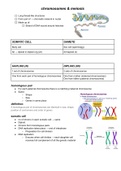
Long thread-like structures
Form part of → chromatin network in nuclei
Made up of:
Strand of DNA wound around histones
SOMATIC CELL GAMETE
Body cell Sex cell (sperm/egg)
All → diploid in diploid org (2n) All haploid (n)
HAPLOID (N) DIPLOID (2N)
1 set of chromosomes 2 sets of chromosomes
One from each pair of homologous chromosomes One from mother (maternal chromosomes)
One from father (paternal chromosomes)
homologous pair
● For each paternal chromosome there is a matching maternal chromosome
● Same:
○ Shape
○ Size
○ Genes in same place
definition:
A homologous pair of chromosomes are identical in size, shape,
position of centromere and order of genes
somatic cell
● no of chromo in each somatic cell → same
● Diploid
● Chromo form homologous pairs
● DNA replication takes place → end of interphase
○ Preparation for cell division
● DNA replication
○ Ensures when cell divides → each daughter cell
receives full complement of all the genetic material
, DNA replication
● Duplicated chromosomes
● Takes place → during interphase
● In cell cycle
Pair of chromo after DNA rep
Forms bivalent
1 bivalent → 2 homo chromo → 4 chromatids
meiosis
Takes place:
ANIMALS PLANTS
Testes → form sperm → spermatogenesis microsporangia/ pollen sacs in male nathers →
microspores
Ovaries → form egg → oogenesis megasporangia / ovules in female ovaries →
megaspores
During meiosis
● Cell division
● In reproductive organs (plants & animals)
● no of chromo → halved from diploid number of chromo in parent call
● To haploid no in daughter cells
● Male gamete fuses with female during sexual reproduction
○ Fertilisation takes place
○ Number of chromo → doubled
○ Diploid zygote formed
● Meiosis cancels out the doubling effect of fertilisation
● DNA replication → end of interphase
meiosis is divided into 2 divisions
● meiosis 1 → reduction division
○ Results in 2 cells
○ no of chromo is halved from 2n → n
○ PMAT 1
Long thread-like structures
Form part of → chromatin network in nuclei
Made up of:
Strand of DNA wound around histones
SOMATIC CELL GAMETE
Body cell Sex cell (sperm/egg)
All → diploid in diploid org (2n) All haploid (n)
HAPLOID (N) DIPLOID (2N)
1 set of chromosomes 2 sets of chromosomes
One from each pair of homologous chromosomes One from mother (maternal chromosomes)
One from father (paternal chromosomes)
homologous pair
● For each paternal chromosome there is a matching maternal chromosome
● Same:
○ Shape
○ Size
○ Genes in same place
definition:
A homologous pair of chromosomes are identical in size, shape,
position of centromere and order of genes
somatic cell
● no of chromo in each somatic cell → same
● Diploid
● Chromo form homologous pairs
● DNA replication takes place → end of interphase
○ Preparation for cell division
● DNA replication
○ Ensures when cell divides → each daughter cell
receives full complement of all the genetic material
, DNA replication
● Duplicated chromosomes
● Takes place → during interphase
● In cell cycle
Pair of chromo after DNA rep
Forms bivalent
1 bivalent → 2 homo chromo → 4 chromatids
meiosis
Takes place:
ANIMALS PLANTS
Testes → form sperm → spermatogenesis microsporangia/ pollen sacs in male nathers →
microspores
Ovaries → form egg → oogenesis megasporangia / ovules in female ovaries →
megaspores
During meiosis
● Cell division
● In reproductive organs (plants & animals)
● no of chromo → halved from diploid number of chromo in parent call
● To haploid no in daughter cells
● Male gamete fuses with female during sexual reproduction
○ Fertilisation takes place
○ Number of chromo → doubled
○ Diploid zygote formed
● Meiosis cancels out the doubling effect of fertilisation
● DNA replication → end of interphase
meiosis is divided into 2 divisions
● meiosis 1 → reduction division
○ Results in 2 cells
○ no of chromo is halved from 2n → n
○ PMAT 1



