

PYC3701
CHAPTER 9 – PROSOCIAL BEHAVIOUR
Key Term Explanation Pg.
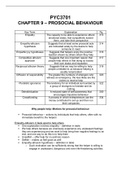
Empathy The capacity to be able to experience others’ 313
emotional states, feel sympathetic toward
them, and take their perspective
Empathy-altruism Suggests that at least some prosocial acts 314
hypothesis are motivated solely by the desire to help
someone in need
Empathic joy hypotheses Suggests that helpers enjoy the positive 316
reaction shown by others whom they help
Competitive altruism Suggests that one important reason that 317
approach people help others is that doing so boosts
their own status and reputation
Reciprocal altruism theory Suggests that we may be willing to help 318
people unrelated to us because helping is
usually reciprocated
Diffusion of responsibility The greater the numbers of strangers who 320
witness an emergency, the less likely are the
victims to receive help
Pluralistic ignorance The tendency for an individual surrounded by 322
a group of strangers to hesitate and do
nothing
Deindividuation A reduced state of self-awareness that 330
encourages impulsive behaviour
Crowdfunding A process in which entrepreneurs use the 334
money contributed to set up and then run
their companies
Why people help: Motives for prosocial behaviour
Prosocial behaviour – actions by individuals that help others, often with no
immediate benefit to the helpers
Empathy-Altruism: It feels good to help others
One explanation involves empathy – definition in table
We help others because we vicariously experience any unpleasant feelings
they are experiencing and we want to help bring their negative feelings to an
end, and one way to do this is to help them
Unselfish – offer help for no extrinsic reason
Selfish – makes us feel good as well
Empathy-altruism hypothesis – definition in table
o Such motivation can be sufficiently strong that the helper is willing to
engage in unpleasant, dangerous and even life-threatening activities
CHAPTER 9 – PROSOCIAL BEHAVIOUR
Key Term Explanation Pg.
Empathy The capacity to be able to experience others’ 313
emotional states, feel sympathetic toward
them, and take their perspective
Empathy-altruism Suggests that at least some prosocial acts 314
hypothesis are motivated solely by the desire to help
someone in need
Empathic joy hypotheses Suggests that helpers enjoy the positive 316
reaction shown by others whom they help
Competitive altruism Suggests that one important reason that 317
approach people help others is that doing so boosts
their own status and reputation
Reciprocal altruism theory Suggests that we may be willing to help 318
people unrelated to us because helping is
usually reciprocated
Diffusion of responsibility The greater the numbers of strangers who 320
witness an emergency, the less likely are the
victims to receive help
Pluralistic ignorance The tendency for an individual surrounded by 322
a group of strangers to hesitate and do
nothing
Deindividuation A reduced state of self-awareness that 330
encourages impulsive behaviour
Crowdfunding A process in which entrepreneurs use the 334
money contributed to set up and then run
their companies
Why people help: Motives for prosocial behaviour
Prosocial behaviour – actions by individuals that help others, often with no
immediate benefit to the helpers
Empathy-Altruism: It feels good to help others
One explanation involves empathy – definition in table
We help others because we vicariously experience any unpleasant feelings
they are experiencing and we want to help bring their negative feelings to an
end, and one way to do this is to help them
Unselfish – offer help for no extrinsic reason
Selfish – makes us feel good as well
Empathy-altruism hypothesis – definition in table
o Such motivation can be sufficiently strong that the helper is willing to
engage in unpleasant, dangerous and even life-threatening activities


