1
Grade 12 Business Studies
Luthando Zulu – Teach Me 2
Investments:
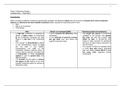
When one looks at different investment opportunities available, the following criteria that can be used to evaluate each of the investment
options and determine the most suitable investment option required at a particular point in time:
Risk
Return on investment
Time frames
Risk Return on investment (ROI) Timelines (period of investment)
o A high-risk investment is expected to o A tool to measure the efficiency of the o The longer the period of investment
deliver a higher return on investment investment. available to the investor, the greater
IF the investment succeeds but also o It is an indicator of what the investor the risks are that the investor can
result in a big loss if the investment will get back over and above the afford to take. A 20-year-old who
fails. original investment made. wants to make provision for retirement
o The concept of diversification relates will have 45 years before retirement to
to risk. Diversification means all eggs recover losses.
are not kept in one basket. o For a person of 50yrs for example there
Consequently, not ONE of the is much less time before retirement
investment vehicles (options) below is age; and clearly cannot afford to take
used to hold all reserves, but rather that too many risks regarding his/her
a combination of these investment investments.
options is used to spread risks over
different assets.
o The investor has the option to choose
the degree of risk relative to the most
suitable investment option for him/her at
that point in time.
, 2
Different investment strategies include:
Growth o High risk
Investment o Long-term capital growth, rather than a monthly income
Strategy o Shares (equities) on the JSE may be considered, with Blue-chip shares reducing the risk factor somewhat
Balanced o Medium risk
Investment o Aim is capital growth, with some monthly income as well
Strategy o A combination of shares (equities) and some interest-bearing investment like a fixed deposit will be
considered or investment in property with a monthly rent income
Defensive o Low risk
Investment o Emphasis is more on a monthly income, but the investor wants some capital growth as well
Strategy o Investments in property and money in the bank, with a much smaller investment in equities
Conservative o Conservative investor does not want risk
Investment o Focus is on a monthly income, while preferably maintaining the capital amount of the investment
Strategy o The majority of the investment will be in property and cash instruments to generate the monthly income. Of
course, investment in the correct property will lead to capital growth.
INVESTMENT OPTIONS/INSTRUMENTS:
1 Equities/shares:
, 3
Equities are also known as shares in a company.
Some companies are listed on the JSE Ltd (hereafter just called JSE), but other companies are unlisted.
We will look at equities/shares, in listed companies, because information on the shares' performance is regularly available.
If company is unlisted, it will not make information on the financial performance of the business available to anybody but
shareholders, banks, creditors and SARS - not to general public. Without this financial info, it will be impossible to evaluate whether the
investment has delivered acceptable returns.
The owners of shares (equities) each own a portion of the business. There are two options/methods to become a shareholder in a
JSE listed company:
o The shares were bought from the company when shares were issued the first time, thus the person who bought the shares
contributes capital to the business.
o The shares were bought on the JSE from a previous shareholder. The money paid for the share is not going to the business,
but to the person who sold his/her shares. Shares bought and sold on the JSE have no impact on the capital available to the
business.
Stock market terminology include:
Bull I Bear The terms 'bullish' and 'bearish' are used to describe the market mood. Bulls are optimistic investors who believe
market share prices will go up. Bears on the other hand have a more negative outlook and believe share prices will go down.
Preference Holders of preference shares can participate in the profits of a company before the dividends are declared to the
shares ordinary and other shareholders
Spread The difference between the asking price (selling price of shares) and the bid price (price at which a buyer buys
shares).
Market The share price of a company multiplied by the number of shares in issue.
capitalisation
Rights offer Offer to existing shareholders to have first option to buy new shares offered for sale when company wants to raise
more capital.
Blue chip Shares in the most solid companies on the stock exchange, which usually have large market values and a steady
shares growth pattern in share value.
Grade 12 Business Studies
Luthando Zulu – Teach Me 2
Investments:
When one looks at different investment opportunities available, the following criteria that can be used to evaluate each of the investment
options and determine the most suitable investment option required at a particular point in time:
Risk
Return on investment
Time frames
Risk Return on investment (ROI) Timelines (period of investment)
o A high-risk investment is expected to o A tool to measure the efficiency of the o The longer the period of investment
deliver a higher return on investment investment. available to the investor, the greater
IF the investment succeeds but also o It is an indicator of what the investor the risks are that the investor can
result in a big loss if the investment will get back over and above the afford to take. A 20-year-old who
fails. original investment made. wants to make provision for retirement
o The concept of diversification relates will have 45 years before retirement to
to risk. Diversification means all eggs recover losses.
are not kept in one basket. o For a person of 50yrs for example there
Consequently, not ONE of the is much less time before retirement
investment vehicles (options) below is age; and clearly cannot afford to take
used to hold all reserves, but rather that too many risks regarding his/her
a combination of these investment investments.
options is used to spread risks over
different assets.
o The investor has the option to choose
the degree of risk relative to the most
suitable investment option for him/her at
that point in time.
, 2
Different investment strategies include:
Growth o High risk
Investment o Long-term capital growth, rather than a monthly income
Strategy o Shares (equities) on the JSE may be considered, with Blue-chip shares reducing the risk factor somewhat
Balanced o Medium risk
Investment o Aim is capital growth, with some monthly income as well
Strategy o A combination of shares (equities) and some interest-bearing investment like a fixed deposit will be
considered or investment in property with a monthly rent income
Defensive o Low risk
Investment o Emphasis is more on a monthly income, but the investor wants some capital growth as well
Strategy o Investments in property and money in the bank, with a much smaller investment in equities
Conservative o Conservative investor does not want risk
Investment o Focus is on a monthly income, while preferably maintaining the capital amount of the investment
Strategy o The majority of the investment will be in property and cash instruments to generate the monthly income. Of
course, investment in the correct property will lead to capital growth.
INVESTMENT OPTIONS/INSTRUMENTS:
1 Equities/shares:
, 3
Equities are also known as shares in a company.
Some companies are listed on the JSE Ltd (hereafter just called JSE), but other companies are unlisted.
We will look at equities/shares, in listed companies, because information on the shares' performance is regularly available.
If company is unlisted, it will not make information on the financial performance of the business available to anybody but
shareholders, banks, creditors and SARS - not to general public. Without this financial info, it will be impossible to evaluate whether the
investment has delivered acceptable returns.
The owners of shares (equities) each own a portion of the business. There are two options/methods to become a shareholder in a
JSE listed company:
o The shares were bought from the company when shares were issued the first time, thus the person who bought the shares
contributes capital to the business.
o The shares were bought on the JSE from a previous shareholder. The money paid for the share is not going to the business,
but to the person who sold his/her shares. Shares bought and sold on the JSE have no impact on the capital available to the
business.
Stock market terminology include:
Bull I Bear The terms 'bullish' and 'bearish' are used to describe the market mood. Bulls are optimistic investors who believe
market share prices will go up. Bears on the other hand have a more negative outlook and believe share prices will go down.
Preference Holders of preference shares can participate in the profits of a company before the dividends are declared to the
shares ordinary and other shareholders
Spread The difference between the asking price (selling price of shares) and the bid price (price at which a buyer buys
shares).
Market The share price of a company multiplied by the number of shares in issue.
capitalisation
Rights offer Offer to existing shareholders to have first option to buy new shares offered for sale when company wants to raise
more capital.
Blue chip Shares in the most solid companies on the stock exchange, which usually have large market values and a steady
shares growth pattern in share value.