
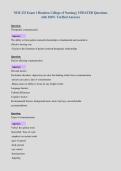
NUR 233 Exam 1 Hondros College of Nursing | UPDATED Questions
with 100% Verified Answers
Question:
Therapeutic communication
Answer:
The ability to form patient-centered relationships is fundamental and essential to
effective nursing care
-Crucial to the formation of patient-centered therapeutic relationships
Question:
Factors affecting communication
Answer:
Personal factors:
Psychiatric disorders- depression can slow the thinking which slows communication
-anxiety can cause a lack of concentration
-Mania causes in ability to focus for any length of time
Language barriers
Cultural differences
Cognitive factors
Environmental Factors: background noise, lack of privacy, uncomfortable
accommodations
Question:
Types of communication
Answer:
Verbal- the spoken word
Nonverbal- Tone of voice
-emphasis on certain words
-pace of speech
-body posture
-eye contact
-hand gestures
-fidgeting
,Question:
How long does an order for seclusion last
Answer:
Orders are good for 24 hours
under 18 2 hours at a time
over 18 4 hours at a time
Nurse can isolate pt if they are feeling threatened
Question:
When is a nurse able to decline floating to an inpatient psych
unit?
Answer:
If they feel uncomfortable, threatened, or like they are in harms way.
Question:
Resilience compared to recovery
Answer:
recovery is the act or process of regaining or repossession of something lost
resilience is the mental ability to recover quickly from depression, illness, or misfortune
Question:
What is false imprisonment?
Answer:
When a person is confined in a limited area or within an institution.
Medications that result in chemical restraint may also fit in this category of tort.
A charge may be made after a person is placed in restraints or seclusion.
Question:
What are intentional torts?
Answer:
1. Assault
2. Battery
3. False Imprisonment
, 4. Invasion of Privacy
Question:
What are unintentional torts?
Answer:
MUST HAVE
1. Duty
2. Breach of duty
3. Cause in the face and proximate cause
4. Damages
unintended acts against another person that produce injury or harm.
Question:
At what age is autism usually diagnosed?
Answer:
First 3 years of life
Usually appears in early childhood
Question:
Autism assessment
Answer:
1. Assess for developmental delays, uneven development, or loss of acquired abilities.
2. Assess the child's communication skills (verbal and nonverbal), sensory, social, and
behavior skills
3. Assess the parent-child relationship for evidence of bonding, anxiety, tension, and fit of
temperaments.
4. Assess for physical and emotional signs of possible abuse. Be aware that children with
behavioral and developmental problems are at risk of abuse.
5. Ensure that screening for comorbid intellectual disability has been completed
6. Assess the need for community programs with support services for parents and
children including parent education, counseling, and after-school programs.
Question:
with 100% Verified Answers
Question:
Therapeutic communication
Answer:
The ability to form patient-centered relationships is fundamental and essential to
effective nursing care
-Crucial to the formation of patient-centered therapeutic relationships
Question:
Factors affecting communication
Answer:
Personal factors:
Psychiatric disorders- depression can slow the thinking which slows communication
-anxiety can cause a lack of concentration
-Mania causes in ability to focus for any length of time
Language barriers
Cultural differences
Cognitive factors
Environmental Factors: background noise, lack of privacy, uncomfortable
accommodations
Question:
Types of communication
Answer:
Verbal- the spoken word
Nonverbal- Tone of voice
-emphasis on certain words
-pace of speech
-body posture
-eye contact
-hand gestures
-fidgeting
,Question:
How long does an order for seclusion last
Answer:
Orders are good for 24 hours
under 18 2 hours at a time
over 18 4 hours at a time
Nurse can isolate pt if they are feeling threatened
Question:
When is a nurse able to decline floating to an inpatient psych
unit?
Answer:
If they feel uncomfortable, threatened, or like they are in harms way.
Question:
Resilience compared to recovery
Answer:
recovery is the act or process of regaining or repossession of something lost
resilience is the mental ability to recover quickly from depression, illness, or misfortune
Question:
What is false imprisonment?
Answer:
When a person is confined in a limited area or within an institution.
Medications that result in chemical restraint may also fit in this category of tort.
A charge may be made after a person is placed in restraints or seclusion.
Question:
What are intentional torts?
Answer:
1. Assault
2. Battery
3. False Imprisonment
, 4. Invasion of Privacy
Question:
What are unintentional torts?
Answer:
MUST HAVE
1. Duty
2. Breach of duty
3. Cause in the face and proximate cause
4. Damages
unintended acts against another person that produce injury or harm.
Question:
At what age is autism usually diagnosed?
Answer:
First 3 years of life
Usually appears in early childhood
Question:
Autism assessment
Answer:
1. Assess for developmental delays, uneven development, or loss of acquired abilities.
2. Assess the child's communication skills (verbal and nonverbal), sensory, social, and
behavior skills
3. Assess the parent-child relationship for evidence of bonding, anxiety, tension, and fit of
temperaments.
4. Assess for physical and emotional signs of possible abuse. Be aware that children with
behavioral and developmental problems are at risk of abuse.
5. Ensure that screening for comorbid intellectual disability has been completed
6. Assess the need for community programs with support services for parents and
children including parent education, counseling, and after-school programs.
Question:


