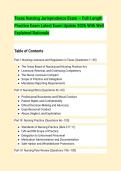
Texas Nursing Jurisprudence Exam — Full-Length
Practice Exam Latest Exam Update 2026 With Well
Explained Rationale
Table of Contents
Part I: Nursing Licensure and Regulation in Texas (Questions 1–35)
● The Texas Board of Nursing and Nursing Practice Act
● Licensure, Renewal, and Continuing Competency
● The Nurse Licensure Compact
● Scope of Practice and Delegation
● Mandatory Reporting Requirements
Part II: Nursing Ethics (Questions 36–65)
● Professional Boundaries and Ethical Conduct
● Patient Rights and Confidentiality
● Ethical Decision-Making and Advocacy
● Unprofessional Conduct
● Abuse, Neglect, and Exploitation
Part III: Nursing Practice (Questions 66–105)
● Standards of Nursing Practice (Rule 217.11)
● LVN and RN Scope of Practice
● Delegation to Unlicensed Personnel
● Medication Administration and Documentation
● Safe Harbor and Whistleblower Protections
Part IV: Nursing Peer Review (Questions 106–130)
, ● Nursing Peer Review Committees
● Incident-Based Peer Review
● Safe Harbor Nursing Peer Review
● Whistleblower Protections
Part V: Disciplinary Action (Questions 131–150)
● Grounds for Discipline
● Disciplinary Sanctions and the Sanction Matrix
● Corrective Actions and Remedial Education
● License Denial, Suspension, and Revocation
PART I: NURSING LICENSURE AND REGULATION IN
TEXAS (Questions 1–35)
1. The primary purpose of the Texas Nursing Practice Act (NPA) is to:
A) Set criminal penalties for nursing violations
✅✅
B) Regulate nursing education, licensure, and practice to protect the public
C) Establish wage and hour requirements for nurses
D) Regulate hospital administration
Option B is correct because Chapter 301 of the Texas Occupations Code
contains the NPA, which creates the Board of Nursing and defines its
responsibility for regulating nursing education, licensure, and practice to
protect the health and welfare of the people of Texas. Option A is incorrect
because criminal penalties are only one part of the NPA, not its primary
purpose. Option C is incorrect because wage and hour requirements are
governed by employment law, not the NPA. Option D is incorrect because
hospital administration is regulated by other statutes.
,2. Which statute primarily governs the practice of nursing in Texas?
✅✅
A) Texas Penal Code
B) Texas Occupations Code Chapter 301 (Nursing Practice Act)
C) Texas Health and Safety Code
D) Texas Education Code
Option B is correct because the NPA is codified in Chapter 301 of the Texas
Occupations Code, which regulates nursing education, licensure, and
practice. Option A is incorrect because the Penal Code governs criminal
offenses, not nursing regulation. Option C is incorrect because the Health and
Safety Code governs public health matters. Option D is incorrect because the
Education Code governs educational institutions.
3. The Texas Board of Nursing consists of how many members?
A) 9
✅✅
B) 11
C) 13
D) 15
Option C is correct because the Texas Board of Nursing consists of 13
members appointed by the governor with the advice and consent of the
senate. Options A, B, and D are incorrect because they do not reflect the
statutory composition.
4. The mission of the Texas Board of Nursing is to:
A) Increase nurse salaries
✅✅
B) Protect and promote the welfare of the people of Texas by ensuring each
nurse is competent to practice safely
C) Represent nurses in disciplinary proceedings
D) Set hospital staffing ratios
, Option B is correct because the BON's mission is to protect and promote the
welfare of the people of Texas by ensuring that each person holding a license
as a nurse in this state is competent to practice safely. Option A is incorrect
because the BON does not set salaries. Option C is incorrect because the
BON regulates nurses, not represents them. Option D is incorrect because
staffing ratios are not within the BON's authority.
5. A Texas nursing license must be renewed every:
✅✅
A) Year
B) Two years
C) Three years
D) Five years
Option B is correct because a Texas nursing license must be renewed every
two years. Options A, C, and D are incorrect because they do not reflect the
biennial renewal cycle.
6. How many contact hours of continuing nursing education (CNE) must a
Texas nurse complete every two years for relicensure?
A) 10 contact hours
✅✅
B) 15 contact hours
C) 20 contact hours
D) 30 contact hours
Option C is correct because Texas nurses are required to complete 20
contact hours of continuing nursing education (CNE) every two years for
relicensure. Options A, B, and D are incorrect because they do not reflect the
statutory CNE requirement.
✅✅
7. Which of the following is a targeted CNE topic required for Texas nurses?
A) Nursing jurisprudence and ethics
Practice Exam Latest Exam Update 2026 With Well
Explained Rationale
Table of Contents
Part I: Nursing Licensure and Regulation in Texas (Questions 1–35)
● The Texas Board of Nursing and Nursing Practice Act
● Licensure, Renewal, and Continuing Competency
● The Nurse Licensure Compact
● Scope of Practice and Delegation
● Mandatory Reporting Requirements
Part II: Nursing Ethics (Questions 36–65)
● Professional Boundaries and Ethical Conduct
● Patient Rights and Confidentiality
● Ethical Decision-Making and Advocacy
● Unprofessional Conduct
● Abuse, Neglect, and Exploitation
Part III: Nursing Practice (Questions 66–105)
● Standards of Nursing Practice (Rule 217.11)
● LVN and RN Scope of Practice
● Delegation to Unlicensed Personnel
● Medication Administration and Documentation
● Safe Harbor and Whistleblower Protections
Part IV: Nursing Peer Review (Questions 106–130)
, ● Nursing Peer Review Committees
● Incident-Based Peer Review
● Safe Harbor Nursing Peer Review
● Whistleblower Protections
Part V: Disciplinary Action (Questions 131–150)
● Grounds for Discipline
● Disciplinary Sanctions and the Sanction Matrix
● Corrective Actions and Remedial Education
● License Denial, Suspension, and Revocation
PART I: NURSING LICENSURE AND REGULATION IN
TEXAS (Questions 1–35)
1. The primary purpose of the Texas Nursing Practice Act (NPA) is to:
A) Set criminal penalties for nursing violations
✅✅
B) Regulate nursing education, licensure, and practice to protect the public
C) Establish wage and hour requirements for nurses
D) Regulate hospital administration
Option B is correct because Chapter 301 of the Texas Occupations Code
contains the NPA, which creates the Board of Nursing and defines its
responsibility for regulating nursing education, licensure, and practice to
protect the health and welfare of the people of Texas. Option A is incorrect
because criminal penalties are only one part of the NPA, not its primary
purpose. Option C is incorrect because wage and hour requirements are
governed by employment law, not the NPA. Option D is incorrect because
hospital administration is regulated by other statutes.
,2. Which statute primarily governs the practice of nursing in Texas?
✅✅
A) Texas Penal Code
B) Texas Occupations Code Chapter 301 (Nursing Practice Act)
C) Texas Health and Safety Code
D) Texas Education Code
Option B is correct because the NPA is codified in Chapter 301 of the Texas
Occupations Code, which regulates nursing education, licensure, and
practice. Option A is incorrect because the Penal Code governs criminal
offenses, not nursing regulation. Option C is incorrect because the Health and
Safety Code governs public health matters. Option D is incorrect because the
Education Code governs educational institutions.
3. The Texas Board of Nursing consists of how many members?
A) 9
✅✅
B) 11
C) 13
D) 15
Option C is correct because the Texas Board of Nursing consists of 13
members appointed by the governor with the advice and consent of the
senate. Options A, B, and D are incorrect because they do not reflect the
statutory composition.
4. The mission of the Texas Board of Nursing is to:
A) Increase nurse salaries
✅✅
B) Protect and promote the welfare of the people of Texas by ensuring each
nurse is competent to practice safely
C) Represent nurses in disciplinary proceedings
D) Set hospital staffing ratios
, Option B is correct because the BON's mission is to protect and promote the
welfare of the people of Texas by ensuring that each person holding a license
as a nurse in this state is competent to practice safely. Option A is incorrect
because the BON does not set salaries. Option C is incorrect because the
BON regulates nurses, not represents them. Option D is incorrect because
staffing ratios are not within the BON's authority.
5. A Texas nursing license must be renewed every:
✅✅
A) Year
B) Two years
C) Three years
D) Five years
Option B is correct because a Texas nursing license must be renewed every
two years. Options A, C, and D are incorrect because they do not reflect the
biennial renewal cycle.
6. How many contact hours of continuing nursing education (CNE) must a
Texas nurse complete every two years for relicensure?
A) 10 contact hours
✅✅
B) 15 contact hours
C) 20 contact hours
D) 30 contact hours
Option C is correct because Texas nurses are required to complete 20
contact hours of continuing nursing education (CNE) every two years for
relicensure. Options A, B, and D are incorrect because they do not reflect the
statutory CNE requirement.
✅✅
7. Which of the following is a targeted CNE topic required for Texas nurses?
A) Nursing jurisprudence and ethics