DEVELOPMENTAL GOALS
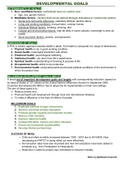
DETERMINANTS OF HEALTH
1. Non- modifiable factors: individuals have no control over
Age, sex, genetic factors
2. Modifiable factors: factors that can be altered through individual or community actions
Social and community influences- sedentary lifestyle, alcohol abuse
Living and working conditions- manual labor, unclean homes
Individual lifestyle factors- smoking, drinking, diet
Cultural and environmental factors- high fat diets in some cultures; overweight is seen as
wealth
Socio-economic factors- poverty, unemployment
DIMENSIONS OF HEALTH
In PHC a holistic approach towards health is taken. Full health is composed of a range of dimensions:
1. Physical health- to be in good working condition
2. Social health- meaningful interaction with others
3. Emotional health- psychological wellbeing
4. Intellectual health- can learn from life’s experiences
5. Spiritual health- understanding of meaning & purpose of life
6. Occupational health- ability to be productive
7. Environmental health- physical/social/economic/and political conditions of the environment in
which the person lives.
MILLENNIUM DEVELOPMENT GOALS (MDGS)
A broad set of important development goals and targets with corresponding indicators, agreed on
by head of states of 191 nations at the United Nations Millennium Summit in September 2000.
Countries that adopted this MDG’s had to adapt this for implementation in their own settings.
The aim of these goals is to:
Reduce poverty and
Promote health and development through local and international initiatives
To make a difference in the lives of millions of people.
MILLENNIUM GOALS
1. Eradicate extreme hunger and poverty
2. Achieve universal primary education
3. Promote gender equality and empower women
4. Reduce child mortality
5. Improve maternal health
6. Combat HIV/AIDS, malaria and other diseases
7. Ensure environmental sustainability
8. Develop Global partnerships
SUCCESS OF MDGs
Child and infant mortality increased between 1998 - 2007 due to HIV/AIDS. Now
decreasing as PMTCT is being rolled out more effectively.
Immunization rates have also improved and new immunizations have been added to
schedule (e.g., from Pentavalent to Hexavalent)
Reduction in extreme poverty has contributed to reduced mortality.
Notes by @silibazisomupereki
DETERMINANTS OF HEALTH
1. Non- modifiable factors: individuals have no control over
Age, sex, genetic factors
2. Modifiable factors: factors that can be altered through individual or community actions
Social and community influences- sedentary lifestyle, alcohol abuse
Living and working conditions- manual labor, unclean homes
Individual lifestyle factors- smoking, drinking, diet
Cultural and environmental factors- high fat diets in some cultures; overweight is seen as
wealth
Socio-economic factors- poverty, unemployment
DIMENSIONS OF HEALTH
In PHC a holistic approach towards health is taken. Full health is composed of a range of dimensions:
1. Physical health- to be in good working condition
2. Social health- meaningful interaction with others
3. Emotional health- psychological wellbeing
4. Intellectual health- can learn from life’s experiences
5. Spiritual health- understanding of meaning & purpose of life
6. Occupational health- ability to be productive
7. Environmental health- physical/social/economic/and political conditions of the environment in
which the person lives.
MILLENNIUM DEVELOPMENT GOALS (MDGS)
A broad set of important development goals and targets with corresponding indicators, agreed on
by head of states of 191 nations at the United Nations Millennium Summit in September 2000.
Countries that adopted this MDG’s had to adapt this for implementation in their own settings.
The aim of these goals is to:
Reduce poverty and
Promote health and development through local and international initiatives
To make a difference in the lives of millions of people.
MILLENNIUM GOALS
1. Eradicate extreme hunger and poverty
2. Achieve universal primary education
3. Promote gender equality and empower women
4. Reduce child mortality
5. Improve maternal health
6. Combat HIV/AIDS, malaria and other diseases
7. Ensure environmental sustainability
8. Develop Global partnerships
SUCCESS OF MDGs
Child and infant mortality increased between 1998 - 2007 due to HIV/AIDS. Now
decreasing as PMTCT is being rolled out more effectively.
Immunization rates have also improved and new immunizations have been added to
schedule (e.g., from Pentavalent to Hexavalent)
Reduction in extreme poverty has contributed to reduced mortality.
Notes by @silibazisomupereki