CHAPTER 7
QUALITY AND PREFORMANCE
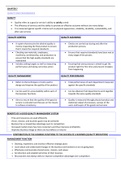
QUALITY
• Quality refers to a good or service’s ability to satisfy a need
• The efficiency of services and the ability to provide an effective outcome without too many delays
• It is measured against specific criteria such as physical appearance, reliability, durability, sustainability, and
after-sale services
QUALITY CONTROL QUALITY ASSURANCE
• A system that ensures the desired quality is • Checks are carried out during and after the
met by inspecting the final product to ensure production process
that it meets the required standards
• Checking raw materials, employees, • Ensures that required standards have been met at
machinery, workmanship, and production to every stage of the process
ensure that the high-quality standards are
maintained
• Includes setting targets as well as measuring • Ensuring that every process is aimed to get the
performance and taking corrective action product right the first time and prevent mistakes
from happening
QUALITY MANAGEMENT QUALITY PREFORMANCE
• Refers to the techniques or tools used to • Total performance of each department measured
design and improve the quality of the product against the specific standards
• Can be used for accountability within each of • Can be obtained if all departments work together
the business functions towards the same quality standards
• Aims to ensure that the quality of the good or • Quality is measured through physical product and
service is consistent and focuses on the means statistical output of processes, surveys of the
to achieve consistency users and buyers of the goods and services
BENEFITS OF A GOOD QUALITY MANAGEMENT SYSTEM
- Time and resources are used efficiently
- Vision, mission, and business goals may be achieved
- Business has a competitive advantage over its competitors
- Increased market share has more costumers and thus improves profitability
- Improves business image as there are less defects or returns
CONTRIBUTION OF THE BUSINESS FUNCTIONS TO THE SUCCESS OF A BUSINESS (QUALITY INDICATORS)
MANAGEMENT FUNCTION
→ Develop, implement, and monitor effective strategic plans
→ Learn about and understand changes in the business environment on an on-going basis
→ Effectively communicate shared vision, mission, and values
→ Set direction and establish priorities of their business
→ Be proactive and always seeks to improve competitive advantage over competitors
, PRODUCTION FUNCTION
→ Provide high quality services and products according to specifications
→ Products must meet costumers’ requirements by being safe, reliable, and durable
→ Business should have good after-sales service
→ Utilize machines and equipment properly
→ Accurately calculate the production costs
PURCHASING FUNCTION
→ Buying raw materials in bulk at lower prices
→ Required quantities should be delivered at the right time and place
→ Monitor and report on minimum stock levels to avoid stock-outs
→ Have a thorough understanding of supply chain management
→ Ensure that there is no break in production due to stock shortages
MARKETING FUNCTION
→ Increasing their market share
→ Adhering to ethical advertising by satisfying their needs, wants and building positive relationships
→ Differentiating products in order to attract more costumers
→ Constantly reviewing value issues
→ Using pricing techniques to ensure a competitive advantage
FINANCIAL FUNCTION
→ Obtain capital from the most suitable, available, and reliable sources
→ Negotiate better interest rates in order to keep financial cost down
→ Analyze strategies to increase profitability
→ Invest surplus funds to create sources of passive income
→ Implement financial control measures and systems to prevent fraud
PUBLIC FUNCTION
→ Dealing quickly with negative publicity
→ Providing regular and positive press releases
→ Implement sustainable Corporate Social Investment (CSI) programmes
→ Good results of positive feedback from public surveys on business image
→ Compliance with recent regulation (e.g. BEE compliant)
ADMINISTRATION FUNCTION
→ Fast and reliable data capturing and processing systems
→ Handle complaints quickly and effectively
→ Use modern technology efficiently
→ Easy recall, find information and documentation
→ All systems and processes are documented
HUMAN RESOURCE FUNCTION
→ Ensures fair and equitable selection process
→ Fair remuneration packages that is aligned to the industry
→ Offer performance incentives for staff to enhance productivity
→ Good relationship with employees
→ Low rate or staff turnover in the business
QUALITY AND PREFORMANCE
QUALITY
• Quality refers to a good or service’s ability to satisfy a need
• The efficiency of services and the ability to provide an effective outcome without too many delays
• It is measured against specific criteria such as physical appearance, reliability, durability, sustainability, and
after-sale services
QUALITY CONTROL QUALITY ASSURANCE
• A system that ensures the desired quality is • Checks are carried out during and after the
met by inspecting the final product to ensure production process
that it meets the required standards
• Checking raw materials, employees, • Ensures that required standards have been met at
machinery, workmanship, and production to every stage of the process
ensure that the high-quality standards are
maintained
• Includes setting targets as well as measuring • Ensuring that every process is aimed to get the
performance and taking corrective action product right the first time and prevent mistakes
from happening
QUALITY MANAGEMENT QUALITY PREFORMANCE
• Refers to the techniques or tools used to • Total performance of each department measured
design and improve the quality of the product against the specific standards
• Can be used for accountability within each of • Can be obtained if all departments work together
the business functions towards the same quality standards
• Aims to ensure that the quality of the good or • Quality is measured through physical product and
service is consistent and focuses on the means statistical output of processes, surveys of the
to achieve consistency users and buyers of the goods and services
BENEFITS OF A GOOD QUALITY MANAGEMENT SYSTEM
- Time and resources are used efficiently
- Vision, mission, and business goals may be achieved
- Business has a competitive advantage over its competitors
- Increased market share has more costumers and thus improves profitability
- Improves business image as there are less defects or returns
CONTRIBUTION OF THE BUSINESS FUNCTIONS TO THE SUCCESS OF A BUSINESS (QUALITY INDICATORS)
MANAGEMENT FUNCTION
→ Develop, implement, and monitor effective strategic plans
→ Learn about and understand changes in the business environment on an on-going basis
→ Effectively communicate shared vision, mission, and values
→ Set direction and establish priorities of their business
→ Be proactive and always seeks to improve competitive advantage over competitors
, PRODUCTION FUNCTION
→ Provide high quality services and products according to specifications
→ Products must meet costumers’ requirements by being safe, reliable, and durable
→ Business should have good after-sales service
→ Utilize machines and equipment properly
→ Accurately calculate the production costs
PURCHASING FUNCTION
→ Buying raw materials in bulk at lower prices
→ Required quantities should be delivered at the right time and place
→ Monitor and report on minimum stock levels to avoid stock-outs
→ Have a thorough understanding of supply chain management
→ Ensure that there is no break in production due to stock shortages
MARKETING FUNCTION
→ Increasing their market share
→ Adhering to ethical advertising by satisfying their needs, wants and building positive relationships
→ Differentiating products in order to attract more costumers
→ Constantly reviewing value issues
→ Using pricing techniques to ensure a competitive advantage
FINANCIAL FUNCTION
→ Obtain capital from the most suitable, available, and reliable sources
→ Negotiate better interest rates in order to keep financial cost down
→ Analyze strategies to increase profitability
→ Invest surplus funds to create sources of passive income
→ Implement financial control measures and systems to prevent fraud
PUBLIC FUNCTION
→ Dealing quickly with negative publicity
→ Providing regular and positive press releases
→ Implement sustainable Corporate Social Investment (CSI) programmes
→ Good results of positive feedback from public surveys on business image
→ Compliance with recent regulation (e.g. BEE compliant)
ADMINISTRATION FUNCTION
→ Fast and reliable data capturing and processing systems
→ Handle complaints quickly and effectively
→ Use modern technology efficiently
→ Easy recall, find information and documentation
→ All systems and processes are documented
HUMAN RESOURCE FUNCTION
→ Ensures fair and equitable selection process
→ Fair remuneration packages that is aligned to the industry
→ Offer performance incentives for staff to enhance productivity
→ Good relationship with employees
→ Low rate or staff turnover in the business