

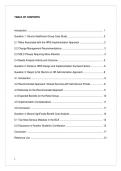
TABLE OF CONTENTS
Introduction ................................................................................................................... 1
Question 1: Ubuntu Healthcare Group Case Study ...................................................... 2
2.1 Risks Associated with the HRIS Implementation Approach .....................................2
2.2 Change Management Recommendations ............................................................... 3
2.3 SDLC Phases Requiring More Attention ................................................................. 4
2.4 Needs Analysis Activity and Outcome .................................................................... 5
Question 2: Dentsu's HRIS Design and Implementation Success Factors ................... 6
Question 3: Report to Mr Dlamini on HR Administration Approach .............................. 8
4.1 Introduction .............................................................................................................. 8
4.2 Recommended Approach: Shared Services with Self-Service Portals ................... 8
4.3 Rationale for the Recommended Approach ............................................................ 9
4.4 Expected Benefits for the Retail Group .................................................................. 10
4.5 Implementation Considerations .............................................................................. 11
4.6 Conclusion .............................................................................................................. 11
Question 4: Mzansi AgriFoods Benefit-Cost Analysis .................................................. 12
5.1 Two Most Serious Mistakes in the BCA ................................................................. 12
5.2 Discussion of Another Student's Contribution ........................................................ 13
Conclusion .................................................................................................................... 17
Reference List ............................................................................................................... 21
1
,1. Introduction
Human Resource Information Systems (HRIS) play an important role in helping organisations
manage their employees and improve HR processes. A well-designed HRIS can make work
easier, improve the accuracy of employee information, support better decision-making, and
reduce administrative problems. However, successful HRIS implementation requires careful
planning, proper needs analysis, employee involvement, training, and effective change
management. It is also important for organisations to consider the costs and benefits of an
HRIS before making investment decisions.
2
, Question 1: Ubuntu Healthcare Group Case Study
Question 1.1 Identify and explain two (2) risks that Ubuntu Healthcare Group may face
due to its approach to implementing the HRIS. Refer to the information provided in the
scenario to support your answer.
System-Organisation Mismatch and User Rejection
The organisation purchased the cloud-based HRIS without conducting a formal needs
analysis, based solely on senior management's impression from a technology conference.
This creates a substantial risk that the selected system may not support all of the
organisation's specific requirements, as raised in the scenario. When an organisation fails to
conduct a proper needs analysis, it "may expend considerable effort reworking the solution
because it does not meet the organisation's needs" (Johnson & Kavanagh, 2026, p. 50). The
scenario indicates that concerns have been raised that the selected system may not support
all specific requirements, and HR administrators have reported that employee information is
captured differently across provinces. This inconsistency means the system may not
accommodate the organisation's diverse data structures and processes, leading to user
frustration, rejection, and potential implementation failure. Users may reject an HRIS that
fails to provide the functionality they need (Kavanagh, Johnson, & Dulebohn, 2026, p. 47).
Employee Resistance and Low User Acceptance
The implementation team is focusing primarily on system configuration and technical
activities while failing to adequately communicate with employees about the upcoming
changes. The scenario reveals that managers were not consulted during decision-making,
employees are circulating rumours about potential job losses, and many long-serving
employees (over 20 years) prefer the current way of working and are uncomfortable with
technology. This lack of communication and involvement creates a significant risk of
resistance to change. Research has shown that "involving the users can create a sense of
ownership, can lead to more effective communication and idea sharing, and has been shown
3
Introduction ................................................................................................................... 1
Question 1: Ubuntu Healthcare Group Case Study ...................................................... 2
2.1 Risks Associated with the HRIS Implementation Approach .....................................2
2.2 Change Management Recommendations ............................................................... 3
2.3 SDLC Phases Requiring More Attention ................................................................. 4
2.4 Needs Analysis Activity and Outcome .................................................................... 5
Question 2: Dentsu's HRIS Design and Implementation Success Factors ................... 6
Question 3: Report to Mr Dlamini on HR Administration Approach .............................. 8
4.1 Introduction .............................................................................................................. 8
4.2 Recommended Approach: Shared Services with Self-Service Portals ................... 8
4.3 Rationale for the Recommended Approach ............................................................ 9
4.4 Expected Benefits for the Retail Group .................................................................. 10
4.5 Implementation Considerations .............................................................................. 11
4.6 Conclusion .............................................................................................................. 11
Question 4: Mzansi AgriFoods Benefit-Cost Analysis .................................................. 12
5.1 Two Most Serious Mistakes in the BCA ................................................................. 12
5.2 Discussion of Another Student's Contribution ........................................................ 13
Conclusion .................................................................................................................... 17
Reference List ............................................................................................................... 21
1
,1. Introduction
Human Resource Information Systems (HRIS) play an important role in helping organisations
manage their employees and improve HR processes. A well-designed HRIS can make work
easier, improve the accuracy of employee information, support better decision-making, and
reduce administrative problems. However, successful HRIS implementation requires careful
planning, proper needs analysis, employee involvement, training, and effective change
management. It is also important for organisations to consider the costs and benefits of an
HRIS before making investment decisions.
2
, Question 1: Ubuntu Healthcare Group Case Study
Question 1.1 Identify and explain two (2) risks that Ubuntu Healthcare Group may face
due to its approach to implementing the HRIS. Refer to the information provided in the
scenario to support your answer.
System-Organisation Mismatch and User Rejection
The organisation purchased the cloud-based HRIS without conducting a formal needs
analysis, based solely on senior management's impression from a technology conference.
This creates a substantial risk that the selected system may not support all of the
organisation's specific requirements, as raised in the scenario. When an organisation fails to
conduct a proper needs analysis, it "may expend considerable effort reworking the solution
because it does not meet the organisation's needs" (Johnson & Kavanagh, 2026, p. 50). The
scenario indicates that concerns have been raised that the selected system may not support
all specific requirements, and HR administrators have reported that employee information is
captured differently across provinces. This inconsistency means the system may not
accommodate the organisation's diverse data structures and processes, leading to user
frustration, rejection, and potential implementation failure. Users may reject an HRIS that
fails to provide the functionality they need (Kavanagh, Johnson, & Dulebohn, 2026, p. 47).
Employee Resistance and Low User Acceptance
The implementation team is focusing primarily on system configuration and technical
activities while failing to adequately communicate with employees about the upcoming
changes. The scenario reveals that managers were not consulted during decision-making,
employees are circulating rumours about potential job losses, and many long-serving
employees (over 20 years) prefer the current way of working and are uncomfortable with
technology. This lack of communication and involvement creates a significant risk of
resistance to change. Research has shown that "involving the users can create a sense of
ownership, can lead to more effective communication and idea sharing, and has been shown
3


