
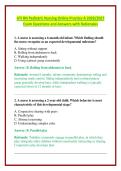
ATI RN Pediatric Nursing Online Practice A 2026/2027
Exam Questions and Answers with Rationales
1. A nurse is assessing a 6-month-old infant. Which finding should
the nurse recognize as an expected developmental milestone?
A. Sitting without support
B. Rolling from abdomen to back
C. Walking independently
D. Using a pincer grasp consistently
Answer: B. Rolling from abdomen to back
Rationale: Around 6 months, infants commonly demonstrate rolling and
increasing trunk control. Sitting independently and a refined pincer
grasp generally develop later, while independent walking is typically
expected closer to 12 months or later.
2. A nurse is assessing a 2-year-old child. Which behavior is most
characteristic of this developmental stage?
A. Cooperative sharing with peers
B. Parallel play
C. Abstract reasoning
D. Understanding complex rules
Answer: B. Parallel play
Rationale: Toddlers commonly engage in parallel play, in which they
play alongside other children without consistently interacting or sharing.
Cooperative play develops later.
,3. A nurse is caring for a child who has epiglottitis. Which action
should the nurse take?
A. Inspect the throat with a tongue depressor
B. Encourage the child to lie flat
C. Keep the child calm and prepare for airway management
D. Obtain a throat culture immediately at the bedside
Answer: C. Keep the child calm and prepare for airway
management
Rationale: Epiglottitis can cause sudden, life-threatening airway
obstruction. The child should be kept calm, and unnecessary throat
manipulation should be avoided because it can precipitate complete
airway obstruction.
4. A nurse is caring for a child with dehydration. Which finding
indicates severe dehydration?
A. Moist mucous membranes
B. Brisk capillary refill
C. Minimal urine output
D. Increased tears
Answer: C. Minimal urine output
Rationale: Reduced urine output is an important indicator of decreased
renal perfusion and significant fluid deficit. Other concerning findings
include lethargy, poor skin turgor, dry mucous membranes, tachycardia,
and delayed capillary refill.
5. A nurse is teaching the parent of a child with asthma about using
a metered-dose inhaler. Which instruction is appropriate?
,A. Inhale rapidly after activating the inhaler
B. Exhale completely before inhaling the medication
C. Swallow the medication immediately after administration
D. Skip the spacer if one is prescribed
Answer: B. Exhale completely before inhaling the medication
Rationale: The child should exhale first, seal the lips around the
mouthpiece or spacer, activate the inhaler, and inhale slowly and deeply.
A spacer can improve medication delivery to the lungs.
6. A nurse is assessing a child who has increased intracranial
pressure. Which finding requires immediate intervention?
A. Mild headache
B. Increasing level of consciousness
C. Unequal pupils
D. Occasional nausea
Answer: C. Unequal pupils
Rationale: Unequal or newly dilated pupils can indicate worsening
intracranial pressure and possible neurologic deterioration. This finding
requires immediate assessment and intervention.
7. A nurse is preparing to administer digoxin to an infant. Which
assessment is most important before administration?
A. Respiratory depth
B. Apical heart rate
C. Bowel sounds
D. Skin temperature
, Answer: B. Apical heart rate
Rationale: Digoxin can cause bradycardia. The nurse should assess the
apical heart rate for a full minute and follow pediatric medication
parameters before administering the medication.
8. A child with type 1 diabetes mellitus is experiencing
hypoglycemia. Which finding should the nurse expect?
A. Fruity breath
B. Polyuria
C. Tremors and diaphoresis
D. Kussmaul respirations
Answer: C. Tremors and diaphoresis
Rationale: Hypoglycemia activates the sympathetic nervous system,
causing manifestations such as sweating, tremors, hunger, tachycardia,
irritability, and altered behavior. Fruity breath and Kussmaul
respirations are associated with diabetic ketoacidosis.
9. A nurse is caring for a child with sickle cell disease who reports
severe pain. Which intervention is appropriate?
A. Restrict oral fluids
B. Apply cold packs to painful areas
C. Administer prescribed analgesia and encourage hydration
D. Encourage strenuous exercise
Answer: C. Administer prescribed analgesia and encourage
hydration
Exam Questions and Answers with Rationales
1. A nurse is assessing a 6-month-old infant. Which finding should
the nurse recognize as an expected developmental milestone?
A. Sitting without support
B. Rolling from abdomen to back
C. Walking independently
D. Using a pincer grasp consistently
Answer: B. Rolling from abdomen to back
Rationale: Around 6 months, infants commonly demonstrate rolling and
increasing trunk control. Sitting independently and a refined pincer
grasp generally develop later, while independent walking is typically
expected closer to 12 months or later.
2. A nurse is assessing a 2-year-old child. Which behavior is most
characteristic of this developmental stage?
A. Cooperative sharing with peers
B. Parallel play
C. Abstract reasoning
D. Understanding complex rules
Answer: B. Parallel play
Rationale: Toddlers commonly engage in parallel play, in which they
play alongside other children without consistently interacting or sharing.
Cooperative play develops later.
,3. A nurse is caring for a child who has epiglottitis. Which action
should the nurse take?
A. Inspect the throat with a tongue depressor
B. Encourage the child to lie flat
C. Keep the child calm and prepare for airway management
D. Obtain a throat culture immediately at the bedside
Answer: C. Keep the child calm and prepare for airway
management
Rationale: Epiglottitis can cause sudden, life-threatening airway
obstruction. The child should be kept calm, and unnecessary throat
manipulation should be avoided because it can precipitate complete
airway obstruction.
4. A nurse is caring for a child with dehydration. Which finding
indicates severe dehydration?
A. Moist mucous membranes
B. Brisk capillary refill
C. Minimal urine output
D. Increased tears
Answer: C. Minimal urine output
Rationale: Reduced urine output is an important indicator of decreased
renal perfusion and significant fluid deficit. Other concerning findings
include lethargy, poor skin turgor, dry mucous membranes, tachycardia,
and delayed capillary refill.
5. A nurse is teaching the parent of a child with asthma about using
a metered-dose inhaler. Which instruction is appropriate?
,A. Inhale rapidly after activating the inhaler
B. Exhale completely before inhaling the medication
C. Swallow the medication immediately after administration
D. Skip the spacer if one is prescribed
Answer: B. Exhale completely before inhaling the medication
Rationale: The child should exhale first, seal the lips around the
mouthpiece or spacer, activate the inhaler, and inhale slowly and deeply.
A spacer can improve medication delivery to the lungs.
6. A nurse is assessing a child who has increased intracranial
pressure. Which finding requires immediate intervention?
A. Mild headache
B. Increasing level of consciousness
C. Unequal pupils
D. Occasional nausea
Answer: C. Unequal pupils
Rationale: Unequal or newly dilated pupils can indicate worsening
intracranial pressure and possible neurologic deterioration. This finding
requires immediate assessment and intervention.
7. A nurse is preparing to administer digoxin to an infant. Which
assessment is most important before administration?
A. Respiratory depth
B. Apical heart rate
C. Bowel sounds
D. Skin temperature
, Answer: B. Apical heart rate
Rationale: Digoxin can cause bradycardia. The nurse should assess the
apical heart rate for a full minute and follow pediatric medication
parameters before administering the medication.
8. A child with type 1 diabetes mellitus is experiencing
hypoglycemia. Which finding should the nurse expect?
A. Fruity breath
B. Polyuria
C. Tremors and diaphoresis
D. Kussmaul respirations
Answer: C. Tremors and diaphoresis
Rationale: Hypoglycemia activates the sympathetic nervous system,
causing manifestations such as sweating, tremors, hunger, tachycardia,
irritability, and altered behavior. Fruity breath and Kussmaul
respirations are associated with diabetic ketoacidosis.
9. A nurse is caring for a child with sickle cell disease who reports
severe pain. Which intervention is appropriate?
A. Restrict oral fluids
B. Apply cold packs to painful areas
C. Administer prescribed analgesia and encourage hydration
D. Encourage strenuous exercise
Answer: C. Administer prescribed analgesia and encourage
hydration


