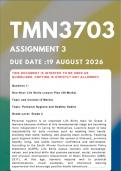
, TMN3703 ASSIGNMENT 3 2026
DUE DATE: 19 AUGUST 2026
Question 1:
One-Hour Life Skills Lesson Plan (50 Marks)
Topic and Context (5 Marks)
Topic: Personal Hygiene and Healthy Habits
Grade Level: Grade 2
Personal hygiene is an important Life Skills topic for Grade 2 learners because children at
this developmental stage are becoming more independent in caring for themselves.
Learners begin to take responsibility for daily routines such as washing their hands, brushing
their teeth, bathing, and wearing clean clothing. Teaching good hygiene habits helps reduce
the spread of illnesses, promotes healthy living, and builds learners' confidence and self-
esteem. According to the South African Curriculum and Assessment Policy Statement (CAPS),
Life Skills equips learners with knowledge, values, and practical skills that promote personal,
social, emotional, and physical development (Department of Basic Education [DBE], 2011).
At this age, learners respond well to practical demonstrations, visual examples, and
interactive learning experiences that encourage positive health behaviours.
Learning Objectives (10 Marks)
By the end of the one-hour lesson, learners should be able to:
1. Identify at least five personal hygiene practices that contribute to good health.
DUE DATE: 19 AUGUST 2026
Question 1:
One-Hour Life Skills Lesson Plan (50 Marks)
Topic and Context (5 Marks)
Topic: Personal Hygiene and Healthy Habits
Grade Level: Grade 2
Personal hygiene is an important Life Skills topic for Grade 2 learners because children at
this developmental stage are becoming more independent in caring for themselves.
Learners begin to take responsibility for daily routines such as washing their hands, brushing
their teeth, bathing, and wearing clean clothing. Teaching good hygiene habits helps reduce
the spread of illnesses, promotes healthy living, and builds learners' confidence and self-
esteem. According to the South African Curriculum and Assessment Policy Statement (CAPS),
Life Skills equips learners with knowledge, values, and practical skills that promote personal,
social, emotional, and physical development (Department of Basic Education [DBE], 2011).
At this age, learners respond well to practical demonstrations, visual examples, and
interactive learning experiences that encourage positive health behaviours.
Learning Objectives (10 Marks)
By the end of the one-hour lesson, learners should be able to:
1. Identify at least five personal hygiene practices that contribute to good health.