Assignment B - Lesson Plan Form and Paragraph
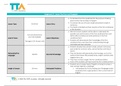
® To introduce the first conditional for the purpose of talking
about events that are likely to happen.
® To contrast the use of future simple and present simple in
Lesson Type: Grammar Lesson Aims:
sentences.
® To provide controlled and freer practice of the first conditional
in this function.
® After this lesson students will be able to understand the
possible uses and functions of the first conditional form and
A2 (Late elementary/
will be able to produce accurate sentences in the first
pre-intermediate)
Level of Class: Lesson Objectives: conditional form.
® Students will demonstrate their knowledge of the first
Teenagers (14-16 years old)
conditional form and show their understanding through
controlled and freer activities.
® Students already know present simple, present continuous,
past simple for common verbs, and are familiar with future
events.
Nationality/First ® They are familiar with grammatical terminology, such as the
Spanish Assumed Knowledge:
Language: names of the tenses they already know, subject, auxiliary verb,
negative form, etc.
® They have not been taught the first conditional before.
® Some of the students will have heard the first conditional form.
® Students are at a lower level of English so trying to convey a
new concept might be a challenge.
Length of Lesson: 60 mins Anticipated Problems: o I will prepare for this by making use of language and/or
vocabulary that is appropriate to their current level of
English.
© 2020 The TEFL Academy. All rights reserved.
1
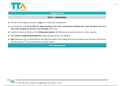
, ® When the new concept becomes challenging to them, the
students might be tempted to revert back to their native
language.
o I will ensure that I recognise this as soon as possible
and then divert them back to English.
® The students might struggle to understand when it is the right
time to use of the first conditional form and when it is the right
time to make use of the other conditional forms.
o I will try to help them understand the differences by
explaining that it is about how likely it is that the event
happens.
® The students might not hear the contraction between the
subject and the auxiliary verbs – e.g. He’ll
o I will clearly pronounce different examples and then ask
them to repeat these examples.
® The lesson might seem boring to them and they may lose
interest in what is being taught.
o I will ensure that I make use of interactive games and
that I speak with enthusiasm. I will also make use of
examples that are relatable to students of this age
group.
® A copy of worksheet 1 and 2 for each student.
® Projector for presentation.
Number of Students: 12 Materials:
® Whiteboard and colourful whiteboard markers (12).
® Student’s notebooks.
© 2020 The TEFL Academy. All rights reserved.
2
® To introduce the first conditional for the purpose of talking
about events that are likely to happen.
® To contrast the use of future simple and present simple in
Lesson Type: Grammar Lesson Aims:
sentences.
® To provide controlled and freer practice of the first conditional
in this function.
® After this lesson students will be able to understand the
possible uses and functions of the first conditional form and
A2 (Late elementary/
will be able to produce accurate sentences in the first
pre-intermediate)
Level of Class: Lesson Objectives: conditional form.
® Students will demonstrate their knowledge of the first
Teenagers (14-16 years old)
conditional form and show their understanding through
controlled and freer activities.
® Students already know present simple, present continuous,
past simple for common verbs, and are familiar with future
events.
Nationality/First ® They are familiar with grammatical terminology, such as the
Spanish Assumed Knowledge:
Language: names of the tenses they already know, subject, auxiliary verb,
negative form, etc.
® They have not been taught the first conditional before.
® Some of the students will have heard the first conditional form.
® Students are at a lower level of English so trying to convey a
new concept might be a challenge.
Length of Lesson: 60 mins Anticipated Problems: o I will prepare for this by making use of language and/or
vocabulary that is appropriate to their current level of
English.
© 2020 The TEFL Academy. All rights reserved.
1
, ® When the new concept becomes challenging to them, the
students might be tempted to revert back to their native
language.
o I will ensure that I recognise this as soon as possible
and then divert them back to English.
® The students might struggle to understand when it is the right
time to use of the first conditional form and when it is the right
time to make use of the other conditional forms.
o I will try to help them understand the differences by
explaining that it is about how likely it is that the event
happens.
® The students might not hear the contraction between the
subject and the auxiliary verbs – e.g. He’ll
o I will clearly pronounce different examples and then ask
them to repeat these examples.
® The lesson might seem boring to them and they may lose
interest in what is being taught.
o I will ensure that I make use of interactive games and
that I speak with enthusiasm. I will also make use of
examples that are relatable to students of this age
group.
® A copy of worksheet 1 and 2 for each student.
® Projector for presentation.
Number of Students: 12 Materials:
® Whiteboard and colourful whiteboard markers (12).
® Student’s notebooks.
© 2020 The TEFL Academy. All rights reserved.
2