Life Sciences Grade 12 Notes on the Menstrual Cycle
1. Introduction to the Menstrual Cycle
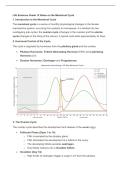
The menstrual cycle is a series of monthly physiological changes in the female
reproductive system, occurring from puberty to menopause. It is divided into two
overlapping sub-cycles: the ovarian cycle (changes in the ovaries) and the uterine
cycle (changes in the lining of the uterus). A typical cycle lasts approximately 28 days.
2. Hormonal Control of the Cycle
The cycle is regulated by hormones from the pituitary gland and the ovaries:
• Pituitary Hormones: Follicle Stimulating Hormone (FSH) and Luteinizing
Hormone (LH).
• Ovarian Hormones: Oestrogen and Progesterone.
3. The Ovarian Cycle
The ovarian cycle describes the development and release of the ovum (egg).
• Follicular Phase (Days 1 to 13):
o FSH is secreted by the pituitary gland.
o FSH stimulates the development of a follicle in the ovary.
o The developing follicle secretes oestrogen.
o One follicle matures into a Graafian follicle.
• Ovulation (Day 14):
o High levels of oestrogen trigger a surge in LH from the pituitary.
1. Introduction to the Menstrual Cycle
The menstrual cycle is a series of monthly physiological changes in the female
reproductive system, occurring from puberty to menopause. It is divided into two
overlapping sub-cycles: the ovarian cycle (changes in the ovaries) and the uterine
cycle (changes in the lining of the uterus). A typical cycle lasts approximately 28 days.
2. Hormonal Control of the Cycle
The cycle is regulated by hormones from the pituitary gland and the ovaries:
• Pituitary Hormones: Follicle Stimulating Hormone (FSH) and Luteinizing
Hormone (LH).
• Ovarian Hormones: Oestrogen and Progesterone.
3. The Ovarian Cycle
The ovarian cycle describes the development and release of the ovum (egg).
• Follicular Phase (Days 1 to 13):
o FSH is secreted by the pituitary gland.
o FSH stimulates the development of a follicle in the ovary.
o The developing follicle secretes oestrogen.
o One follicle matures into a Graafian follicle.
• Ovulation (Day 14):
o High levels of oestrogen trigger a surge in LH from the pituitary.