

FMT3701 Assignment 1 Student: 49432087 No: 771999
Question 1
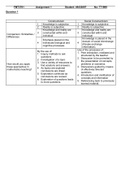
Constructivism Social Constructivism
1 Knowledge is subjective 1 Knowledge is subjective
2 Reality is subjective 2 Reality is subjective
Knowledge and reality are Knowledge and reality are
3 constructed within and 3 constructed within and
Comparison: Similarities /
individual individual
Differences
Knowledge is placed in the
Emphasis placed on the
domain of social interchange
4 individuals biological and 4
(People exchange
cognitive processes.
information).
Use of the processes of:
By the use of:
1. Peer interaction, mediated and
1. Inquiry methods to ask
structured by the teacher.
questions
2. Discussion to be promoted by
2. Investigation of a topic
the presentation of concepts,
3. Use a variety of resources to
How would you apply problems or scenarios.
find solutions and answers.
these approaches in 3. Discussions guided by means
4. As topics are explored
mathematics teaching? of effectively directed
conclusions are drawn
questions
5. Exploration continues as
4. Introduction and clarification of
conclusions are revised.
concepts and information
6. Exploration of questions leads
5. Referencing back to previously
to more questions.
learned material.
, Question 2
Piaget Vygotsky Burner
Name of theorists Jean Piaget Lev Vygotsky Jerome Bruner
Name of Theory Constructivism Cognitive development Theory Constructivist Theory
Socio Cultural
contexts
Piaget's theory of constructivism argues His theory states that knowledge is co-
Based on the framework that learning is an
that people produce knowledge and form constructed and that individuals learn from
active process and learners construct new
Constructivism meaning based upon their experiences. one another. Called a social constructivist
ideas or concepts based on existing
Piaget's theory covered learning theories, theory because in his opinion the learner
knowledge.
teaching methods, and education reform.1 must be engaged in the learning process.
Every function in the child’s cultural 1. Enactive Mode (Physical actions)
1. Sensorimotor (Birth – 18-24 Months)
development appears twice: first, on the 2. Iconic (Use of one thing to represent
Stages of child 2. Preoperational (2-7 years)
social level, and later, on the individual another)
development 3. Concrete operational (7-11 years)
level; first, between people and then inside 3. Symbolic (Children represent and
4. Formal operational (11-Adult)
the child. (p57)2 understand using words & ideas)
1. Children are natural scientists
1. Children can do more difficult tasks with
2. Organisation occurs naturally and is Four major aspects:
the help of a more advanced individual
an ongoing process. 1. Predisposition towards learning,
2. Tasks that are challenging promote
3. Adaptation is the tendency to use 2. The ways in which a body of knowledge
cognitive development growth
assimilation and accommodation to can be structured so that it can be most
3. Play is important and allows children to
Key processes adapt to one’s environment. readily grasped by the learner,
stretch themselves
4. Equilibration is the strive for balance 3. The most effective sequences in which
4. Encourage team working and
between new information and existing to present material, and
collaboration
data stored in the mind. 4. The nature and pacing of rewards and
5. Promote discussion or debates and set
5. Change in thinking is due to internal punishments.3
up study groups for peer learning
change in our brain growth and maturity
Piaget's theory describes
1. Children develop through conversations Language is important for the increased
children's language as “symbolic,” allowing
with adults ability to deal with abstract
them to venture beyond the “here and now”
2. During the first few years of life is where concepts. Bruner argues that language can
and to talk about such things as the past,
Role of language thought and language become code stimuli and free an individual from the
the future, people, feelings and events.
increasingly independent constraints of dealing only with
During this time, children's language often
3. Complex mental activities begin as appearances, to provide a more complex
shows instances of what Piaget termed
basic social activities yet flexible cognition.
“animism” and “egocentrism.”4
1
(Teachnology n.d.)
2
(Vygotsky 1978)
3
(Bruner 1966)
4
(Vickers n.d.)
Question 1
Constructivism Social Constructivism
1 Knowledge is subjective 1 Knowledge is subjective
2 Reality is subjective 2 Reality is subjective
Knowledge and reality are Knowledge and reality are
3 constructed within and 3 constructed within and
Comparison: Similarities /
individual individual
Differences
Knowledge is placed in the
Emphasis placed on the
domain of social interchange
4 individuals biological and 4
(People exchange
cognitive processes.
information).
Use of the processes of:
By the use of:
1. Peer interaction, mediated and
1. Inquiry methods to ask
structured by the teacher.
questions
2. Discussion to be promoted by
2. Investigation of a topic
the presentation of concepts,
3. Use a variety of resources to
How would you apply problems or scenarios.
find solutions and answers.
these approaches in 3. Discussions guided by means
4. As topics are explored
mathematics teaching? of effectively directed
conclusions are drawn
questions
5. Exploration continues as
4. Introduction and clarification of
conclusions are revised.
concepts and information
6. Exploration of questions leads
5. Referencing back to previously
to more questions.
learned material.
, Question 2
Piaget Vygotsky Burner
Name of theorists Jean Piaget Lev Vygotsky Jerome Bruner
Name of Theory Constructivism Cognitive development Theory Constructivist Theory
Socio Cultural
contexts
Piaget's theory of constructivism argues His theory states that knowledge is co-
Based on the framework that learning is an
that people produce knowledge and form constructed and that individuals learn from
active process and learners construct new
Constructivism meaning based upon their experiences. one another. Called a social constructivist
ideas or concepts based on existing
Piaget's theory covered learning theories, theory because in his opinion the learner
knowledge.
teaching methods, and education reform.1 must be engaged in the learning process.
Every function in the child’s cultural 1. Enactive Mode (Physical actions)
1. Sensorimotor (Birth – 18-24 Months)
development appears twice: first, on the 2. Iconic (Use of one thing to represent
Stages of child 2. Preoperational (2-7 years)
social level, and later, on the individual another)
development 3. Concrete operational (7-11 years)
level; first, between people and then inside 3. Symbolic (Children represent and
4. Formal operational (11-Adult)
the child. (p57)2 understand using words & ideas)
1. Children are natural scientists
1. Children can do more difficult tasks with
2. Organisation occurs naturally and is Four major aspects:
the help of a more advanced individual
an ongoing process. 1. Predisposition towards learning,
2. Tasks that are challenging promote
3. Adaptation is the tendency to use 2. The ways in which a body of knowledge
cognitive development growth
assimilation and accommodation to can be structured so that it can be most
3. Play is important and allows children to
Key processes adapt to one’s environment. readily grasped by the learner,
stretch themselves
4. Equilibration is the strive for balance 3. The most effective sequences in which
4. Encourage team working and
between new information and existing to present material, and
collaboration
data stored in the mind. 4. The nature and pacing of rewards and
5. Promote discussion or debates and set
5. Change in thinking is due to internal punishments.3
up study groups for peer learning
change in our brain growth and maturity
Piaget's theory describes
1. Children develop through conversations Language is important for the increased
children's language as “symbolic,” allowing
with adults ability to deal with abstract
them to venture beyond the “here and now”
2. During the first few years of life is where concepts. Bruner argues that language can
and to talk about such things as the past,
Role of language thought and language become code stimuli and free an individual from the
the future, people, feelings and events.
increasingly independent constraints of dealing only with
During this time, children's language often
3. Complex mental activities begin as appearances, to provide a more complex
shows instances of what Piaget termed
basic social activities yet flexible cognition.
“animism” and “egocentrism.”4
1
(Teachnology n.d.)
2
(Vygotsky 1978)
3
(Bruner 1966)
4
(Vickers n.d.)


