
Nursing 221 Exam 1 – Practice Questions & Answers
| Reliable Study Guide With Solutions
Save
Terms in this set (140)
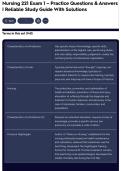
Characteristics of a Profession: Has specific body of knowledge, specific skills,
administration of the highest care, performing duties
and care safely, responsibility, judgement, usually has
certifying body or professional organization
Characteristics of a Job: Typically performed w/out "thought," may/may not
require advanced knowledge, typically no
association linked to it, requires less training, typically
pays less, and may/may not have a Scope of Practice
Nursing: The protection, promotion, and optimization of
health and abilities, prevention of illness and injury,
alleviation of suffering through the diagnosis and
treatment of human response, and advocacy in the
care of individuals, families, communities, and
populations
Characteristics of a Profession (5) Requires an extended education, requires a body of
knowledge, provides a specific service, has
autonomy, incorporates a code of ethics
Florence Nightingale Author of "Notes on Nursing," established the first
nursing philosophy based on health maintenance
and restoration, believed that cleanliness was the
best thing, developed The Nightingale Training
School for Nurses at St. Thomas Hospital in London,
first practicing nurse epidemiologist, decreased the
soldier mortality rate during the Civil War
,Clara Barton Founded the American Red Cross, tended the
soldiers on the battlefield, changed dressings, met
basic needs and provided care for the dying.
Mother Bickerdyke Developed the first ambulance system for Civil War
soldiers
Mary Mahoney First African American professionally trained nurse
Contemporary Influences on Nursing Public Perception: very positive, majority of public
see nurses as most honest, trustworthy, and
knowledgeable
Protect the Public: ensure safety, constantly assess
for safety issues, prevention of hospital errors
Influences on Nursing Nurse's Self Care Act: caring for self helps in caring
for others
prolonged exposure to noise, alarms, chronic illness,
social issues, can lead to "Nursing Burnout" resulting
in poor job performance, withdraw,
physical/psychiatric illness, changing jobs
Impact of Nursing on Public Policy Political Power: the ability to influence or persuade a
government official
Nursing has a powerful lobby for health care
changes
Professional nursing organization and state boards of
nursing exert a powerful influence over government
politics
Nursing Unity Day Opportunity to network with legislators and make a
powerful statement in lab coats
present posters
, Challenges of the Healthcare System New technology, new medications, new diseases,
Healthcare is a business, must make a profit and
minimize losses, earlier discharges, sicker upon
discharges, more complex health issues, myriad of
social issues, increasing need for nursing homes,
rehab and home health, gaps in healthcare may
produce readmission
PPS: Prospective Payment System 1983, Eliminated reimbursement based on cost,
Facilities serving Medicare/Medicaid patients and
receiving those benefits could no longer charge
actual cost of care, cost only based on diagnosis
related groups, Capitated Payments: fixed amounts
per payment enrollee. Goal is to shorten stay with
discharge planning done early in stay
Managed Care Provides comprehensive preventive and treatment
services to to a specific group of voluntarily enrolled
people. Focuses on health maintenance, primary
care. All care is provided by primary healthcare
physician. Referral is needed to access a specialist
and hospitalization. GOAL: to keep people healthy
Preferred Provider Organization Type of managed care plan that limits the enrollee's
choice to a list of "preferred" hospitals, physicians,
and providers. Pay more out-of-pocket expenses for
not using the list. Focus is on Health Maintenance
Medicare A: Provides basic protection for medical, surgical,
and psychiatric care costs based on diagnosis
related groups and provides limited skilled nursing
facility care, hospice, and home health care.
B: voluntary medical insurance; covers physicians,
certain other specified health professional service,
and certain outpatient services
C: a managed care provision that provides a choice
of three insurance plans
D: a voluntary Prescription Drug Improvement
| Reliable Study Guide With Solutions
Save
Terms in this set (140)
Characteristics of a Profession: Has specific body of knowledge, specific skills,
administration of the highest care, performing duties
and care safely, responsibility, judgement, usually has
certifying body or professional organization
Characteristics of a Job: Typically performed w/out "thought," may/may not
require advanced knowledge, typically no
association linked to it, requires less training, typically
pays less, and may/may not have a Scope of Practice
Nursing: The protection, promotion, and optimization of
health and abilities, prevention of illness and injury,
alleviation of suffering through the diagnosis and
treatment of human response, and advocacy in the
care of individuals, families, communities, and
populations
Characteristics of a Profession (5) Requires an extended education, requires a body of
knowledge, provides a specific service, has
autonomy, incorporates a code of ethics
Florence Nightingale Author of "Notes on Nursing," established the first
nursing philosophy based on health maintenance
and restoration, believed that cleanliness was the
best thing, developed The Nightingale Training
School for Nurses at St. Thomas Hospital in London,
first practicing nurse epidemiologist, decreased the
soldier mortality rate during the Civil War
,Clara Barton Founded the American Red Cross, tended the
soldiers on the battlefield, changed dressings, met
basic needs and provided care for the dying.
Mother Bickerdyke Developed the first ambulance system for Civil War
soldiers
Mary Mahoney First African American professionally trained nurse
Contemporary Influences on Nursing Public Perception: very positive, majority of public
see nurses as most honest, trustworthy, and
knowledgeable
Protect the Public: ensure safety, constantly assess
for safety issues, prevention of hospital errors
Influences on Nursing Nurse's Self Care Act: caring for self helps in caring
for others
prolonged exposure to noise, alarms, chronic illness,
social issues, can lead to "Nursing Burnout" resulting
in poor job performance, withdraw,
physical/psychiatric illness, changing jobs
Impact of Nursing on Public Policy Political Power: the ability to influence or persuade a
government official
Nursing has a powerful lobby for health care
changes
Professional nursing organization and state boards of
nursing exert a powerful influence over government
politics
Nursing Unity Day Opportunity to network with legislators and make a
powerful statement in lab coats
present posters
, Challenges of the Healthcare System New technology, new medications, new diseases,
Healthcare is a business, must make a profit and
minimize losses, earlier discharges, sicker upon
discharges, more complex health issues, myriad of
social issues, increasing need for nursing homes,
rehab and home health, gaps in healthcare may
produce readmission
PPS: Prospective Payment System 1983, Eliminated reimbursement based on cost,
Facilities serving Medicare/Medicaid patients and
receiving those benefits could no longer charge
actual cost of care, cost only based on diagnosis
related groups, Capitated Payments: fixed amounts
per payment enrollee. Goal is to shorten stay with
discharge planning done early in stay
Managed Care Provides comprehensive preventive and treatment
services to to a specific group of voluntarily enrolled
people. Focuses on health maintenance, primary
care. All care is provided by primary healthcare
physician. Referral is needed to access a specialist
and hospitalization. GOAL: to keep people healthy
Preferred Provider Organization Type of managed care plan that limits the enrollee's
choice to a list of "preferred" hospitals, physicians,
and providers. Pay more out-of-pocket expenses for
not using the list. Focus is on Health Maintenance
Medicare A: Provides basic protection for medical, surgical,
and psychiatric care costs based on diagnosis
related groups and provides limited skilled nursing
facility care, hospice, and home health care.
B: voluntary medical insurance; covers physicians,
certain other specified health professional service,
and certain outpatient services
C: a managed care provision that provides a choice
of three insurance plans
D: a voluntary Prescription Drug Improvement


