ACIDS AND BASES
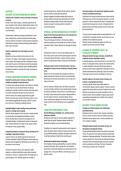
You get 3 definitions for an acid and a base:
1. Arrhenius
Acid Produces H₃O⁺ (hydronium ions) in water.
Base Produces OH⁻ (hydroxide ions) in water.
Limitation Only applies to reactions in water.
2. Bronsted lowry
Acid Proton (H+) donor
Base Proton acceptor
Works for any solvent
3. Lewis
Acid Electron pair acceptor
Base Electron pair donor
Conjugate Acid-base pairs are species that differ only by presence of max
one proton
Conjugate Acid (CA): Formed when a base gains a proton.
Conjugate Base (CB): Formed when an acid loses a proton.
Stronger the acid, the weaker its CB
Stronger the base. The weaker its CA
The pH Scale and Autoionization of Water
Kw = [H₃O⁺][OH⁻] = 10^-14 at 25C
In pure NEUTRAL water (distilled water): [H₃O⁺] = [OH⁻] = 10^-7M
pH = -log[H₃O⁺] or simply pH = -log[H⁺]
Acidic solution, [H3O+}>[OH-], so basic will be opposite
pH + pOH = 14.
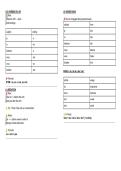
Strong Acids: Strong Bases:
If the number of oxygen atoms Metal hydroxides of Group 1 and
exceeds the number of ionizable the heavier Group 2 metals are
hydrogens by 2 or more, it’s often strong bases.
strong.
1. HClO4 H-O=1-4=3 1. LiOH
2. HBr 2. NaOH
3. HI 3. KOH
4. HF 4. RbOH
, 5. H2SO4 H-O=2-4=2 5. CsOH
6. HNO3 H-O=1-3=2 6. Ca(OH)2
7. Ba(OH)2
8. Sr(OH)2
Weak Acids: Weak bases:
1. HNO2 Nitrous acid 13. NH3 Ammonia
2. H2S03 Sulphurous acid 14. C6H5NH2 Aniline
3. HCLO2 Chlorus acid 15. CH3NH2
4. HCLO Hypochlorous acid Methylamine
5. HC2H3O2 Acetic acid 16. C5H5N Pyridine
6. H2CO3 Carbonic acid
7. H3PO Phosphoric acid
8. HF Hydrofluoric acid
9. H2S Hydro sulfuric acid
10. HCN Hydrocyanic
acid
11. HCOOH Formic acid
12. NH4 ammonium
Key note:
Calculating pH: For a strong acid, [H₃O⁺] = initial concentration of
acid. For a strong base like M(OH)₂, [OH⁻] = 2 x initial concentration
of base.
A weak acid/base will not dissociate completely in water, a strong
acid/base will
Ka Products/reactants for acid
Kb Products/reactants for base
Higher Ka val, stronger acid
Higher Kb val, stronger base
conjugate acid-base pair: Ka x Kb = Kw = 10⁻¹⁴
% Ionisation
Measure of weak acid strength.
% = ([H₃O⁺]eq / [HA]initial) x 100
Strong acid will have high % ionisation
There are also acids that can donate more than one H+ (Polyprotic acids)
You get 3 definitions for an acid and a base:
1. Arrhenius
Acid Produces H₃O⁺ (hydronium ions) in water.
Base Produces OH⁻ (hydroxide ions) in water.
Limitation Only applies to reactions in water.
2. Bronsted lowry
Acid Proton (H+) donor
Base Proton acceptor
Works for any solvent
3. Lewis
Acid Electron pair acceptor
Base Electron pair donor
Conjugate Acid-base pairs are species that differ only by presence of max
one proton
Conjugate Acid (CA): Formed when a base gains a proton.
Conjugate Base (CB): Formed when an acid loses a proton.
Stronger the acid, the weaker its CB
Stronger the base. The weaker its CA
The pH Scale and Autoionization of Water
Kw = [H₃O⁺][OH⁻] = 10^-14 at 25C
In pure NEUTRAL water (distilled water): [H₃O⁺] = [OH⁻] = 10^-7M
pH = -log[H₃O⁺] or simply pH = -log[H⁺]
Acidic solution, [H3O+}>[OH-], so basic will be opposite
pH + pOH = 14.
Strong Acids: Strong Bases:
If the number of oxygen atoms Metal hydroxides of Group 1 and
exceeds the number of ionizable the heavier Group 2 metals are
hydrogens by 2 or more, it’s often strong bases.
strong.
1. HClO4 H-O=1-4=3 1. LiOH
2. HBr 2. NaOH
3. HI 3. KOH
4. HF 4. RbOH
, 5. H2SO4 H-O=2-4=2 5. CsOH
6. HNO3 H-O=1-3=2 6. Ca(OH)2
7. Ba(OH)2
8. Sr(OH)2
Weak Acids: Weak bases:
1. HNO2 Nitrous acid 13. NH3 Ammonia
2. H2S03 Sulphurous acid 14. C6H5NH2 Aniline
3. HCLO2 Chlorus acid 15. CH3NH2
4. HCLO Hypochlorous acid Methylamine
5. HC2H3O2 Acetic acid 16. C5H5N Pyridine
6. H2CO3 Carbonic acid
7. H3PO Phosphoric acid
8. HF Hydrofluoric acid
9. H2S Hydro sulfuric acid
10. HCN Hydrocyanic
acid
11. HCOOH Formic acid
12. NH4 ammonium
Key note:
Calculating pH: For a strong acid, [H₃O⁺] = initial concentration of
acid. For a strong base like M(OH)₂, [OH⁻] = 2 x initial concentration
of base.
A weak acid/base will not dissociate completely in water, a strong
acid/base will
Ka Products/reactants for acid
Kb Products/reactants for base
Higher Ka val, stronger acid
Higher Kb val, stronger base
conjugate acid-base pair: Ka x Kb = Kw = 10⁻¹⁴
% Ionisation
Measure of weak acid strength.
% = ([H₃O⁺]eq / [HA]initial) x 100
Strong acid will have high % ionisation
There are also acids that can donate more than one H+ (Polyprotic acids)