

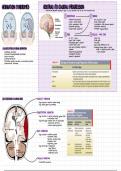
HERNIATION SYNDROMES ROSTRALTOCALDALPROGRESSO of the brainstem on
1 DIENCEPHALON D 2 MIDBRAIN
-
impaired consciousness -
pts May enter
. a cama
-
small 3 reactive pupils -
fixed midsize
, pupils
-
intast oculocephalis reflex -
osulocephalis reflex becomes impaired
-
decorticate posturing -
descrebrate posturing
-
Cheyne-Stokes respirations -
neurogenis hyperventilation
O
3 PONS 4 MEDLLLA-FINAL STAGE
-
Pt is
. in a coma -
deep coma
-
pupils fixed irregular -
fixed pupils
-
dysconjugate gaze is present -
flaccility
carneal reflex is last gag 3 sough reflexes are lost
- -
cold caloric stimulation response is breathing becomes ataxic or apreis
CLASSIFICATION OF BRAIN HERNATION
- -
impaired >
-
leads to respiratory arrest & death
.
1 subfalcine herniation -
hemiparesis/quadriparesis if left untreated
.
2 transalar (transsphenaidal) herniation -
decerebrate posturing
.
3 uncal herniation -
apneustis respirations
4
. central herniation
.
5 cerebellar tonsillar herniation >
-
irreversible herniation
.
6 transsalvarial herniation
KEY STRUCTURES i CLINICAL SIGNS · CINGULATE HERNIATION
-
key structures -
> anterior cerebral artery
-
key clinical signs + leg weakness
4 TRANSTENTORIAL HERNIATION
-
key structures - reticular activating system [RAS)
- corticospinal tract
-
key clinical signs + altered level of consciousness
>
-
decorticate pasturing
>
-
rostral-saudal progression
· UNCAL HERNIATION
-
key structures - cerebral peduncle
=> aculamator nerve
-
posterior serebral artery
# cerebellar tonsil
-
>
respiratory center
-
key slinical signs + hemiparesis
>-
pupil dilation
>
-
visual field loss
>
-
respiratory arrest
>
- TONSILLAR HERNIATION
-
irreversible herniation
, CRANIAL NERVE LESIONS often saused by
= wh head
V
* * common
OCULOMOTOR M TROCHLEAR M ABDLICENS M * most common
aneurysms injuries
TEST >
-
eye movement TEST >
-
eye movement TEST >
-
eye movement
- · -
OLFACTORY S LESION >
-
ptosis ,
dilated pupil , down 3 out LESION - cannot look at tip of nose LESION -> cannot adduct (false localising)
of smell
TEST -> sense (rarely dane)
CAUSES OF ANOSMIA :
-
URTI Smast comman)
-
smoking 3 ↑ age
-
ethmaid tumours
-
basal skull fracture/frontal fracture/
after pituitary surgery
-
congenital -> e g Kallmann's syndrome
.
.
-
following meningitis
-
meningioma of the olfactory groave
OPTIC S
V TRIGEMINAL B V FAGIAL B V VESTIBLLOCOCHLEAR S
TEST - visual acuity ABNORMALITIES >
-
mator weakness L SION =
facial asymmetry 3 weakness of most COCHLEAR LESIONS :
hearing loss
>
-
nothing/light/movement/count fingers/ >
-
difficulty clenching the jaw ipsilateral facial weakness (no ptosis]
shellen loss in V1-V3 sensation
VESTIBULAR DIVISION =
Vertigo
>
-
, pain ,
> visual fields & temperature sense
spares the forehead
-
4) MN >
-
>
-
corneal reflex
·
ipsilateral brain stem lesion
Bell's Palsy
= bilateral reflex loss
LMN -> e .
g .
·
unilateral facial nerve dyfuns .
-
-
GASSOPHARYNGEAL B VAGHS B = SPINAL ACCESSORY M HYPOGLOSSAL M
SENSORY fibers for gag-reflex MOTOR fibers for gag-reflex TESTS - shoug shoulders head side-to-side
, TEST >
-
tongue movement
ABNORMALITY : Absent pharyngeal ABNORMALITY : diminished velar movement L SION >
-
weakness unilateral LESION >
-
unilateral weakness
sensation (tested by touching the rear of ( the valar should elevate as the patient >
-
tongue deviates towards the opposite
the pharynx] says "Ohh") side of the lesion (weak sidel
CAUSES Of PALSIES : CAUSES Of PALSIES :
- Pseudobulbarpayalternal capsule infarcts
- Pseudobulbarpayalternal capsule infarcts
1 DIENCEPHALON D 2 MIDBRAIN
-
impaired consciousness -
pts May enter
. a cama
-
small 3 reactive pupils -
fixed midsize
, pupils
-
intast oculocephalis reflex -
osulocephalis reflex becomes impaired
-
decorticate posturing -
descrebrate posturing
-
Cheyne-Stokes respirations -
neurogenis hyperventilation
O
3 PONS 4 MEDLLLA-FINAL STAGE
-
Pt is
. in a coma -
deep coma
-
pupils fixed irregular -
fixed pupils
-
dysconjugate gaze is present -
flaccility
carneal reflex is last gag 3 sough reflexes are lost
- -
cold caloric stimulation response is breathing becomes ataxic or apreis
CLASSIFICATION OF BRAIN HERNATION
- -
impaired >
-
leads to respiratory arrest & death
.
1 subfalcine herniation -
hemiparesis/quadriparesis if left untreated
.
2 transalar (transsphenaidal) herniation -
decerebrate posturing
.
3 uncal herniation -
apneustis respirations
4
. central herniation
.
5 cerebellar tonsillar herniation >
-
irreversible herniation
.
6 transsalvarial herniation
KEY STRUCTURES i CLINICAL SIGNS · CINGULATE HERNIATION
-
key structures -
> anterior cerebral artery
-
key clinical signs + leg weakness
4 TRANSTENTORIAL HERNIATION
-
key structures - reticular activating system [RAS)
- corticospinal tract
-
key clinical signs + altered level of consciousness
>
-
decorticate pasturing
>
-
rostral-saudal progression
· UNCAL HERNIATION
-
key structures - cerebral peduncle
=> aculamator nerve
-
posterior serebral artery
# cerebellar tonsil
-
>
respiratory center
-
key slinical signs + hemiparesis
>-
pupil dilation
>
-
visual field loss
>
-
respiratory arrest
>
- TONSILLAR HERNIATION
-
irreversible herniation
, CRANIAL NERVE LESIONS often saused by
= wh head
V
* * common
OCULOMOTOR M TROCHLEAR M ABDLICENS M * most common
aneurysms injuries
TEST >
-
eye movement TEST >
-
eye movement TEST >
-
eye movement
- · -
OLFACTORY S LESION >
-
ptosis ,
dilated pupil , down 3 out LESION - cannot look at tip of nose LESION -> cannot adduct (false localising)
of smell
TEST -> sense (rarely dane)
CAUSES OF ANOSMIA :
-
URTI Smast comman)
-
smoking 3 ↑ age
-
ethmaid tumours
-
basal skull fracture/frontal fracture/
after pituitary surgery
-
congenital -> e g Kallmann's syndrome
.
.
-
following meningitis
-
meningioma of the olfactory groave
OPTIC S
V TRIGEMINAL B V FAGIAL B V VESTIBLLOCOCHLEAR S
TEST - visual acuity ABNORMALITIES >
-
mator weakness L SION =
facial asymmetry 3 weakness of most COCHLEAR LESIONS :
hearing loss
>
-
nothing/light/movement/count fingers/ >
-
difficulty clenching the jaw ipsilateral facial weakness (no ptosis]
shellen loss in V1-V3 sensation
VESTIBULAR DIVISION =
Vertigo
>
-
, pain ,
> visual fields & temperature sense
spares the forehead
-
4) MN >
-
>
-
corneal reflex
·
ipsilateral brain stem lesion
Bell's Palsy
= bilateral reflex loss
LMN -> e .
g .
·
unilateral facial nerve dyfuns .
-
-
GASSOPHARYNGEAL B VAGHS B = SPINAL ACCESSORY M HYPOGLOSSAL M
SENSORY fibers for gag-reflex MOTOR fibers for gag-reflex TESTS - shoug shoulders head side-to-side
, TEST >
-
tongue movement
ABNORMALITY : Absent pharyngeal ABNORMALITY : diminished velar movement L SION >
-
weakness unilateral LESION >
-
unilateral weakness
sensation (tested by touching the rear of ( the valar should elevate as the patient >
-
tongue deviates towards the opposite
the pharynx] says "Ohh") side of the lesion (weak sidel
CAUSES Of PALSIES : CAUSES Of PALSIES :
- Pseudobulbarpayalternal capsule infarcts
- Pseudobulbarpayalternal capsule infarcts


