

University of Santo Tomas
Latest uploads at University of Santo Tomas. Looking for notes at University of Santo Tomas? We have lots of notes, study guides and study notes available for your school.
-
144
-
3
-
2
All courses for University of Santo Tomas
-
Accountancy 0044 1
-
Acct 101 FIN003 23
-
Analysis Of Urine and Body Fluids 1
-
Anatomy 2
-
Anatomy and Physiology 32
-
Biochemistry 1
-
BT4 1
-
Building Technology BT5 1
-
CE226 1
-
Clinical Chemistry 1
-
D10 D10 1
-
Educ104 Edtect2 1
-
ENG 201 - Chemistry and its Applications 1
-
ENG 2010 1
-
ENG 2014 - Differential Equations 1
-
ENG 203-Calculus 1 1
-
ENG 206 - Integral Calculus 1
-
Ethics 1
-
Histopathology 1
-
HOA 2
-
Human Anatomy and Physiology 5
-
ICS2602 ICS2602 1
-
ME 2023 - Thermodynamics 2 3
-
ME 264 - Thermodynamics 1 1
-
ME 268 - Advanced Engineering Mathematics 1
-
Media and Information Literacy 1
-
Medical Biology Biology 10
-
Medicine 2
-
Micro Perspective of Tourism and Hospitality 2
-
MSHRM 4
-
Nursing 5
-
Nutrition 1
-
Parasitology 4
-
Pathology 1
-
Personal Development 1
-
PHA 614 1
-
Pharmaceutical Botany with Taxonomy PHA611 10
-
PHARMACEUTICAL MICROBIOLOGY AND PARASITOLOGY 3
-
PHARMACY INFORMATICS 1
-
Phlebotomy 1
-
PURPCOM 1
-
READ_PH 1
-
Risk Management 1
-
Social Science 1
-
Special Needs SNED7285 1
-
SPN1 1
-
Theories of Personality PSY434 1
-
Thermodynamics Sample Problems 2
-
THM520Macro Perspective of Tourism and Hospitality THM5202 1
-
THY1 1
Latest content University of Santo Tomas
This text discusses the skeletal system including its functions, structure, types of bones, and joints. Some key points: The skeletal system provides support, protects organs, allows movement, stores minerals, and produces blood cells. The extracellular matrix of bone consists of collagen, proteoglycans, minerals and water. There are four categories of bone: long, short, flat, and irregular. Long bones have a shaft, ends, and growth plates. Bone tissue consists of osteoblasts, osteocytes,...
- Book
- Summary
- • 39 pages's •
-
University Of Santo Tomas•Human Anatomy and Physiology
-
Seeley\'s Essentials of Anatomy and Physiology • Cinnamon Vanputte, Jennifer Regan, Andrew F. Russo• ISBN 9780077276195
Preview 4 out of 39 pages
Getting your document ready...
This text discusses the skeletal system including its functions, structure, types of bones, and joints. Some key points: The skeletal system provides support, protects organs, allows movement, stores minerals, and produces blood cells. The extracellular matrix of bone consists of collagen, proteoglycans, minerals and water. There are four categories of bone: long, short, flat, and irregular. Long bones have a shaft, ends, and growth plates. Bone tissue consists of osteoblasts, osteocytes,...
The text discusses the integumentary system, which consists of the skin, hair, glands, and nails. The skin performs several important functions, including protection, sensation, vitamin D production, temperature regulation, and excretion. The epidermis is the outer layer of skin and consists of stratified squamous epithelium divided into strata. The dermis is made of dense connective tissue and contains blood vessels, nerves, and skin appendages. Melanocytes in the dermis produce melanin that de...
- Book
- Summary
- • 19 pages's •
-
University Of Santo Tomas•Human Anatomy and Physiology
-
Seeley\'s Essentials of Anatomy and Physiology • Cinnamon Vanputte, Jennifer Regan, Andrew F. Russo• ISBN 9780077276195
Preview 3 out of 19 pages
Getting your document ready...
The text discusses the integumentary system, which consists of the skin, hair, glands, and nails. The skin performs several important functions, including protection, sensation, vitamin D production, temperature regulation, and excretion. The epidermis is the outer layer of skin and consists of stratified squamous epithelium divided into strata. The dermis is made of dense connective tissue and contains blood vessels, nerves, and skin appendages. Melanocytes in the dermis produce melanin that de...
This text discusses cell structure and function. Some key points: • Cells are the basic unit of life and consist of a nucleus, cytoplasm, and plasma membrane. The nucleus contains DNA which controls cell activity. The cytoplasm contains organelles that perform specific functions. • The plasma membrane regulates what enters and leaves the cell. Molecules can move across the membrane through passive diffusion, osmosis, or active carrier-mediated transport using protein channels and carri...
- Book
- Summary
- • 35 pages's •
-
University Of Santo Tomas•Anatomy and Physiology
-
Seeley\'s Essentials of Anatomy and Physiology • Cinnamon Vanputte, Jennifer Regan, Andrew F. Russo• ISBN 9780077276195
Preview 4 out of 35 pages
Getting your document ready...
This text discusses cell structure and function. Some key points: • Cells are the basic unit of life and consist of a nucleus, cytoplasm, and plasma membrane. The nucleus contains DNA which controls cell activity. The cytoplasm contains organelles that perform specific functions. • The plasma membrane regulates what enters and leaves the cell. Molecules can move across the membrane through passive diffusion, osmosis, or active carrier-mediated transport using protein channels and carri...
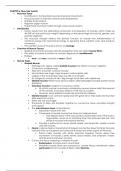
CHAPTER 6: Muscular System • Muscular Tissue o Contributes to homeostasis by producing body movements o Producing heat to maintain normal body temperature o Stabilize body position o Regulate organ volume o Propel fluids and food matter through various body systems • Introduction o Motion results from the alternating contraction and relaxation of muscles, which make up 40–50% of total adult body weight (depending on the percentage of body fat, gender, and exercise regimen). o Th...
- Book
- Summary
- • 134 pages's •
-
University Of Santo Tomas•Anatomy and Physiology
-
The Muscular System Manual - E-Book • Joseph E. Muscolino• ISBN 9780323327718
Preview 4 out of 134 pages
Getting your document ready...
CHAPTER 6: Muscular System • Muscular Tissue o Contributes to homeostasis by producing body movements o Producing heat to maintain normal body temperature o Stabilize body position o Regulate organ volume o Propel fluids and food matter through various body systems • Introduction o Motion results from the alternating contraction and relaxation of muscles, which make up 40–50% of total adult body weight (depending on the percentage of body fat, gender, and exercise regimen). o Th...
This text discusses the structure and function of the human body. Some key points: • Anatomy is the study of body structure, while physiology focuses on function. The two are interrelated - structure determines function. • The human body is organized hierarchically from smallest to largest: chemical, cellular, tissue, organ, organ system, organism. • The body has 11 organ systems that work together to maintain life. These include the integumentary, skeletal, muscular, nervous, e...
- Book
- Summary
- • 46 pages's •
-
University Of Santo Tomas•Anatomy and Physiology
-
Introduction to the Human Body • Gerard J. Tortora, Bryan H. Derrickson• ISBN 9780471367918
Preview 4 out of 46 pages
Getting your document ready...
This text discusses the structure and function of the human body. Some key points: • Anatomy is the study of body structure, while physiology focuses on function. The two are interrelated - structure determines function. • The human body is organized hierarchically from smallest to largest: chemical, cellular, tissue, organ, organ system, organism. • The body has 11 organ systems that work together to maintain life. These include the integumentary, skeletal, muscular, nervous, e...
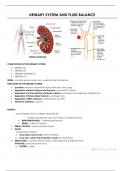
The text discusses the urinary system and fluid balance in the human body. The urinary system consists of the kidneys, ureters, urinary bladder, and urethra. The kidneys filter waste from the blood and regulate fluid balance and electrolyte concentration. The nephron is the functional unit of the kidney, consisting of a glomerulus and tubules. Urine is formed through filtration, reabsorption, and secretion in the nephron. The kidneys also regulate acid-base balance, extracellular fluid compositi...
- Summary
- • 6 pages's •
-
University Of Santo Tomas•Anatomy and Physiology
Preview 2 out of 6 pages
Getting your document ready...
The text discusses the urinary system and fluid balance in the human body. The urinary system consists of the kidneys, ureters, urinary bladder, and urethra. The kidneys filter waste from the blood and regulate fluid balance and electrolyte concentration. The nephron is the functional unit of the kidney, consisting of a glomerulus and tubules. Urine is formed through filtration, reabsorption, and secretion in the nephron. The kidneys also regulate acid-base balance, extracellular fluid compositi...
This text discusses the special senses of hearing, taste, sight, and smell. For hearing, the outer, middle, and inner ear structures are described. The outer ear collects sounds waves and directs them to the middle ear, which contains small bones that transmit vibrations to the inner ear. The inner ear contains fluids and structures that transform sound vibrations into neural signals. The cochlea transforms vibrations into signals that travel along the vestibulocochlear nerve. For taste...
- Book
- Summary
- • 9 pages's •
-
University Of Santo Tomas•Anatomy and Physiology
-
Physiology of the Special Senses • Greenwood Jr• ISBN 9781314256123
Preview 2 out of 9 pages
Getting your document ready...
This text discusses the special senses of hearing, taste, sight, and smell. For hearing, the outer, middle, and inner ear structures are described. The outer ear collects sounds waves and directs them to the middle ear, which contains small bones that transmit vibrations to the inner ear. The inner ear contains fluids and structures that transform sound vibrations into neural signals. The cochlea transforms vibrations into signals that travel along the vestibulocochlear nerve. For taste...
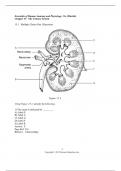
This text discusses the structure and function of the urinary system, specifically the kidneys. The kidneys are located retroperitoneally between the T12 and L3 vertebrae. They contain an outer renal cortex and inner renal medulla. The functional unit of the kidney is the nephron, which filters blood to form urine. Blood enters the glomerulus where glomerular filtration occurs, forming filtrate that contains water, solutes, and waste products. Most of the filtrate is reabsorbed in the proximal c...
- Book
- Exam (elaborations)
- • 31 pages's •
-
University Of Santo Tomas•Anatomy and Physiology
-
The Urinary System • Stephanie Watson• ISBN 9780313324024
Preview 4 out of 31 pages
Getting your document ready...
This text discusses the structure and function of the urinary system, specifically the kidneys. The kidneys are located retroperitoneally between the T12 and L3 vertebrae. They contain an outer renal cortex and inner renal medulla. The functional unit of the kidney is the nephron, which filters blood to form urine. Blood enters the glomerulus where glomerular filtration occurs, forming filtrate that contains water, solutes, and waste products. Most of the filtrate is reabsorbed in the proximal c...
This text discusses the anatomy and physiology of the urinary system. The key functions of the urinary system are eliminating waste products and regulating homeostasis through water balance, electrolyte regulation, and acid-base balance. The organs of the urinary system are the kidneys, ureters, urinary bladder, and urethra. The kidneys filter blood to form urine. The nephrons, which are the functional units of the kidneys, filter blood in the glomerulus and reabsorb water and nutrients in t...
- Book
- Summary
- • 12 pages's •
-
University Of Santo Tomas•Anatomy and Physiology
-
The Urinary System • Stephanie Watson• ISBN 9780313324024
Preview 2 out of 12 pages
Getting your document ready...
This text discusses the anatomy and physiology of the urinary system. The key functions of the urinary system are eliminating waste products and regulating homeostasis through water balance, electrolyte regulation, and acid-base balance. The organs of the urinary system are the kidneys, ureters, urinary bladder, and urethra. The kidneys filter blood to form urine. The nephrons, which are the functional units of the kidneys, filter blood in the glomerulus and reabsorb water and nutrients in t...
This text discusses the digestive system. The liver produces bile which aids in digestion. Jaundice is a condition caused by bile salts and bile pigments entering the bloodstream. Peyer's patches are lymphatic tissue found in the small intestine. The human body has 32 baby teeth. Saliva begins starch digestion in the mouth. The small intestine is the major site of absorption. The pyloric sphincter controls the movement of food from the stomach to the small intestine. Rennin digests milk protein....
- Book
- Exam (elaborations)
- • 35 pages's •
-
University Of Santo Tomas•Anatomy and Physiology
-
The Digestive System • Margaret E. Smith, Dion G. Morton• ISBN 9780443062452
Preview 4 out of 35 pages
Getting your document ready...
This text discusses the digestive system. The liver produces bile which aids in digestion. Jaundice is a condition caused by bile salts and bile pigments entering the bloodstream. Peyer's patches are lymphatic tissue found in the small intestine. The human body has 32 baby teeth. Saliva begins starch digestion in the mouth. The small intestine is the major site of absorption. The pyloric sphincter controls the movement of food from the stomach to the small intestine. Rennin digests milk protein....