University of Western Ontario (UWO ) • Business
Latest uploads for Business at University of Western Ontario (UWO ). Looking for Business notes at University of Western Ontario (UWO )? We have lots of notes, study guides and study notes available for Business at University of Western Ontario (UWO ).
-
33
- 0
-
2
Courses Business at University of Western Ontario (UWO )
Notes available for the following courses of Business at University of Western Ontario (UWO )
Latest content University of Western Ontario (UWO ) • Business
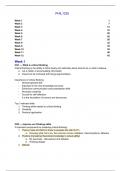
These notes include every week (weeks 1-12) from the philosophy 1230 course. Includes notes from every week's lectures and readings. Extremely comprehensive and helped at least 4 people get a 4.0 in the course.
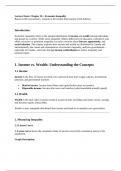
These lecture notes from Chapter 18 of Microeconomics: Canada in the Global Environment (11th Edition) examine the distribution of income and wealth in Canada and globally. The notes explain how inequality is measured using tools like the Lorenz curve and Gini coefficient and highlight trends in Canadian and international inequality. They explore the sources of inequality—including labour market differences, capital income, and systemic barriers—and discuss how Canada reduces inequality thro...
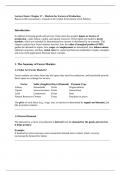
These lecture notes from Chapter 17 of Microeconomics: Canada in the Global Environment (11th Edition) explore how markets for factors of production—labour, capital, land, and natural resources—determine income distribution and resource allocation. The notes explain how the value of marginal product (VMP) guides a firm’s demand for each factor and how wages, employment, and rental rates are set through supply and demand interactions. The role of labour unions, minimum wages, and productivi...
These lecture notes from Chapter 16 of Microeconomics: Canada in the Global Environment (11th Edition) examine the economic challenges associated with public goods and common resources. The notes distinguish between private goods, public goods, common resources, and club goods based on rivalry and excludability. They explain how the **free-rider problem** leads to underproduction of public goods and how the **tragedy of the commons** results in overuse of shared resources. Graphs illustrate inef...
These lecture notes from Chapter 15 of Microeconomics: Canada in the Global Environment (11th Edition) explore how externalities—costs or benefits affecting third parties—lead to market failure. Negative externalities like pollution result in overproduction, while positive externalities like vaccinations cause underproduction. Graphs illustrate the gaps between private and social costs or benefits, highlighting resulting deadweight losses. The notes explain corrective tools such as Pigovian ...
These lecture notes from Chapter 14 of *Microeconomics: Canada in the Global Environment (11th Edition)* explore oligopoly, a market structure characterized by few dominant firms and strategic interdependence. The notes explain how game theory, including payoff matrices and the prisoner’s dilemma, helps predict firm behavior regarding price, output, advertising, and R&D. The kinked demand curve model illustrates price rigidity in oligopolies. Real-world examples from airlines, telecoms, and su...
These lecture notes from Chapter 13 of *Microeconomics: Canada in the Global Environment (11th Edition)* explore monopolistic competition, a common market structure characterized by many firms offering differentiated products. The notes explain how firms set prices and output in the short run—earning profits or losses—and how long-run entry erodes economic profit. Graphs illustrate equilibrium conditions and inefficiencies such as excess capacity. The chapter also explains why firms spend he...
These lecture notes from Chapter 12 of *Microeconomics: Canada in the Global Environment (11th Edition)* explore the nature and behavior of monopolies. They explain how monopolies arise through barriers to entry and how a single-price monopolist determines output where marginal revenue equals marginal cost. The notes compare monopoly outcomes to perfect competition, highlighting reduced output, higher prices, and deadweight loss. Price discrimination is examined as a strategy to increase profit ...
These lecture notes from Chapter 11 of *Microeconomics: Canada in the Global Environment (11th Edition)* explore the characteristics and dynamics of perfect competition. The notes explain how firms act as price takers, make output decisions by equating marginal cost and marginal revenue, and earn profits or incur losses in the short run. In the long run, entry and exit drive the market to zero economic profit and productive efficiency. Technological advancements lower costs and shift supply. Per...
These lecture notes from Chapter 10 of *Microeconomics: Canada in the Global Environment (11th Edition)* explain how firms make production decisions by analyzing costs in the short run and long run. The notes distinguish between accounting and economic profit, define total, marginal, and average product, and derive short-run cost curves like marginal cost and average total cost. They also introduce the long-run average cost curve, explaining how firms experience economies and diseconomies of sca...