Nudging lectures
Lecture 1
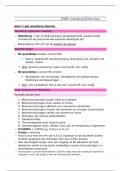
Nudging is a behavior change method. Nudging relies on a different system: two ways to think:
1. Automatic/Impulsive
2. Reflective/Rational
What system do we use more often? We make a lot of mental shortcuts, so we use the automatic
system more often.
What kind of shortcuts?
- Shortcuts to perceive the world/make it easier to perceive the world: e.g. cheerleader effect.
People look more attractive in a group than when looked at individually. This is because we
attribute group characteristics to each individual, this is easier for our brain. Also a mental
shortcut: clustering illusion. Random groups of dots are perceived as a pattern by humans.
- Shortcuts we use to judge/perceive ourself: e.g. ‘IKEA-effect’. If you put effort into something
you yourself produce, you perceive it as more valuable than when a store has built it already.
We think our expertise is as high as an IKEA employee. Also: Planning fallacy: we think we are
quicker with different actions (e.g. studying) than we are in reality. We overestimate our
ability.
We’re not always aware of our mental shortcuts, so that might pose some problems.
GI Joe bias: we think that knowing/being aware of our mental shortcuts/cognitive biases/heuristics, is
sufficient in overcoming them, but that is not the case. Most actions we do are based on e.g. habits.
That’s were nudging comes to play. Because our behavior is so influenced by mental shortcuts,
nudges are really suited to help alter our behavior.
Biases are not always a bad thing, but there are biases that lead to suboptimal choices. We can also
make use of those biases via nudges. A Nudge is any aspect of the choice architecture that alters
people’s behavior in a predictable way without forbidding any options or significantly changing their
economic incentives. E.g. ‘default bias’; people tend to go for the default option, so if you make the
default option the ‘right’ option, you nudge people in the good direction. However, you’re
influencing people – subconsciously – to make choices you want them to make, is that manipulative?
Libertarian paternalism: preserve people’s freedom of choice, but also nudge them into making the
best/healthiest choice. So don’t forbid choices, but make the best choices easier to make.
What kind of behavior should we nudge? Choices that:
- Have a delayed (positive) effect
- Are difficult
- Are infrequent
- Have poor feedback
- Have an unclear outcome
What makes a good nudge?
iNcentives: make the desired effects rewarding
Understand mappings: make choice outcomes clear
, Defaults: make use of laziness shortcuts
Give feedback: make choice-outcome clear
Expect error: by foreseeing shortcuts people will use
Structure complex choices: make choice outcome clear
Lecture 2:
The accessibility of a thought depends both on the characteristics of the cognitive system and on the
presence of an appropriate stimulus.
Nudges make ‘good’ choices more attractive and easy. There is theory behind nudges, not just an
idea. Some people worry about nudges their possible manipulation. Others think there is no problem
with it, if the freedom of choice is still intact.
Herbert Simon’s bounded rationality: E.g.: De theorie van Herbert A Simon dat besluitvorming zelden
volledig rationeel plaatsvindt. Op basis van onderzoek concludeerde Simon dat managers vaak snel
kiezen voor een tevredenstellende oplossing in plaats van voor de beste oplossing. People don’t have
the cognitive capacity to consider all pros and cons.
Classic economic theorists propose theories of rational decision making: people consider all options
and choose the one with maximum utility. However, full rationality is a normative standard
compared to which humans underperform.
In 1950s still behaviorism: they thought that the mental processes underlying behavior were
inaccessible (black box).
System 1 thinking (automatic) was discovered as part of the cognitive revolution after behaviorism.
System 2 (conscious) was ‘invented’ to regulate the irrational system 1. Nudges rely on system 1.
System 1 is default; this system is older: swift thinking is more adaptive than slow thinking, in case
immediate decisions are required to survive.
System 2 is the younger system; reflective consciousness and the capacity to think hypothetically
about the future.
Is System 1 prone to errors? Yes, that could be. Examples: Stroop task and the bat/ball example.
System 2 is not designed to correct System 1. But not always error prone. E.g. experts find it very
hard to explain their decisions; because of their experience they have an understanding that is
automatic. conscious deliberation may interfere, and experts might make more mistakes.
Critical words on dual systems:
Are they truly separate systems? Different features do not necessarily coincide. Unconscious =/
unintentional =/ uncontrollable =/ efficient. E.g. you might think a long time about what to get for
lunch, and want a healthy lunch, but end up with a hamburger.
Transparency of nudges does not ruin effects. Nudge was still effective. People tend to see the
default as an implicit recommendation.
What about ‘System 2 nudges?’ They are aimed at enhancing decision making competency. Type 2
nudges attract attention to reflectively adjust behavior by engaging System 2. Conventional
educational campaigns that help make complex choices are different from Type 2 nudges. Type 2
Lecture 1
Nudging is a behavior change method. Nudging relies on a different system: two ways to think:
1. Automatic/Impulsive
2. Reflective/Rational
What system do we use more often? We make a lot of mental shortcuts, so we use the automatic
system more often.
What kind of shortcuts?
- Shortcuts to perceive the world/make it easier to perceive the world: e.g. cheerleader effect.
People look more attractive in a group than when looked at individually. This is because we
attribute group characteristics to each individual, this is easier for our brain. Also a mental
shortcut: clustering illusion. Random groups of dots are perceived as a pattern by humans.
- Shortcuts we use to judge/perceive ourself: e.g. ‘IKEA-effect’. If you put effort into something
you yourself produce, you perceive it as more valuable than when a store has built it already.
We think our expertise is as high as an IKEA employee. Also: Planning fallacy: we think we are
quicker with different actions (e.g. studying) than we are in reality. We overestimate our
ability.
We’re not always aware of our mental shortcuts, so that might pose some problems.
GI Joe bias: we think that knowing/being aware of our mental shortcuts/cognitive biases/heuristics, is
sufficient in overcoming them, but that is not the case. Most actions we do are based on e.g. habits.
That’s were nudging comes to play. Because our behavior is so influenced by mental shortcuts,
nudges are really suited to help alter our behavior.
Biases are not always a bad thing, but there are biases that lead to suboptimal choices. We can also
make use of those biases via nudges. A Nudge is any aspect of the choice architecture that alters
people’s behavior in a predictable way without forbidding any options or significantly changing their
economic incentives. E.g. ‘default bias’; people tend to go for the default option, so if you make the
default option the ‘right’ option, you nudge people in the good direction. However, you’re
influencing people – subconsciously – to make choices you want them to make, is that manipulative?
Libertarian paternalism: preserve people’s freedom of choice, but also nudge them into making the
best/healthiest choice. So don’t forbid choices, but make the best choices easier to make.
What kind of behavior should we nudge? Choices that:
- Have a delayed (positive) effect
- Are difficult
- Are infrequent
- Have poor feedback
- Have an unclear outcome
What makes a good nudge?
iNcentives: make the desired effects rewarding
Understand mappings: make choice outcomes clear
, Defaults: make use of laziness shortcuts
Give feedback: make choice-outcome clear
Expect error: by foreseeing shortcuts people will use
Structure complex choices: make choice outcome clear
Lecture 2:
The accessibility of a thought depends both on the characteristics of the cognitive system and on the
presence of an appropriate stimulus.
Nudges make ‘good’ choices more attractive and easy. There is theory behind nudges, not just an
idea. Some people worry about nudges their possible manipulation. Others think there is no problem
with it, if the freedom of choice is still intact.
Herbert Simon’s bounded rationality: E.g.: De theorie van Herbert A Simon dat besluitvorming zelden
volledig rationeel plaatsvindt. Op basis van onderzoek concludeerde Simon dat managers vaak snel
kiezen voor een tevredenstellende oplossing in plaats van voor de beste oplossing. People don’t have
the cognitive capacity to consider all pros and cons.
Classic economic theorists propose theories of rational decision making: people consider all options
and choose the one with maximum utility. However, full rationality is a normative standard
compared to which humans underperform.
In 1950s still behaviorism: they thought that the mental processes underlying behavior were
inaccessible (black box).
System 1 thinking (automatic) was discovered as part of the cognitive revolution after behaviorism.
System 2 (conscious) was ‘invented’ to regulate the irrational system 1. Nudges rely on system 1.
System 1 is default; this system is older: swift thinking is more adaptive than slow thinking, in case
immediate decisions are required to survive.
System 2 is the younger system; reflective consciousness and the capacity to think hypothetically
about the future.
Is System 1 prone to errors? Yes, that could be. Examples: Stroop task and the bat/ball example.
System 2 is not designed to correct System 1. But not always error prone. E.g. experts find it very
hard to explain their decisions; because of their experience they have an understanding that is
automatic. conscious deliberation may interfere, and experts might make more mistakes.
Critical words on dual systems:
Are they truly separate systems? Different features do not necessarily coincide. Unconscious =/
unintentional =/ uncontrollable =/ efficient. E.g. you might think a long time about what to get for
lunch, and want a healthy lunch, but end up with a hamburger.
Transparency of nudges does not ruin effects. Nudge was still effective. People tend to see the
default as an implicit recommendation.
What about ‘System 2 nudges?’ They are aimed at enhancing decision making competency. Type 2
nudges attract attention to reflectively adjust behavior by engaging System 2. Conventional
educational campaigns that help make complex choices are different from Type 2 nudges. Type 2