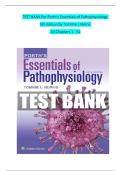
Test Bank
A Manual Of Laboratory And Diagnostic Tests
By Frances T Fischbach
11th Edition
, A Manual Of Laboratory And Diagnostic Tests
Contents
Editors
Contributors
Dedication
Preface
Acknowledgments
Diagnostic Testing
Blood Studies; Hematology And Coagulation
Urine Studies
Stool Studies
Cerebrospinal Fluid Studies
Chemistry Studies
Microbiologic Studies
8 Immunodiagnostic Studies
Nuclear Medicine Studies
X-Ray Studies
Cytologic, Histologic, And Genetic Studies
Endoscopic Studies
Ultrasound Studies
Pulmonary Function, Arterial Blood Gases (Abgs), And Electrolyte Studi S
Prenatal Diagnosis And Tests Of Fetal Well-Bein G
Special Systems, Organ Functions, And Postmortem Studies
Appendix A Standard/Universal Precautions
Appendix B Latex And Rubber Allergy Precautions
Appendix C Sedation And Analgesia Precautions
Appendix D Conversions From Conventional To Systéme International (Si) Units
Appendix E Guidelines For Specimen Transport And Storage
Appendix F Vitamins In Human Nutrition
Appendix G Minerals In Human Nutrition
Appendix H Examples Of Forms
Appendix I Panic Or Critical Values
Appendix J Effects Of The Most Commonly Used Drugs On Frequently Ordered Laboratory Tests (Blood, “Whole” Plasma, Serum, Stool, And Urine)
,Appendix K Protocols For Hair, Nails, Saliva, Sputum, And Breath Specimen Collection
Appendix L Protocols For Evidentiary Specimen Collection In Criminal Or Forensic Cases
Corrinne Strandell, Rn, Bsn, Msn, Phd
Contributors
Nursing Research, Home Care And Rehabilitation Specialist, West Allis, Wi
Bernice Gestout Deboer, Rn, Bsn, Cpan
Parish Nurse, Covenant Health Care, Milwaukee, Wi
Mary Pat Haas Schmidt, Bs, Mt
Manager, Laboratory Services, Pre-Insurance Testing; Instructor, Medical Technology, Waukesha, Wi
Jean Schultz, Es, Rt, Rd, Ms
Director Of Ultrasound And Radiology Education, St. Luke's Medical Center, Milwaukee, Wi
Patricia Pomohac, Mt (Ascp)
Supervisor, Diagnostic Immunology, Department Of Pathology, United Regional Medical Services, Inc., Milwaukee, Wi
Teresa Friedel Abrams, Rn, Bsn, Msn
Geriatric Nurse Specialist, Menomonee Falls Health Care Center, Menomonee Falls, Wi
Carol Colasacco, Ct (Ascp), Cmiac
Cytotechnologist, Department Of Pathology, Fletcher Allen Health Care, Burlington, Vt
Emma Felder, Rn, Bsn, Msn, Phd
Professor Emeritus, Nursing, University Of Wisconsin-Milwaukee, Milwaukee, Wi
Ann Shafranski Fischbach, Rn, Bsn
Occupational Health; Case Manager, Johnson Controls, Milwaukee, Wi
Bonnie Grahn, Rn, Cic
Infection Control Coordinator, Froedtert Memorial Lutheran Hospital, Milwaukee, Wi
Roger Groth
Ophthalmic Technologist, Eye Institute, Froedtert Memorial Lutheran Hospital, Milwaukee, Wi
Gary Hoffman
Manager, Laboratory For Newborn Screening, State Of Wisconsin, Madison, Wi
Karen Kehl, Phd
Assistant Professor-Pathology, Children's Hospital Of Wisconsin, Milwaukee, Wi
Susan Kirkpatrick, Ms
Genetic Counselor, Waisman Center, Madison, Wi
Stanley F. Lo, Phd
Assistant Professor-Pathology, Children's Hospital Of Wisconsin, Milwaukee, Wi
Lynn Mehlberg, Es, Cnmt
Director, Quality Assurance-Imaging Department, St. Luke's Medical Center, Milwaukee, Wi
Deborah B. Martin, Rn, Bsn
Community Health Nurse, Baltimore City Health Department, Maternal And Infant Program Field Office, Baltimore, Md
Lorraine Meisner, Phd
Cytogenetics, State Laboratory Of Hygiene, Madison, Wi
Christine Naczek, Mt (Ascp)
Manager, Blood Banking And Pre-Transfusion Testing, Department Of Pathology, United Regional Medical Services, Inc.,
Milwaukee, Wi
Anne Witkowiak Nezworski, Rn, Bsn
,Maternity and newborn specialist, sacred heart hospital, eau claire, wi
Joseph nezworski, es, rn, bsn
Chief deputy medical examiner, eau claire county, eau claire, wi
Richard nuccio, ba, ma, mba, cnmt, rt (ascp)
Global products, general electric medical systems, milwaukee, wi
Annette o'gorman, rn, esn, msncs
Family nurse practitioner, em care s.c., milwaukee, wi
Tracey ryan, rd
Chief clinical dietitian, froedtert memorial lutheran hospital, milwaukee, wi
Julie saavedra, rn, ba, bsn, cgrn
Nursing manager, department of endoscopy, rush-presbyterian-st. Luke's medical center, chicago, il
John shalkham
Program director for school of cytotechnology, state laboratory of hygiene, clinical assistant professor–department of
pathology, university of wisconsin, madison, wi
Eleanor c. Simms, rnc, bsn
Specialist, nursing student enrichment program, coppin state college, helene fuld school of nursing, baltimore, md
Nancy a. Staszak, rn, bsn, ccrn
Education coordinator-qa & staff development, froedtert memorial lutheran hospital, milwaukee, wi
Frank g. Steffel, bs, cnmt
Program director-nuclear medicine technology, department of radiology, froedtert memorial lutheran hospital, milwaukee,
wi
Rosalie wilson steiner, rn, bsn, msn, phd
Community health specialist, milwaukee, wi
Thudung tieu
Qa/safety coordinator, united dynacare laboratories, milwaukee, wi
Jean m. Trione, rph
Clinical specialist, wausau hospital, wausau, wi
Beverly wheeler, rn, bsn, msn, cs
Cardiology; cardiothoracic nurse specialistm, national naval medical center, bethesda, md
Michael zacharisen, md
Assistant professor-pediatrics, children's hospital of wisconsin, milwaukee, wi
, Dedication
To michael, mary, paul, and margaret
, Editors
Frances talaska fischbach, rn, bsn, msn
Associate clinical professor of nursing
department of health restoration school
of nursing
University of wisconsin-milwaukee
Milwaukee, wisconsin; associate professor of nursing (ret) school
of nursing
University of wisconsin-milwaukee
milwaukee, wisconsin
Marshall barnett dunning, iii, bs, ms, phd
Associate professor of medicine
department of medicine
Division of pulmonary/critical care medicine medical
college of wisconsin, milwaukee wisconsin; director
Pulmonary diagnostic laboratory
froedtert memorial lutheran hospital
milwaukee, wisconsin
Quincy mcdonald
Acquisitions editor
Sharon nowak/marie rim
Editorial assistant
Debra schiff
Senior production editor
Helen ewan
Senior production manager
Erika kors
Managing editor / production
Carolyn o'brien
Art director
Bj crim
Design
William alberti
Manufacturing manager
Alexandra nickerson
Indexer
Preface
purpose
The purpose of a manual of laboratory and diagnostic tests, in this seventh edition, is to promote the delivery of safe,
effective, and informed care for patients undergoing diagnostic tests and procedures and also to provide the clinician and
student with a unique resource. This comprehensive manual provides a foundation for understanding the relatively simple
to the most highly complex diagnostic tests that are delivered to varied populations in varied settings. It describes the
clinician's role in providing effective diagnostic services in depth, through affording the necessary information for quality
care planning, individualized patient assessment, analysis of patient needs, appropriate interventions, patient education,
patient follow-up, and timely outcome evaluation.
Potential risks and complications of diagnostic testing mandate that proper test protocols, interfering factors, follow-up
testing, and collaboration among those involved in the testing process be a significant part of the information included in
this text.
Organization
,This book is organized into 16 chapters and 12 appendices. Chapter 1 outlines the clinician's role in diagnostic testing
and includes interventions for safe, effective, informed pre-, intra-, and posttest care. This chapter includes a patient's bill
of rights and responsibilities, a model for the role of the clinical team in providing diagnostic care and services, test
environments, reimbursement for diagnostic services, and the importance of communication as key to desired outcomes.
The intratest section is expanded to include information about collaborative approaches facilitating family presence during
invasive procedures, risk management, the collection, handling, and transport of specimens, infection control, controlling
pain, comfort measures, administration of drugs and solutions, monitoring fluid intake and loss, using required equipment
kits and supplies, properly positioning the patient for the procedure, managing the environment, and patient monitoring.
The reader is referred back to chapter 1, diagnostic testing, throughout the text for information about the clinician's role
and diagnostic services. Chapter 2, chapter 3, chapter 4, chapter 5, chapter 6, chapter 7, chapter 8, chapter 9,
Chapter 10, chapter 11, chapter 12, chapter 13, chapter 14, chapter 15 and chapter 16 focus upon specific categories
that include:
Chapter 2: blood studies
chapter 3: urine studies
chapter 4: stool studies
Chapter 5: cerebrospinal fluid studies chapter
6: chemistry studies
Chapter 7: microbiologic studies
chapter 8: immunodiagnostic studies
chapter 9: nuclear medicine studies
chapter 10: x-ray studies
Chapter 11: cytology, histology, and genetic studies chapter
12: endoscopic studies
Chapter 13: ultrasound studies
Chapter 14: pulmonary function and blood gas studies chapter
15: prenatal diagnosis and tests of fetal well-being
Chapter 16: special systems, organ functions, and postmortem studies
Chapter content and features
background rationale
test purpose
interfering factors
description of the procedure protocol and time frames and test completion
reference ranges and normal values, expectations
patient involvement (eg, history of signs and symptoms, body position, breathing instructions, electrode placement,
compliance issues, patient right to refuse testing)
method of specimen collection (biohazard guidelines), handling, and transportation
Clinical implications with interpretation of abnormal findings, unexpected outcomes, and disease patterns
interventions for pretest patient preparation (medications, fasting), explanation of benefits and risks, intratest
patient care (appropriate monitoring, conscious sedation), and posttest patient aftercare (includes monitoring,
explanation of further testing and treatment modalities)
Special features integrated into the format include:
the clinician's role in providing diagnostic services.
clinical alerts and education alerts that signal special cautions.
specific guidelines listed for each test phase.
expected outcomes with evidence-based patient expectations and reference ranges as defined by the specialty.
a user-friendly format of the text to support easy information retrieval.
both conventional and si units are listed and, where possible, age-related reference values are also listed as a
Component of normal reference values.
numerous examples of test values and clinical considerations for newborn, infant, child, adolescent, and older
adult groups where appropriate.
a bibliography at the end of each chapter representing a composite of selected references from various
disciplines and directs the clinician to information available beyond the scope of this book. Extensive appendices
providing the clinician with additional data for everyday practice.
current, complete, and accurate content, which has been compiled from various multidisciplinary sources, then
carefully scrutinized and continually reevaluated.
New information in the seventh edition
The addition of many new tests and methodologies includes:
newborn screening for inherited disease
Updated pap smears and protocols for further testing
cytokines
Metabolic autopsy
Tissue (histology) biopsies and predictive markers for treatment response
, Tests for bone disease
tests for heart disease, congestive and acute mi disease
microbiological testing, bioterrorism agents, detecting food poisoning, anthrax, plague, and hemorrhagic fever
breast diagnostic and prognostic markers
fetal predictive tests of abnormal
development breath tests for ulcers, alcohol,
lactose, etc.
fertility tests
expanded scope of magnetic resonance (mri) scans
expanded scope of sleep/sleepiness studies in newborns, children, older adults
new nuclear tumor and infection scans
pet scans combined with ct spiral imaging and ultrasound
ductal lavage for determining gail index for breast cancer risk
new sentinel node localization
leep gyn procedure
eye tests for retinal disorders, macular degeneration, visual acuity, and glaucoma
Expanded content on keeping records of diagnostic tests, use of proper forms, and standardized patient reports
panels of multiple tests (e.g., metabolic syndrome, syndrome x) within chapter 6 chemistry tests
The appendices are completely revised and contain many additions. For example, appendix d offers information
regarding collection of saliva, breath, nail, sputum, and hair specimens. Appendix h provides examples of commonly
used forms and infrequently used forms (videotaping, refusal). Appendix l deals with guidelines for collecting evidentiary
specimens.
Revised chapters include changes in the clinician's role and reflect current laboratory and diagnostic practice standards.
Throughout the text, a greater emphasis is placed upon communication skills and collaboration between patients, their
significant others, and health professionals from diverse disciplines. When clinicians see patients in the context of what
the patient and loved ones are experiencing (ie, situational needs, expectations, previous experiences, and the
environment in which they live), only then can they offer meaningful support and care. When patients believe the clinician
is on their side, they have an increased sense of control. Identifying with the patient's point of view leads to a more
profound level of communication.
Current developments in laboratory and diagnostic testing
New technologies foster new scientific modalities for patient assessment and clinical interventions. Thus, the clinician is
provided a greater understanding of the long chain of events from diagnosis through treatment and outcomes. In a brief
span of years, new technologies have introduced greatly improved developments in total body and brain x-ray scanners;
digital and enhanced imaging; magnetic resonance (mr); positron emission tomography (pet) scanners, combination
scans such as pet and ct to diagnose cancer and infections; greatly enhanced ultrasound and nuclear medicine
procedures; genetic mutation studies; new tests for cancer; new cancer markers for diagnosis and prognosis; sleep
disorders tests; technology for fetal testing before birth, and postmortem testing after death. Many new technologies are
faster, more patient-friendly, more comfortable, and provide an equivalent or higher degree of accuracy (ie, hiv or
hepatitis detection, monitoring for drug abuse or managing therapeutic drug levels). Saliva and breath testing is gaining
ground as a mirror of body function and emotional, hormonal, immune, and neurologic status, as well as providing clues
about faulty metabolism. Noninvasive and minimally invasive testing, (ie, need only one drop of blood, nail and hair
clippings), which is better suited for testing in environments such as the workplace, private home, and other
nontraditional health care settings such as churches, is made possible by better collection methods and standardized
collection techniques. Newest diagnostic lab technologies include hand-held nucleic acid detectors for specific bacteria
and viruses, hand-held miniaturized chip-based dna analyzers, reagentless diagnostics that introduce the sample (hand,
finger, ear lobe, etc.) To magnetic fields, and magnetic resonance spectroscopy (mrs). Non-invasive and minimally
invasive diagnostics include infrared light to estimate glucose, rapid oral screen for hiv, proteinomics, functional and
molecular techniques. Managed care and its drive for control of costs for diagnostic services exerts a tremendous effect
on consumers' ability to access testing services care. This results in mixed access to services, depending upon approval
or denial of coverage.
,A resurgence in the use of traditional, trusted diagnostic modalities, such as electroencephalogram (eeg), is being seen
in certain areas. Diseases such as hiv, antibiotic-resistant strains of pathological organisms, and type 2 diabetes are
becoming more prevalent. In the workplace, thorough diagnostic testing is more common as applications are made for
disability benefits. Also, requirements for periodic monitoring of exposures to potentially hazardous workplace substances
(chemicals, heavy metals), breathing and hearing tests, and tb and latex allergy testing requires skill in administering and
procuring specimens. The number of forensic dna tests being performed has increased tremendously. Concurrently,
consumer perceptions have shifted from implicit faith in the health care system to concerns regarding less control over
choices for health care and more distrust of the system in general.
These trends—combined with a shift in diagnostic care from acute care hospital settings to outpatient departments,
physicians' offices, clinics, community-based centers, nursing homes, and sometimes even churches, stores and
pharmacies—challenge clinicians to provide standards-based, safe, effective, and informed care. Because the health
care system is becoming a community-based model, the clinician's role is also changing. Updated knowledge and skills,
flexibility, and a heightened awareness of the testing environment (point of care testing) are needed to provide
diagnostic services in these settings.
Clinicians must also adapt their practice to changes in other areas. This includes developing, coordinating, and following
policies and standards set forth by institutions, governmental bodies, and regulatory agencies. Being informed regarding
ethical and legal implications of such things as informed consent, privacy, patient safety, the right to refuse tests, end-of-
life decisions, and trends in diagnostic research procedures add another dimension to the clinician's accountability and
responsibility. The consequences of certain types of testing (ie, hiv and genetic) and the implications of confidential
versus anonymous testing must also be kept in mind. For example, anonymous tests do not require the individual to give
his or her name, whereas confidential tests do require the name. This difference has implications in the requirements
and process of agency reporting all patients as well as for select groups of infectious diseases such as hiv.
Responding to these trends, the seventh edition of a manual of laboratory and diagnostic tests is a comprehensive,
up-to-date diagnostic reference source that includes information about newer technologies, together with the time-
honored classic tests that continue to be an important component of diagnostic work. It meets the needs of clinicians,
educators, researches, students, and others whose work and study requires this type of resource or reference
Manual.
Frances talaska fischbach
, It is with sincere gratitude and pleasure that i acknowledge the collaboration of dr. Marshall b. Dunning for his diligence,
Acknowledgments
Extra effort, and graciousness in accomplishing the task of renewal and enhancement for the revision of this text, for the
7th edition, all in a timely manner.
I want to give special praise and recognition to my husband, jack fischbach, the best researcher i have ever had; to
corrinne strandell, mary pat schmidt, bernice deboer, pat pomohac, and jean schultz for their dedication, kindness,
support, and generous help in manuscript preparation; to kathie gordon, kathleen dunning, deanne shmitz, and margaret
fischbach, for carefully arranging, organizing, and typing the manuscript.
I would also like to acknowledge and thank all the reviewers, researchers, and consultants who provided ideas for
manuscript revision and whose comments to me have helped make the book better. This work would not have been
complete without the help and information provided by the librarians and staff of the todd wehr library of the medical
college of wisconsin, the marquette university library, and st. Joseph's hospital library; with thanks to dynacare
laboratories and medical science laboratories, especially for referencing their laboratory handbooks, and to the infection
control staff, neuroscience center, transplant services, transfusion services, eye institute, at froedtert memorial hospital of
milwaukee, wisconsin.
Appreciation and recognition are also due these persons who helped with this and previous editions: my daughters,
mary fischbach johnson, bs, ms ed, and margaret fischbach, ba, jd; my son-in-law, richard johnson, ba; my daughter-
in-law, ann shafranski fischbach, bsn; and the hard work on this edition and in the past of the entire staff at lippincott
williams & wilkins, especially sharon nowak, marie rim, quincy mcdonald, debra schiff, kim lilly, kathie barrie, and, as
always, jay lippincott. Writing a book is truly a labor of love, and the process makes me humble and thankful to many,
many individuals, named and unnamed, who have made it possible. Thanks for a job well done.
Frances fischbach
A Manual Of Laboratory And Diagnostic Tests
By Frances T Fischbach
11th Edition
, A Manual Of Laboratory And Diagnostic Tests
Contents
Editors
Contributors
Dedication
Preface
Acknowledgments
Diagnostic Testing
Blood Studies; Hematology And Coagulation
Urine Studies
Stool Studies
Cerebrospinal Fluid Studies
Chemistry Studies
Microbiologic Studies
8 Immunodiagnostic Studies
Nuclear Medicine Studies
X-Ray Studies
Cytologic, Histologic, And Genetic Studies
Endoscopic Studies
Ultrasound Studies
Pulmonary Function, Arterial Blood Gases (Abgs), And Electrolyte Studi S
Prenatal Diagnosis And Tests Of Fetal Well-Bein G
Special Systems, Organ Functions, And Postmortem Studies
Appendix A Standard/Universal Precautions
Appendix B Latex And Rubber Allergy Precautions
Appendix C Sedation And Analgesia Precautions
Appendix D Conversions From Conventional To Systéme International (Si) Units
Appendix E Guidelines For Specimen Transport And Storage
Appendix F Vitamins In Human Nutrition
Appendix G Minerals In Human Nutrition
Appendix H Examples Of Forms
Appendix I Panic Or Critical Values
Appendix J Effects Of The Most Commonly Used Drugs On Frequently Ordered Laboratory Tests (Blood, “Whole” Plasma, Serum, Stool, And Urine)
,Appendix K Protocols For Hair, Nails, Saliva, Sputum, And Breath Specimen Collection
Appendix L Protocols For Evidentiary Specimen Collection In Criminal Or Forensic Cases
Corrinne Strandell, Rn, Bsn, Msn, Phd
Contributors
Nursing Research, Home Care And Rehabilitation Specialist, West Allis, Wi
Bernice Gestout Deboer, Rn, Bsn, Cpan
Parish Nurse, Covenant Health Care, Milwaukee, Wi
Mary Pat Haas Schmidt, Bs, Mt
Manager, Laboratory Services, Pre-Insurance Testing; Instructor, Medical Technology, Waukesha, Wi
Jean Schultz, Es, Rt, Rd, Ms
Director Of Ultrasound And Radiology Education, St. Luke's Medical Center, Milwaukee, Wi
Patricia Pomohac, Mt (Ascp)
Supervisor, Diagnostic Immunology, Department Of Pathology, United Regional Medical Services, Inc., Milwaukee, Wi
Teresa Friedel Abrams, Rn, Bsn, Msn
Geriatric Nurse Specialist, Menomonee Falls Health Care Center, Menomonee Falls, Wi
Carol Colasacco, Ct (Ascp), Cmiac
Cytotechnologist, Department Of Pathology, Fletcher Allen Health Care, Burlington, Vt
Emma Felder, Rn, Bsn, Msn, Phd
Professor Emeritus, Nursing, University Of Wisconsin-Milwaukee, Milwaukee, Wi
Ann Shafranski Fischbach, Rn, Bsn
Occupational Health; Case Manager, Johnson Controls, Milwaukee, Wi
Bonnie Grahn, Rn, Cic
Infection Control Coordinator, Froedtert Memorial Lutheran Hospital, Milwaukee, Wi
Roger Groth
Ophthalmic Technologist, Eye Institute, Froedtert Memorial Lutheran Hospital, Milwaukee, Wi
Gary Hoffman
Manager, Laboratory For Newborn Screening, State Of Wisconsin, Madison, Wi
Karen Kehl, Phd
Assistant Professor-Pathology, Children's Hospital Of Wisconsin, Milwaukee, Wi
Susan Kirkpatrick, Ms
Genetic Counselor, Waisman Center, Madison, Wi
Stanley F. Lo, Phd
Assistant Professor-Pathology, Children's Hospital Of Wisconsin, Milwaukee, Wi
Lynn Mehlberg, Es, Cnmt
Director, Quality Assurance-Imaging Department, St. Luke's Medical Center, Milwaukee, Wi
Deborah B. Martin, Rn, Bsn
Community Health Nurse, Baltimore City Health Department, Maternal And Infant Program Field Office, Baltimore, Md
Lorraine Meisner, Phd
Cytogenetics, State Laboratory Of Hygiene, Madison, Wi
Christine Naczek, Mt (Ascp)
Manager, Blood Banking And Pre-Transfusion Testing, Department Of Pathology, United Regional Medical Services, Inc.,
Milwaukee, Wi
Anne Witkowiak Nezworski, Rn, Bsn
,Maternity and newborn specialist, sacred heart hospital, eau claire, wi
Joseph nezworski, es, rn, bsn
Chief deputy medical examiner, eau claire county, eau claire, wi
Richard nuccio, ba, ma, mba, cnmt, rt (ascp)
Global products, general electric medical systems, milwaukee, wi
Annette o'gorman, rn, esn, msncs
Family nurse practitioner, em care s.c., milwaukee, wi
Tracey ryan, rd
Chief clinical dietitian, froedtert memorial lutheran hospital, milwaukee, wi
Julie saavedra, rn, ba, bsn, cgrn
Nursing manager, department of endoscopy, rush-presbyterian-st. Luke's medical center, chicago, il
John shalkham
Program director for school of cytotechnology, state laboratory of hygiene, clinical assistant professor–department of
pathology, university of wisconsin, madison, wi
Eleanor c. Simms, rnc, bsn
Specialist, nursing student enrichment program, coppin state college, helene fuld school of nursing, baltimore, md
Nancy a. Staszak, rn, bsn, ccrn
Education coordinator-qa & staff development, froedtert memorial lutheran hospital, milwaukee, wi
Frank g. Steffel, bs, cnmt
Program director-nuclear medicine technology, department of radiology, froedtert memorial lutheran hospital, milwaukee,
wi
Rosalie wilson steiner, rn, bsn, msn, phd
Community health specialist, milwaukee, wi
Thudung tieu
Qa/safety coordinator, united dynacare laboratories, milwaukee, wi
Jean m. Trione, rph
Clinical specialist, wausau hospital, wausau, wi
Beverly wheeler, rn, bsn, msn, cs
Cardiology; cardiothoracic nurse specialistm, national naval medical center, bethesda, md
Michael zacharisen, md
Assistant professor-pediatrics, children's hospital of wisconsin, milwaukee, wi
, Dedication
To michael, mary, paul, and margaret
, Editors
Frances talaska fischbach, rn, bsn, msn
Associate clinical professor of nursing
department of health restoration school
of nursing
University of wisconsin-milwaukee
Milwaukee, wisconsin; associate professor of nursing (ret) school
of nursing
University of wisconsin-milwaukee
milwaukee, wisconsin
Marshall barnett dunning, iii, bs, ms, phd
Associate professor of medicine
department of medicine
Division of pulmonary/critical care medicine medical
college of wisconsin, milwaukee wisconsin; director
Pulmonary diagnostic laboratory
froedtert memorial lutheran hospital
milwaukee, wisconsin
Quincy mcdonald
Acquisitions editor
Sharon nowak/marie rim
Editorial assistant
Debra schiff
Senior production editor
Helen ewan
Senior production manager
Erika kors
Managing editor / production
Carolyn o'brien
Art director
Bj crim
Design
William alberti
Manufacturing manager
Alexandra nickerson
Indexer
Preface
purpose
The purpose of a manual of laboratory and diagnostic tests, in this seventh edition, is to promote the delivery of safe,
effective, and informed care for patients undergoing diagnostic tests and procedures and also to provide the clinician and
student with a unique resource. This comprehensive manual provides a foundation for understanding the relatively simple
to the most highly complex diagnostic tests that are delivered to varied populations in varied settings. It describes the
clinician's role in providing effective diagnostic services in depth, through affording the necessary information for quality
care planning, individualized patient assessment, analysis of patient needs, appropriate interventions, patient education,
patient follow-up, and timely outcome evaluation.
Potential risks and complications of diagnostic testing mandate that proper test protocols, interfering factors, follow-up
testing, and collaboration among those involved in the testing process be a significant part of the information included in
this text.
Organization
,This book is organized into 16 chapters and 12 appendices. Chapter 1 outlines the clinician's role in diagnostic testing
and includes interventions for safe, effective, informed pre-, intra-, and posttest care. This chapter includes a patient's bill
of rights and responsibilities, a model for the role of the clinical team in providing diagnostic care and services, test
environments, reimbursement for diagnostic services, and the importance of communication as key to desired outcomes.
The intratest section is expanded to include information about collaborative approaches facilitating family presence during
invasive procedures, risk management, the collection, handling, and transport of specimens, infection control, controlling
pain, comfort measures, administration of drugs and solutions, monitoring fluid intake and loss, using required equipment
kits and supplies, properly positioning the patient for the procedure, managing the environment, and patient monitoring.
The reader is referred back to chapter 1, diagnostic testing, throughout the text for information about the clinician's role
and diagnostic services. Chapter 2, chapter 3, chapter 4, chapter 5, chapter 6, chapter 7, chapter 8, chapter 9,
Chapter 10, chapter 11, chapter 12, chapter 13, chapter 14, chapter 15 and chapter 16 focus upon specific categories
that include:
Chapter 2: blood studies
chapter 3: urine studies
chapter 4: stool studies
Chapter 5: cerebrospinal fluid studies chapter
6: chemistry studies
Chapter 7: microbiologic studies
chapter 8: immunodiagnostic studies
chapter 9: nuclear medicine studies
chapter 10: x-ray studies
Chapter 11: cytology, histology, and genetic studies chapter
12: endoscopic studies
Chapter 13: ultrasound studies
Chapter 14: pulmonary function and blood gas studies chapter
15: prenatal diagnosis and tests of fetal well-being
Chapter 16: special systems, organ functions, and postmortem studies
Chapter content and features
background rationale
test purpose
interfering factors
description of the procedure protocol and time frames and test completion
reference ranges and normal values, expectations
patient involvement (eg, history of signs and symptoms, body position, breathing instructions, electrode placement,
compliance issues, patient right to refuse testing)
method of specimen collection (biohazard guidelines), handling, and transportation
Clinical implications with interpretation of abnormal findings, unexpected outcomes, and disease patterns
interventions for pretest patient preparation (medications, fasting), explanation of benefits and risks, intratest
patient care (appropriate monitoring, conscious sedation), and posttest patient aftercare (includes monitoring,
explanation of further testing and treatment modalities)
Special features integrated into the format include:
the clinician's role in providing diagnostic services.
clinical alerts and education alerts that signal special cautions.
specific guidelines listed for each test phase.
expected outcomes with evidence-based patient expectations and reference ranges as defined by the specialty.
a user-friendly format of the text to support easy information retrieval.
both conventional and si units are listed and, where possible, age-related reference values are also listed as a
Component of normal reference values.
numerous examples of test values and clinical considerations for newborn, infant, child, adolescent, and older
adult groups where appropriate.
a bibliography at the end of each chapter representing a composite of selected references from various
disciplines and directs the clinician to information available beyond the scope of this book. Extensive appendices
providing the clinician with additional data for everyday practice.
current, complete, and accurate content, which has been compiled from various multidisciplinary sources, then
carefully scrutinized and continually reevaluated.
New information in the seventh edition
The addition of many new tests and methodologies includes:
newborn screening for inherited disease
Updated pap smears and protocols for further testing
cytokines
Metabolic autopsy
Tissue (histology) biopsies and predictive markers for treatment response
, Tests for bone disease
tests for heart disease, congestive and acute mi disease
microbiological testing, bioterrorism agents, detecting food poisoning, anthrax, plague, and hemorrhagic fever
breast diagnostic and prognostic markers
fetal predictive tests of abnormal
development breath tests for ulcers, alcohol,
lactose, etc.
fertility tests
expanded scope of magnetic resonance (mri) scans
expanded scope of sleep/sleepiness studies in newborns, children, older adults
new nuclear tumor and infection scans
pet scans combined with ct spiral imaging and ultrasound
ductal lavage for determining gail index for breast cancer risk
new sentinel node localization
leep gyn procedure
eye tests for retinal disorders, macular degeneration, visual acuity, and glaucoma
Expanded content on keeping records of diagnostic tests, use of proper forms, and standardized patient reports
panels of multiple tests (e.g., metabolic syndrome, syndrome x) within chapter 6 chemistry tests
The appendices are completely revised and contain many additions. For example, appendix d offers information
regarding collection of saliva, breath, nail, sputum, and hair specimens. Appendix h provides examples of commonly
used forms and infrequently used forms (videotaping, refusal). Appendix l deals with guidelines for collecting evidentiary
specimens.
Revised chapters include changes in the clinician's role and reflect current laboratory and diagnostic practice standards.
Throughout the text, a greater emphasis is placed upon communication skills and collaboration between patients, their
significant others, and health professionals from diverse disciplines. When clinicians see patients in the context of what
the patient and loved ones are experiencing (ie, situational needs, expectations, previous experiences, and the
environment in which they live), only then can they offer meaningful support and care. When patients believe the clinician
is on their side, they have an increased sense of control. Identifying with the patient's point of view leads to a more
profound level of communication.
Current developments in laboratory and diagnostic testing
New technologies foster new scientific modalities for patient assessment and clinical interventions. Thus, the clinician is
provided a greater understanding of the long chain of events from diagnosis through treatment and outcomes. In a brief
span of years, new technologies have introduced greatly improved developments in total body and brain x-ray scanners;
digital and enhanced imaging; magnetic resonance (mr); positron emission tomography (pet) scanners, combination
scans such as pet and ct to diagnose cancer and infections; greatly enhanced ultrasound and nuclear medicine
procedures; genetic mutation studies; new tests for cancer; new cancer markers for diagnosis and prognosis; sleep
disorders tests; technology for fetal testing before birth, and postmortem testing after death. Many new technologies are
faster, more patient-friendly, more comfortable, and provide an equivalent or higher degree of accuracy (ie, hiv or
hepatitis detection, monitoring for drug abuse or managing therapeutic drug levels). Saliva and breath testing is gaining
ground as a mirror of body function and emotional, hormonal, immune, and neurologic status, as well as providing clues
about faulty metabolism. Noninvasive and minimally invasive testing, (ie, need only one drop of blood, nail and hair
clippings), which is better suited for testing in environments such as the workplace, private home, and other
nontraditional health care settings such as churches, is made possible by better collection methods and standardized
collection techniques. Newest diagnostic lab technologies include hand-held nucleic acid detectors for specific bacteria
and viruses, hand-held miniaturized chip-based dna analyzers, reagentless diagnostics that introduce the sample (hand,
finger, ear lobe, etc.) To magnetic fields, and magnetic resonance spectroscopy (mrs). Non-invasive and minimally
invasive diagnostics include infrared light to estimate glucose, rapid oral screen for hiv, proteinomics, functional and
molecular techniques. Managed care and its drive for control of costs for diagnostic services exerts a tremendous effect
on consumers' ability to access testing services care. This results in mixed access to services, depending upon approval
or denial of coverage.
,A resurgence in the use of traditional, trusted diagnostic modalities, such as electroencephalogram (eeg), is being seen
in certain areas. Diseases such as hiv, antibiotic-resistant strains of pathological organisms, and type 2 diabetes are
becoming more prevalent. In the workplace, thorough diagnostic testing is more common as applications are made for
disability benefits. Also, requirements for periodic monitoring of exposures to potentially hazardous workplace substances
(chemicals, heavy metals), breathing and hearing tests, and tb and latex allergy testing requires skill in administering and
procuring specimens. The number of forensic dna tests being performed has increased tremendously. Concurrently,
consumer perceptions have shifted from implicit faith in the health care system to concerns regarding less control over
choices for health care and more distrust of the system in general.
These trends—combined with a shift in diagnostic care from acute care hospital settings to outpatient departments,
physicians' offices, clinics, community-based centers, nursing homes, and sometimes even churches, stores and
pharmacies—challenge clinicians to provide standards-based, safe, effective, and informed care. Because the health
care system is becoming a community-based model, the clinician's role is also changing. Updated knowledge and skills,
flexibility, and a heightened awareness of the testing environment (point of care testing) are needed to provide
diagnostic services in these settings.
Clinicians must also adapt their practice to changes in other areas. This includes developing, coordinating, and following
policies and standards set forth by institutions, governmental bodies, and regulatory agencies. Being informed regarding
ethical and legal implications of such things as informed consent, privacy, patient safety, the right to refuse tests, end-of-
life decisions, and trends in diagnostic research procedures add another dimension to the clinician's accountability and
responsibility. The consequences of certain types of testing (ie, hiv and genetic) and the implications of confidential
versus anonymous testing must also be kept in mind. For example, anonymous tests do not require the individual to give
his or her name, whereas confidential tests do require the name. This difference has implications in the requirements
and process of agency reporting all patients as well as for select groups of infectious diseases such as hiv.
Responding to these trends, the seventh edition of a manual of laboratory and diagnostic tests is a comprehensive,
up-to-date diagnostic reference source that includes information about newer technologies, together with the time-
honored classic tests that continue to be an important component of diagnostic work. It meets the needs of clinicians,
educators, researches, students, and others whose work and study requires this type of resource or reference
Manual.
Frances talaska fischbach
, It is with sincere gratitude and pleasure that i acknowledge the collaboration of dr. Marshall b. Dunning for his diligence,
Acknowledgments
Extra effort, and graciousness in accomplishing the task of renewal and enhancement for the revision of this text, for the
7th edition, all in a timely manner.
I want to give special praise and recognition to my husband, jack fischbach, the best researcher i have ever had; to
corrinne strandell, mary pat schmidt, bernice deboer, pat pomohac, and jean schultz for their dedication, kindness,
support, and generous help in manuscript preparation; to kathie gordon, kathleen dunning, deanne shmitz, and margaret
fischbach, for carefully arranging, organizing, and typing the manuscript.
I would also like to acknowledge and thank all the reviewers, researchers, and consultants who provided ideas for
manuscript revision and whose comments to me have helped make the book better. This work would not have been
complete without the help and information provided by the librarians and staff of the todd wehr library of the medical
college of wisconsin, the marquette university library, and st. Joseph's hospital library; with thanks to dynacare
laboratories and medical science laboratories, especially for referencing their laboratory handbooks, and to the infection
control staff, neuroscience center, transplant services, transfusion services, eye institute, at froedtert memorial hospital of
milwaukee, wisconsin.
Appreciation and recognition are also due these persons who helped with this and previous editions: my daughters,
mary fischbach johnson, bs, ms ed, and margaret fischbach, ba, jd; my son-in-law, richard johnson, ba; my daughter-
in-law, ann shafranski fischbach, bsn; and the hard work on this edition and in the past of the entire staff at lippincott
williams & wilkins, especially sharon nowak, marie rim, quincy mcdonald, debra schiff, kim lilly, kathie barrie, and, as
always, jay lippincott. Writing a book is truly a labor of love, and the process makes me humble and thankful to many,
many individuals, named and unnamed, who have made it possible. Thanks for a job well done.
Frances fischbach