Lecture 2 – Marx & Weber
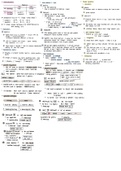
Karl Marx – The Basics
● Who he was: A 19th-century philosopher, journalist, and revolutionary thinker. He
wanted not just to understand society but to change it.
● Main question: Why are societies unequal, and how does that inequality create
conflict and change?
Exam tip: Be ready to explain why Marx is considered both a theorist and an activist — his
ideas were tied directly to a political project.
Materialism
● Core idea: The economy (how we produce and distribute goods) is the foundation of
society. Everything else — politics, law, culture, even religion — sits on top of this
“economic base.”
● Implication: To understand why laws or governments work the way they do, look at
who controls wealth and production.
Example: In capitalism, businesses (the bourgeoisie) own factories. Laws about property
protect them. Workers (the proletariat) have to sell their labor to survive.
Dialectical Change
● Dialectic (simple terms): Every system creates its own contradictions → these
contradictions clash → the clash produces a new system.
● Marx’s version (Dialectical Materialism): It’s not ideas alone that clash, but material
interests (classes fighting over resources).
Example:
● Feudalism had lords and peasants.
● Contradiction: peasants wanted freedom + land, lords wanted control.
● Result: the system collapsed → capitalism emerged.
Karl Marx – The Basics
● Who he was: A 19th-century philosopher, journalist, and revolutionary thinker. He
wanted not just to understand society but to change it.
● Main question: Why are societies unequal, and how does that inequality create
conflict and change?
Exam tip: Be ready to explain why Marx is considered both a theorist and an activist — his
ideas were tied directly to a political project.
Materialism
● Core idea: The economy (how we produce and distribute goods) is the foundation of
society. Everything else — politics, law, culture, even religion — sits on top of this
“economic base.”
● Implication: To understand why laws or governments work the way they do, look at
who controls wealth and production.
Example: In capitalism, businesses (the bourgeoisie) own factories. Laws about property
protect them. Workers (the proletariat) have to sell their labor to survive.
Dialectical Change
● Dialectic (simple terms): Every system creates its own contradictions → these
contradictions clash → the clash produces a new system.
● Marx’s version (Dialectical Materialism): It’s not ideas alone that clash, but material
interests (classes fighting over resources).
Example:
● Feudalism had lords and peasants.
● Contradiction: peasants wanted freedom + land, lords wanted control.
● Result: the system collapsed → capitalism emerged.