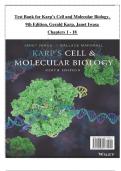
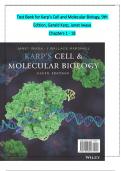
Test Bank for Karp’s Cell and Molecular Biology,
9th Edition, Gerald Karp, Janet Iwasa
Chapters 1 - 18
,Test Bank for Karp’s Cell and Molecular Biology 9th Edition Karp
Table of Contents:
Chapter 1: Introduction to the Study of Cell and Molecular Biology
Chapter 2: The Chemical Basis of Life
Chapter 3: Bioenergetics, Enzymes, and Metabolism
Chapter 4: The Structure and Function of the Plasma Membrane
Chapter 5: Aerobic Respiration and the Mitochondrion
Chapter 6: Photosynthesis and the Chloroplast
Chapter 7: Interactions between Cells and Their Environment
Chapter 8: Cytoplasmic Membrane Systems: Structure, Function, and Membrane
Trafficking
Chapter 9: The Cytoskeleton and Cell Motility
Chapter 10: The Nature of the Gene and the Genome
Chapter 11: The Central Dogma: DNA to RNA to Protein
Chapter 12: Control of Gene Expression
Chapter 13: DNA Replication and Repair
Chapter 14: Cell Division 6
Chapter 15: Cell Signaling and Signal Transduction: Communication between Cells
Chapter 16: Cancer
Chapter 17: The Immune Response
Chapter 18: Techniques in Cell and Molecular Biology
,Package Title: Test Bank
Course Title: Karp9e
Chapter Number: 1
Chapter 1: Introduction to the Study of Cell and Molecular Biology
Karp’s Cell and Molecular Biology, 9th Edition
Question Type: Multiple Choice
1) Who was the first person to name what he thought were single cells?
a) Leeuwenhoek
b) Hooke
c) Schleiden
d) Schwann
e) Virchow
ANSWER: b
Difficulty: Easy
Learning Objective: LO 1.1 Identify the three tenets of cell theory.
Section Reference: Section 1.1 The Discovery of Cells
2) The first compound light microscopes were constructed by the end of the sixteenth century. What
characteristic defines a compound microscope?
a) It has a moveable stage.
b) It has multiple lenses.
c) Its lens is double the size of simple microscopes.
d) The lens has two different colors.
e) It has two different light sources.
ANSWER: b
Difficulty: Easy
Learning Objective: LO 1.1 Identify the three tenets of cell theory.
Section Reference: Section 1.1 The Discovery of Cells
3) Who was the first scientist to examine and describe living cells?
a) Leeuwenhoek
b) Hooke
c) Schleiden
d) Schwann
e) Virchow
ANSWER: a
Difficulty: Easy
Learning Objective: LO 1.1 Identify the three tenets of cell theory.
Section Reference: Section 1.1 The Discovery of Cells
, 4) Who fis fgenerally fcredited fwith fthe fdiscovery fof fcells?
a) Leeuwenhoek
b) Hooke
c) Schleiden
d) Schwann
e) Virchow
fANSWER:
fb
Difficulty: fEasy
Learning fObjective: fLO f1.1 fIdentify fthe fthree ftenets fof fcell
ftheory.fSection fReference: fSection f1.1 fThe fDiscovery fof fCells
5) Despite fbeing fcorrect fabout fthe ffirst ftwo ftenets fof fthe fCell fTheory, fSchleiden fand fSchwann
fmade fanferror fabout fanother fcentral ffeature fof fcells. fWhat fwas ftheir fmistaken fclaim?
a) They fbelieved fthat fall fcells fwere fsmaller fthan f2 fµ fin fdiameter.
b) They fclaimed fthat fall fcells fwere fexactly fthe fsame fin fevery fdetail.
c) They fdescribed fcells fas fimmortal.
d) They fagreed fthat fcells fcould farise ffrom fnoncellular fmaterials.
e) They fstated fthat fall fcells fhad fnuclei fthrough ftheir fentire fexistence.
ANSWER: fd
fDifficulty: fMedium
Learning fObjective: fLO f1.1 fIdentify fthe fthree ftenets fof fcell ftheory.
Section fReference: fSection f1.1 fThe fDiscovery fof fCells
6) Which fof fthe ffollowing fcharacteristics fis fNOT fa fbasic fproperty fof fcells?
a) Cells fcarry fout fa fvariety fof femotional freactions.
b) Cells fengage fin fnumerous fmechanical factivities.
c) Cells fgenerally frespond fto fstimuli.
d) Cells fare fcapable fof fself-regulation.
e) Cells fevolve.
ANSWER: fa
fDifficulty: fEasy
Learning fObjective: fLO f1.2 fExplain fthe fimportance fof fthe ffundamental fproperties fshared fby fall fcells.
Section fReference: fSection f1.2 fBasic fProperties fof fCells
7) Which fof fthe ffollowing fstatements faccurately fcharacterize fcells?
a) Cells fare fhighly fcomplex fand forganized.
b) Cells fpossess fa fgenetic fprogram fand fthe fmeans fto fuse fit.
9th Edition, Gerald Karp, Janet Iwasa
Chapters 1 - 18
,Test Bank for Karp’s Cell and Molecular Biology 9th Edition Karp
Table of Contents:
Chapter 1: Introduction to the Study of Cell and Molecular Biology
Chapter 2: The Chemical Basis of Life
Chapter 3: Bioenergetics, Enzymes, and Metabolism
Chapter 4: The Structure and Function of the Plasma Membrane
Chapter 5: Aerobic Respiration and the Mitochondrion
Chapter 6: Photosynthesis and the Chloroplast
Chapter 7: Interactions between Cells and Their Environment
Chapter 8: Cytoplasmic Membrane Systems: Structure, Function, and Membrane
Trafficking
Chapter 9: The Cytoskeleton and Cell Motility
Chapter 10: The Nature of the Gene and the Genome
Chapter 11: The Central Dogma: DNA to RNA to Protein
Chapter 12: Control of Gene Expression
Chapter 13: DNA Replication and Repair
Chapter 14: Cell Division 6
Chapter 15: Cell Signaling and Signal Transduction: Communication between Cells
Chapter 16: Cancer
Chapter 17: The Immune Response
Chapter 18: Techniques in Cell and Molecular Biology
,Package Title: Test Bank
Course Title: Karp9e
Chapter Number: 1
Chapter 1: Introduction to the Study of Cell and Molecular Biology
Karp’s Cell and Molecular Biology, 9th Edition
Question Type: Multiple Choice
1) Who was the first person to name what he thought were single cells?
a) Leeuwenhoek
b) Hooke
c) Schleiden
d) Schwann
e) Virchow
ANSWER: b
Difficulty: Easy
Learning Objective: LO 1.1 Identify the three tenets of cell theory.
Section Reference: Section 1.1 The Discovery of Cells
2) The first compound light microscopes were constructed by the end of the sixteenth century. What
characteristic defines a compound microscope?
a) It has a moveable stage.
b) It has multiple lenses.
c) Its lens is double the size of simple microscopes.
d) The lens has two different colors.
e) It has two different light sources.
ANSWER: b
Difficulty: Easy
Learning Objective: LO 1.1 Identify the three tenets of cell theory.
Section Reference: Section 1.1 The Discovery of Cells
3) Who was the first scientist to examine and describe living cells?
a) Leeuwenhoek
b) Hooke
c) Schleiden
d) Schwann
e) Virchow
ANSWER: a
Difficulty: Easy
Learning Objective: LO 1.1 Identify the three tenets of cell theory.
Section Reference: Section 1.1 The Discovery of Cells
, 4) Who fis fgenerally fcredited fwith fthe fdiscovery fof fcells?
a) Leeuwenhoek
b) Hooke
c) Schleiden
d) Schwann
e) Virchow
fANSWER:
fb
Difficulty: fEasy
Learning fObjective: fLO f1.1 fIdentify fthe fthree ftenets fof fcell
ftheory.fSection fReference: fSection f1.1 fThe fDiscovery fof fCells
5) Despite fbeing fcorrect fabout fthe ffirst ftwo ftenets fof fthe fCell fTheory, fSchleiden fand fSchwann
fmade fanferror fabout fanother fcentral ffeature fof fcells. fWhat fwas ftheir fmistaken fclaim?
a) They fbelieved fthat fall fcells fwere fsmaller fthan f2 fµ fin fdiameter.
b) They fclaimed fthat fall fcells fwere fexactly fthe fsame fin fevery fdetail.
c) They fdescribed fcells fas fimmortal.
d) They fagreed fthat fcells fcould farise ffrom fnoncellular fmaterials.
e) They fstated fthat fall fcells fhad fnuclei fthrough ftheir fentire fexistence.
ANSWER: fd
fDifficulty: fMedium
Learning fObjective: fLO f1.1 fIdentify fthe fthree ftenets fof fcell ftheory.
Section fReference: fSection f1.1 fThe fDiscovery fof fCells
6) Which fof fthe ffollowing fcharacteristics fis fNOT fa fbasic fproperty fof fcells?
a) Cells fcarry fout fa fvariety fof femotional freactions.
b) Cells fengage fin fnumerous fmechanical factivities.
c) Cells fgenerally frespond fto fstimuli.
d) Cells fare fcapable fof fself-regulation.
e) Cells fevolve.
ANSWER: fa
fDifficulty: fEasy
Learning fObjective: fLO f1.2 fExplain fthe fimportance fof fthe ffundamental fproperties fshared fby fall fcells.
Section fReference: fSection f1.2 fBasic fProperties fof fCells
7) Which fof fthe ffollowing fstatements faccurately fcharacterize fcells?
a) Cells fare fhighly fcomplex fand forganized.
b) Cells fpossess fa fgenetic fprogram fand fthe fmeans fto fuse fit.