

Advanced topics
April 22, 2022 11:16
Client
Does not include third-party insurers or payers
Biestek (1957)-the 8 Principles in a helping relationship:
1. Individuation Therapeutic Alliance - empathy, respect, genuineness, and warmth
2. Purposeful emotional expression
3. Controlled emotional involvement Eye Contact
4 Acceptance Muscles facial movement
LAYMEN'S TEARMS 5 Non-judgemental attitude
Posture
Affect
Terms must be expressed in words that the family will understand 6. Self-determination Tone of voice
7. Confidentiality Hearing the clients views
Your Response
8. Cultural Competence
The 8 principles of a FAMILY CENTERED therapeutic relationship
1. The family is the CONSENT in the child's life
2. The relationship must involve collaboration
Compassion - integration into treatment
1. Critical interpersonal and technical skills
3. The information shared must be completely unbiased and true - the
2. Balance and fluency
Fiduciary Duty - must be able to refer the client if feeling compassion fatigue
therapist must be competent in there domain
4. There must be acceptance of a family's diversity in their coping 3. Effective and compassionate - therapeutic alliance
4. professionals must have direct training before working with the family
strategies You also MUST feel values basies and opinions at the door
5. There must be acceptance of family differences
6. There must be equal balance in flexibility, acceptability, and
comprehension
7. There must be encouragement for family to family networking
Cultural Competence 8. Children with special needs must be referred to as children first
Family Support and Importance
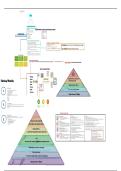
Family Needs - Lower must be addressed first
Must have awareness of the family's level of needs and ability to support the treatment (systems approach)
How does the fam support therapy?
Physical
competence
Welfare
Ethnicity
Culture Opportunity for emotional &
Theories/Models Gender
intellectual growth
Power Relationship with others
Poverty
Family Systems Theory
Family Provisions of spiritual needs
1
Families are unique in how they behave in these areas:
Structure
1. Communication and interactions
2. Separation and connectedness
3. Loyalty and independence
4. Adaptations and stressors
These areas help us understand how to assist and treat families:
Towle Levels of Needs
1. Boundaries
2. Roles
3. Rules
4. Hierarchies
5. Climate
6. Equilibrium
2
Structural Family Therapy
SFT is a systems-based model that places a special focus on the “internal organization” of “relationships
within the family”
SFT aims to solve problems of dysfunction by making changes in the underlying structure of personal
relationships
Family levels of need
Solution Based Therapy
As the name implies, the focus is on solutions not problems Unable to meet basic needs Interventions Techniques:
1
To attain the dynamic interplay between therapist and family, certain assumptions must be made Could be due to neglects and disorganization Supporting the ineffective parent or lead role Family preservation and case management
Survey of potential resources
3
These are: single parent families, or families where one parent is Referrals to medical specialists, mental health workers, and income aid
The family is the expert stressed or overwhelmed … focus of strengthening the family rather than the problems Guidance and advocacy with respect to respite care, referral to substance abuse counsellors, child development
Problems and solutions are not always connected centres, budget and time management, education/upgrading, correctional services)
Make unsolvable problems solvable Physical & Life Sustaining Basic needs are met Parental systems are likely unable to set/maintain sufficient limits for (one or
more) family members
Change is constant and inevitable Intervention targets family structure and organization
2
Issues surround family structure
Only a small change is needed Establishing and maintaining authority, boundaries and limit Inability to parent with limits and boundaries threatens the stability of the entire Focus is on facilitating the spouses to co-operate and develop a strength-based relationship
Keep it brief Food, Water, Air, Warmth, Shelter setting are the prominent issues to work on at Level II intervention family system
Such inabilities could include: lack of clear (or any) boundaries, rules, structure,
Help the family leaders establish a ‘united front’
To develop an alliance of those in charge against those needing control
Children out of control, Acting out teenagers, Parents with
addiction, mental health issues, Marital conflict Family violence discipline, expectations or lack of power to enforce same Behaviour management techniques taught and implemented
Limit setting, clear communications, social learning skills (written contracts, behavioural reinforcers, task assignment
Involve re-shaping the internal architecture of the family
3
More Complicated and harder to see
Physical Safety Traditional coping mixed with resistance to change
Little to no room for negotiations
Everyone needs appropriate space, access, privacy, and input
Challenge the existing structure
Techniques: Introduce flexibility, and acceptance of input from ALL family members, build alliances, examine and
strengthen communication skills
Example: family from the 50's or related behaviour where one Change patterns of behaviour
protection from physical attack and disease parent is dominated by the other … "boss men" Introduce new workable strategies that differ from the strategies that have been
passed down from generation to generation
Basic needs are met
4
Structural boundaries are relatively clear and satisfactory to all Focus on “the richness and quality of individual and family life”
Presenting problems are focused on greater intimacy, greater Strategies for resolving inner conflicts, intimacy, self-realization, resolution of
sense of self and autonomy trauma, insight, spirituality are the primary focus
In comparison: women in shelters are not focused of high levels of Assisting family members to accept certain things, clarify values (ACT!), personal
Love needs like relationships - rather low levels like shelter growth, counselling, etc.
the need to be cherished, supported and aided by others
Self-esteem: the need for self worth
Self-actualization:
the need for productivity, creativity & objectivity
Maslow Level of Needs
April 22, 2022 11:16
Client
Does not include third-party insurers or payers
Biestek (1957)-the 8 Principles in a helping relationship:
1. Individuation Therapeutic Alliance - empathy, respect, genuineness, and warmth
2. Purposeful emotional expression
3. Controlled emotional involvement Eye Contact
4 Acceptance Muscles facial movement
LAYMEN'S TEARMS 5 Non-judgemental attitude
Posture
Affect
Terms must be expressed in words that the family will understand 6. Self-determination Tone of voice
7. Confidentiality Hearing the clients views
Your Response
8. Cultural Competence
The 8 principles of a FAMILY CENTERED therapeutic relationship
1. The family is the CONSENT in the child's life
2. The relationship must involve collaboration
Compassion - integration into treatment
1. Critical interpersonal and technical skills
3. The information shared must be completely unbiased and true - the
2. Balance and fluency
Fiduciary Duty - must be able to refer the client if feeling compassion fatigue
therapist must be competent in there domain
4. There must be acceptance of a family's diversity in their coping 3. Effective and compassionate - therapeutic alliance
4. professionals must have direct training before working with the family
strategies You also MUST feel values basies and opinions at the door
5. There must be acceptance of family differences
6. There must be equal balance in flexibility, acceptability, and
comprehension
7. There must be encouragement for family to family networking
Cultural Competence 8. Children with special needs must be referred to as children first
Family Support and Importance
Family Needs - Lower must be addressed first
Must have awareness of the family's level of needs and ability to support the treatment (systems approach)
How does the fam support therapy?
Physical
competence
Welfare
Ethnicity
Culture Opportunity for emotional &
Theories/Models Gender
intellectual growth
Power Relationship with others
Poverty
Family Systems Theory
Family Provisions of spiritual needs
1
Families are unique in how they behave in these areas:
Structure
1. Communication and interactions
2. Separation and connectedness
3. Loyalty and independence
4. Adaptations and stressors
These areas help us understand how to assist and treat families:
Towle Levels of Needs
1. Boundaries
2. Roles
3. Rules
4. Hierarchies
5. Climate
6. Equilibrium
2
Structural Family Therapy
SFT is a systems-based model that places a special focus on the “internal organization” of “relationships
within the family”
SFT aims to solve problems of dysfunction by making changes in the underlying structure of personal
relationships
Family levels of need
Solution Based Therapy
As the name implies, the focus is on solutions not problems Unable to meet basic needs Interventions Techniques:
1
To attain the dynamic interplay between therapist and family, certain assumptions must be made Could be due to neglects and disorganization Supporting the ineffective parent or lead role Family preservation and case management
Survey of potential resources
3
These are: single parent families, or families where one parent is Referrals to medical specialists, mental health workers, and income aid
The family is the expert stressed or overwhelmed … focus of strengthening the family rather than the problems Guidance and advocacy with respect to respite care, referral to substance abuse counsellors, child development
Problems and solutions are not always connected centres, budget and time management, education/upgrading, correctional services)
Make unsolvable problems solvable Physical & Life Sustaining Basic needs are met Parental systems are likely unable to set/maintain sufficient limits for (one or
more) family members
Change is constant and inevitable Intervention targets family structure and organization
2
Issues surround family structure
Only a small change is needed Establishing and maintaining authority, boundaries and limit Inability to parent with limits and boundaries threatens the stability of the entire Focus is on facilitating the spouses to co-operate and develop a strength-based relationship
Keep it brief Food, Water, Air, Warmth, Shelter setting are the prominent issues to work on at Level II intervention family system
Such inabilities could include: lack of clear (or any) boundaries, rules, structure,
Help the family leaders establish a ‘united front’
To develop an alliance of those in charge against those needing control
Children out of control, Acting out teenagers, Parents with
addiction, mental health issues, Marital conflict Family violence discipline, expectations or lack of power to enforce same Behaviour management techniques taught and implemented
Limit setting, clear communications, social learning skills (written contracts, behavioural reinforcers, task assignment
Involve re-shaping the internal architecture of the family
3
More Complicated and harder to see
Physical Safety Traditional coping mixed with resistance to change
Little to no room for negotiations
Everyone needs appropriate space, access, privacy, and input
Challenge the existing structure
Techniques: Introduce flexibility, and acceptance of input from ALL family members, build alliances, examine and
strengthen communication skills
Example: family from the 50's or related behaviour where one Change patterns of behaviour
protection from physical attack and disease parent is dominated by the other … "boss men" Introduce new workable strategies that differ from the strategies that have been
passed down from generation to generation
Basic needs are met
4
Structural boundaries are relatively clear and satisfactory to all Focus on “the richness and quality of individual and family life”
Presenting problems are focused on greater intimacy, greater Strategies for resolving inner conflicts, intimacy, self-realization, resolution of
sense of self and autonomy trauma, insight, spirituality are the primary focus
In comparison: women in shelters are not focused of high levels of Assisting family members to accept certain things, clarify values (ACT!), personal
Love needs like relationships - rather low levels like shelter growth, counselling, etc.
the need to be cherished, supported and aided by others
Self-esteem: the need for self worth
Self-actualization:
the need for productivity, creativity & objectivity
Maslow Level of Needs


