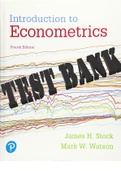
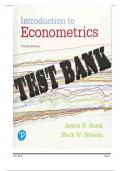
Introduction to Econometrics 4th Edition by James Stock and Mark Watson. ISBN-. Chapters 1-19
2p 2p 2p 2p 2p 2p
L
2p 2p 2p 2p 2p 2p 2p
Test Bank
2p Page 1
2p
, Introduction to Econometrics 4th Edition by James Stock and Mark Watson. ISBN-. Chapters 1-19
2p 2p 2p 2p 2p 2p 2p 2p 2p 2p 2p 2p 2p
Introduction to Econometrics, 4e (Stock/Watson
2p 2p 2p 2p
)Chapter 1 Economic Questions and Data
p
2 2p 2 p 2p 2p 2p
1.1 Multiple Choice Questions 2p 2p
1) Analyzing the behavior of unemployment rates across U.S. states in March of 2006 is
2p 2p 2p 2p 2p 2p 2p 2p 2p 2p 2p 2p 2p 2p
anexample of using:
p
2 2p 2p
A) time series data.
2p 2p
B) panel data. 2p
C) cross-sectional data. 2p
D) experimental data 2p
.Answer: C
p
2 2 p
2) Studying inflation in the United States from 1970 to 2006 is an example of using:
2p 2p 2p 2p 2p 2p 2p 2p 2p 2p 2p 2p 2p 2p
A) randomized controlled experiments. 2p 2p
B) time series data.
2p 2p
C) panel data. 2p
D) cross-
sectional data.Answer:
2p 2p
2 p B
3) Analyzing the effect of minimum wage changes on teenage employment across the
2p 2p 2p 2p 2p 2p 2p 2p 2p 2p 2p 2p
48contiguous U.S. states from 1980 to 2004 is an example of using:
p
2 2p 2p 2p 2p 2p 2p 2p 2p 2p 2p 2p
A) time series data.
2p 2p
B) panel data. 2p
C) having a treatment group vs. a control group, since only teenagers receive minimum wages.
2p 2p 2p 2p 2p 2p 2p 2p 2p 2p 2p 2p 2p
D) cross-
sectional data.Answer:
2p 2p
2 p B
4) Panel data:
2p
Test Bank
2p Page 2
2p
, Introduction to Econometrics 4th Edition by James Stock and Mark Watson. ISBN-. Chapters 1-19
2p 2p 2p 2p 2p 2p 2p 2p 2p 2p 2p 2p 2p
A) is also called longitudinal data.
2p 2p 2p 2p
B) is the same as time series data.
2p 2p 2p 2p 2p 2p
C) studies a group of people at a point in time.
2p 2p 2p 2p 2p 2p 2p 2p 2p
D) typically uses control and treatment groups 2p 2p 2p 2p 2p
.Answer: A
p
2 2 p
5) Econometrics can be defined as follows with the exception of: 2p 2p 2p 2p 2p 2p 2p 2p 2p
A) the science of testing economic theory.
2p 2p 2p 2p 2p
B) fitting mathematical economic models to real-world data.
2p 2p 2p 2p 2p 2p
C) a set of tools used for forecasting future values of economic variables.
2p 2p 2p 2p 2p 2p 2p 2p 2p 2p 2p
D) measuring the height of economists 2p 2p 2p 2p
.Answer: D
p
2 2 p
6) To provide quantitative answers to policy questions:
2p 2p 2p 2p 2p 2p
A) it is typically sufficient to use common sense.
2p 2p 2p 2p 2p 2p 2p
B) you should interview the policy makers involved.
2p 2p 2p 2p 2p 2p
C) you should examine empirical evidence.
2p 2p 2p 2p
D) is typically impossible since policy questions are not quantifiabl
2p 2p 2p 2p 2p 2p 2p 2p
e.Answer: C
p
2 2 p
7) An example of a randomized controlled experiment is when:
2p 2p 2p 2p 2p 2p 2p 2p
A) households receive a tax rebate in one year but not the other. 2p 2p 2p 2p 2p 2p 2p 2p 2p 2p 2p
B) one U.S. state increases minimum wages and an adjacent state does not, a
2p 2p 2p 2p 2p 2p 2p 2p 2p 2p 2p 2p
ndemployment differences are observed.
p
2 2p 2p 2p
C) random variables are controlled for by holding constant other factors.
2p 2p 2p 2p 2p 2p 2p 2p 2p
D) some 5th graders in a specific elementary school are allowed to use computers at sch
2p 2p 2p 2p 2p 2p 2p 2p 2p 2p 2p 2p 2p 2p
oolwhile others are not, and their end-of-
p
2 2p 2p 2p 2p 2p 2p
year performance is compared holding constant otherfactors.
2p 2p 2p 2p 2p 2p p
2
Answer: D 2 p
8) Ideal randomized controlled experiments in economics are:
2p 2p 2p 2p 2p 2p
A) often performed in practice. 2p 2p 2p
B) often used by the Federal Reserve to study the effects of monetary policy.
2p 2p 2p 2p 2p 2p 2p 2p 2p 2p 2p 2p
C) useful because they give a definition of a causal effect.
2p 2p 2p 2p 2p 2p 2p 2p 2p
D) sometimes used by universities to determine who graduates in four years rather th
2p 2p 2p 2p 2p 2p 2p 2p 2p 2p 2p 2p
anfive. Answer: C
p
2 2p 2 p
Test Bank 2p Page 3
2p
, Introduction to Econometrics 4th Edition by James Stock and Mark Watson. ISBN-. Chapters 1-19
2p 2p 2p 2p 2p 2p 2p 2p 2p 2p 2p 2p 2p
9) Most economic data are obtained:
2p 2p 2p 2p
A) through randomized controlled experiments. 2p 2p 2p
B) by calibration methods.
2p 2p
C) through textbook examples typically involving ten observation points.
2p 2p 2p 2p 2p 2p 2p
D) by observing real- 2p 2p
world behavior.Answer: D
2p 2p 2 p
10) One of the primary advantages of using econometrics over typical results from econom
2p 2p 2p 2p 2p 2p 2p 2p 2p 2p 2p 2p
ictheory, is that:
p
2 2p 2p
A) it potentially provides you with quantitative answers for a policy problem rather than simp
2p 2p 2p 2p 2p 2p 2p 2p 2p 2p 2p 2p 2p
lysuggesting the direction (positive/negative) of the response.
p
2 2p 2p 2p 2p 2p 2p
B) teaching you how to use statistical packages 2p 2p 2p 2p 2p 2p
C) learning how to invert a 4 by 4 matrix. 2p 2p 2p 2p 2p 2p 2p 2p
D) all of the above 2p 2p 2p
.Answer: A
p
2 2 p
11) In a randomized controlled experiment:
2p 2p 2p 2p
A) there is a control group and a treatment group.
2p 2p 2p 2p 2p 2p 2p 2p
B) you control for the effect that random numbers are not truly randomly generated
2p 2p 2p 2p 2p 2p 2p 2p 2p 2p 2p 2p
C) you control for random answers
2p 2p 2p 2p
D) the control group receives treatment on even days onl
2p 2p 2p 2p 2p 2p 2p 2p
y.Answer: A
p
2 2 p
12) The reason why economists do not use experimental data more frequently is for all of
2p 2p 2p 2p 2p 2p 2p 2p 2p 2p 2p 2p 2p 2p 2p
thefollowing reasons EXCEPT that real-world experiments:
p
2 2p 2p 2p 2p 2p
A) cannot be executed in economics. 2p 2p 2p 2p
B) with humans are difficult to administer.
2p 2p 2p 2p 2p
C) are often unethical.2p 2p
D) have flaws relative to ideal randomized controlled experiment
2p 2p 2p 2p 2p 2p 2p
s.Answer: A
p
2 2 p
13) The most frequently used experimental or observational data in econometrics are of t
2p 2p 2p 2p 2p 2p 2p 2p 2p 2p 2p 2p
hefollowing type:
p
2 2p
A) cross-sectional data. 2p
B) randomly generated data. 2p 2p
Test Bank 2p Page 4
2p
2p 2p 2p 2p 2p 2p
L
2p 2p 2p 2p 2p 2p 2p
Test Bank
2p Page 1
2p
, Introduction to Econometrics 4th Edition by James Stock and Mark Watson. ISBN-. Chapters 1-19
2p 2p 2p 2p 2p 2p 2p 2p 2p 2p 2p 2p 2p
Introduction to Econometrics, 4e (Stock/Watson
2p 2p 2p 2p
)Chapter 1 Economic Questions and Data
p
2 2p 2 p 2p 2p 2p
1.1 Multiple Choice Questions 2p 2p
1) Analyzing the behavior of unemployment rates across U.S. states in March of 2006 is
2p 2p 2p 2p 2p 2p 2p 2p 2p 2p 2p 2p 2p 2p
anexample of using:
p
2 2p 2p
A) time series data.
2p 2p
B) panel data. 2p
C) cross-sectional data. 2p
D) experimental data 2p
.Answer: C
p
2 2 p
2) Studying inflation in the United States from 1970 to 2006 is an example of using:
2p 2p 2p 2p 2p 2p 2p 2p 2p 2p 2p 2p 2p 2p
A) randomized controlled experiments. 2p 2p
B) time series data.
2p 2p
C) panel data. 2p
D) cross-
sectional data.Answer:
2p 2p
2 p B
3) Analyzing the effect of minimum wage changes on teenage employment across the
2p 2p 2p 2p 2p 2p 2p 2p 2p 2p 2p 2p
48contiguous U.S. states from 1980 to 2004 is an example of using:
p
2 2p 2p 2p 2p 2p 2p 2p 2p 2p 2p 2p
A) time series data.
2p 2p
B) panel data. 2p
C) having a treatment group vs. a control group, since only teenagers receive minimum wages.
2p 2p 2p 2p 2p 2p 2p 2p 2p 2p 2p 2p 2p
D) cross-
sectional data.Answer:
2p 2p
2 p B
4) Panel data:
2p
Test Bank
2p Page 2
2p
, Introduction to Econometrics 4th Edition by James Stock and Mark Watson. ISBN-. Chapters 1-19
2p 2p 2p 2p 2p 2p 2p 2p 2p 2p 2p 2p 2p
A) is also called longitudinal data.
2p 2p 2p 2p
B) is the same as time series data.
2p 2p 2p 2p 2p 2p
C) studies a group of people at a point in time.
2p 2p 2p 2p 2p 2p 2p 2p 2p
D) typically uses control and treatment groups 2p 2p 2p 2p 2p
.Answer: A
p
2 2 p
5) Econometrics can be defined as follows with the exception of: 2p 2p 2p 2p 2p 2p 2p 2p 2p
A) the science of testing economic theory.
2p 2p 2p 2p 2p
B) fitting mathematical economic models to real-world data.
2p 2p 2p 2p 2p 2p
C) a set of tools used for forecasting future values of economic variables.
2p 2p 2p 2p 2p 2p 2p 2p 2p 2p 2p
D) measuring the height of economists 2p 2p 2p 2p
.Answer: D
p
2 2 p
6) To provide quantitative answers to policy questions:
2p 2p 2p 2p 2p 2p
A) it is typically sufficient to use common sense.
2p 2p 2p 2p 2p 2p 2p
B) you should interview the policy makers involved.
2p 2p 2p 2p 2p 2p
C) you should examine empirical evidence.
2p 2p 2p 2p
D) is typically impossible since policy questions are not quantifiabl
2p 2p 2p 2p 2p 2p 2p 2p
e.Answer: C
p
2 2 p
7) An example of a randomized controlled experiment is when:
2p 2p 2p 2p 2p 2p 2p 2p
A) households receive a tax rebate in one year but not the other. 2p 2p 2p 2p 2p 2p 2p 2p 2p 2p 2p
B) one U.S. state increases minimum wages and an adjacent state does not, a
2p 2p 2p 2p 2p 2p 2p 2p 2p 2p 2p 2p
ndemployment differences are observed.
p
2 2p 2p 2p
C) random variables are controlled for by holding constant other factors.
2p 2p 2p 2p 2p 2p 2p 2p 2p
D) some 5th graders in a specific elementary school are allowed to use computers at sch
2p 2p 2p 2p 2p 2p 2p 2p 2p 2p 2p 2p 2p 2p
oolwhile others are not, and their end-of-
p
2 2p 2p 2p 2p 2p 2p
year performance is compared holding constant otherfactors.
2p 2p 2p 2p 2p 2p p
2
Answer: D 2 p
8) Ideal randomized controlled experiments in economics are:
2p 2p 2p 2p 2p 2p
A) often performed in practice. 2p 2p 2p
B) often used by the Federal Reserve to study the effects of monetary policy.
2p 2p 2p 2p 2p 2p 2p 2p 2p 2p 2p 2p
C) useful because they give a definition of a causal effect.
2p 2p 2p 2p 2p 2p 2p 2p 2p
D) sometimes used by universities to determine who graduates in four years rather th
2p 2p 2p 2p 2p 2p 2p 2p 2p 2p 2p 2p
anfive. Answer: C
p
2 2p 2 p
Test Bank 2p Page 3
2p
, Introduction to Econometrics 4th Edition by James Stock and Mark Watson. ISBN-. Chapters 1-19
2p 2p 2p 2p 2p 2p 2p 2p 2p 2p 2p 2p 2p
9) Most economic data are obtained:
2p 2p 2p 2p
A) through randomized controlled experiments. 2p 2p 2p
B) by calibration methods.
2p 2p
C) through textbook examples typically involving ten observation points.
2p 2p 2p 2p 2p 2p 2p
D) by observing real- 2p 2p
world behavior.Answer: D
2p 2p 2 p
10) One of the primary advantages of using econometrics over typical results from econom
2p 2p 2p 2p 2p 2p 2p 2p 2p 2p 2p 2p
ictheory, is that:
p
2 2p 2p
A) it potentially provides you with quantitative answers for a policy problem rather than simp
2p 2p 2p 2p 2p 2p 2p 2p 2p 2p 2p 2p 2p
lysuggesting the direction (positive/negative) of the response.
p
2 2p 2p 2p 2p 2p 2p
B) teaching you how to use statistical packages 2p 2p 2p 2p 2p 2p
C) learning how to invert a 4 by 4 matrix. 2p 2p 2p 2p 2p 2p 2p 2p
D) all of the above 2p 2p 2p
.Answer: A
p
2 2 p
11) In a randomized controlled experiment:
2p 2p 2p 2p
A) there is a control group and a treatment group.
2p 2p 2p 2p 2p 2p 2p 2p
B) you control for the effect that random numbers are not truly randomly generated
2p 2p 2p 2p 2p 2p 2p 2p 2p 2p 2p 2p
C) you control for random answers
2p 2p 2p 2p
D) the control group receives treatment on even days onl
2p 2p 2p 2p 2p 2p 2p 2p
y.Answer: A
p
2 2 p
12) The reason why economists do not use experimental data more frequently is for all of
2p 2p 2p 2p 2p 2p 2p 2p 2p 2p 2p 2p 2p 2p 2p
thefollowing reasons EXCEPT that real-world experiments:
p
2 2p 2p 2p 2p 2p
A) cannot be executed in economics. 2p 2p 2p 2p
B) with humans are difficult to administer.
2p 2p 2p 2p 2p
C) are often unethical.2p 2p
D) have flaws relative to ideal randomized controlled experiment
2p 2p 2p 2p 2p 2p 2p
s.Answer: A
p
2 2 p
13) The most frequently used experimental or observational data in econometrics are of t
2p 2p 2p 2p 2p 2p 2p 2p 2p 2p 2p 2p
hefollowing type:
p
2 2p
A) cross-sectional data. 2p
B) randomly generated data. 2p 2p
Test Bank 2p Page 4
2p