

BIOS251 OL, Week 5 Lab
Name:
OL Lab 5: Integumentary system
Learning Objectives:
Identify the tissue and cellular features of the skin.
Identify the structures associated with the skin.
Correlate the anatomical features to its functions.
Identify the role of the skin in thermoregulation and wound healing.
Part A: Anatomy of the skin
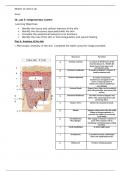
I. Microscopic anatomy of the skin. Complete the table using the image provided:
Structure Function
A Stratum corneum It consists of 20-30 layers of flat
dead keratinocytes. Shields the
deeper layers from injury and
microbial invasion.
B Stratum Granulosum It consists of hairless 3-5 layers of
dead keratinized cells.
C Stratum Spinosum It consists of numerous
keratinocytes arranged in 8-10
layers, with projections of
melanocytes and intraepidermal
macrophages
D Stratum Basale Deepest later where newly produced
skin cells push older ones toward the
surface.
II. Gross anatomy of the skin. et E Basement Membrane Provides structural support and
filters cells, separating tissues and
t Compl e table using the e protecting them.
h
F Sensory Nerve Detects the sensation of touch.
G Dermis Supports and protects the skin while
aiding in thermoregulation. It
possesses the ability to stretch and
recoil easily.
H Intraepidermal They engage in immune responses to
Macrophages assist other immune cells in
identifying and eliminating invading
microbes.
I Tactile Epithelium It detects light touch.
J Keratinocyte It produces keratin, which helps
restore the epidermal barrier.
K Melanocyte Produce melanin granules.
, BIOS251 OL, Week 5 Lab
Name:
Structure Function
A Hairs Provide protection against
external factors.
B Blood vessels Regulate body temperature.
C Arrector pili muscle Causes goosebumps and
hair to rise.
D Sebaceous gland Produce oil.
E Apocrine sweat Secretes sweat into hair
gland follicles in axillary and
pubic regions.
F Hair bulb Responds to hair
movement.
G Hypodermis Helps to insulate the body
and protect underlying
muscles and other tissues.
H Lamellar Corpuscle Assist in sensing pressure.
I Dermal papillae Assist with hair growth.
J Epidermis Protects skin and
responsible for
thermoregulation.
K Reticular dermis Skin elasticity.
L Dermis Supports and proctects the
skin and deeper layers.
Name:
OL Lab 5: Integumentary system
Learning Objectives:
Identify the tissue and cellular features of the skin.
Identify the structures associated with the skin.
Correlate the anatomical features to its functions.
Identify the role of the skin in thermoregulation and wound healing.
Part A: Anatomy of the skin
I. Microscopic anatomy of the skin. Complete the table using the image provided:
Structure Function
A Stratum corneum It consists of 20-30 layers of flat
dead keratinocytes. Shields the
deeper layers from injury and
microbial invasion.
B Stratum Granulosum It consists of hairless 3-5 layers of
dead keratinized cells.
C Stratum Spinosum It consists of numerous
keratinocytes arranged in 8-10
layers, with projections of
melanocytes and intraepidermal
macrophages
D Stratum Basale Deepest later where newly produced
skin cells push older ones toward the
surface.
II. Gross anatomy of the skin. et E Basement Membrane Provides structural support and
filters cells, separating tissues and
t Compl e table using the e protecting them.
h
F Sensory Nerve Detects the sensation of touch.
G Dermis Supports and protects the skin while
aiding in thermoregulation. It
possesses the ability to stretch and
recoil easily.
H Intraepidermal They engage in immune responses to
Macrophages assist other immune cells in
identifying and eliminating invading
microbes.
I Tactile Epithelium It detects light touch.
J Keratinocyte It produces keratin, which helps
restore the epidermal barrier.
K Melanocyte Produce melanin granules.
, BIOS251 OL, Week 5 Lab
Name:
Structure Function
A Hairs Provide protection against
external factors.
B Blood vessels Regulate body temperature.
C Arrector pili muscle Causes goosebumps and
hair to rise.
D Sebaceous gland Produce oil.
E Apocrine sweat Secretes sweat into hair
gland follicles in axillary and
pubic regions.
F Hair bulb Responds to hair
movement.
G Hypodermis Helps to insulate the body
and protect underlying
muscles and other tissues.
H Lamellar Corpuscle Assist in sensing pressure.
I Dermal papillae Assist with hair growth.
J Epidermis Protects skin and
responsible for
thermoregulation.
K Reticular dermis Skin elasticity.
L Dermis Supports and proctects the
skin and deeper layers.


