Defamation
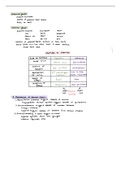
a. Definition
Tort of strict liability, aims to protect claimant’s reputation
Requirements
o Statement must be defamatory
o Statement must refer to claimant
o Statement must be published
Defences to defamation
o Distributors
o Truth
o Honest Opinion
o Qualified Privilege
o Absolute Privilege
b. Libel vs Slander
Libel: Permanent publications or those broadcast on stage/screen or electronic means.
No requirement to prove that claimant has suffered a loss
Slander: Transient publications which only give rise to liability if loss is proven
s.166 Broadcasting Act 1990: Defamatory words/pictures/visual images/gestures on the
radio are to be treated as libel
s.4(1) Theatres Act 1968: Publication of defamatory words during performance of a play
are treated as libel
o Exceptions in s.7(1) & (2)
bi. Slander – Requirement of Special Damage
2 exceptions to this
o Imputation of Unfitness in Business/Incompetence (s.2 Defamation Act 1952)
o Imputation of criminal conduct
, Defamation
Thorley v Lord Kerry
o Distinguished spoken words as slander, written words as libel
o Court saw not principled justification but felt compelled to accept it due to precedent
o Criticism: May not accurately reflect damage caused words spoken infront of a large
group of people vs a written article only read by a few
Gray v Jones
o Held that slander was actionable where the defendant had said to the claimant ‘you
are a convicted person’
c. Requirement 1: Statement must be Defamatory
Definition: Statement which tends to lower a person’s standing amongst right-thinking
people which has caused or is likely to cause serious harm to that person’s reputation.
Monson v Tussauds
o Held that statues/wax works/caricature/ signs/pictures constitutes defamatory
statement
Lachaux
o Does not require every single person who sees statement to understand defamatory
meaning, just a tendency for someone who sees it to understand
o Tendency reflects inherently injurious nature of statement
Berkoff v Burchill
o Reviewer called Berkoff ‘notoriously hideous’ B sued for defamation
o Held that statement was defamatory because he was an actor/playwright and public
performance was essential to his livelihood emphasised the importance of his
profession
o Dissent: Millett LJ: People must be allowed to poke fun at one another without fear of
litigation it is one thing to ridicule a man, but another to expose him to ridicule
Youssoupoff v Metro
o Allegations that C is misfortunate (madness, disease, rape) can constitute defamation
because others would socially exclude C through pity/moral judgment
ci. Right Thinking People
Definition of ‘right thinking’ people from Sim v Stretch
Byrne v Dean
o C was a member of a golf club with Illegal gambling machines C alerted police
o Someone posted a poem accusing C of being the snitch caused him to feel ostracized
a. Definition
Tort of strict liability, aims to protect claimant’s reputation
Requirements
o Statement must be defamatory
o Statement must refer to claimant
o Statement must be published
Defences to defamation
o Distributors
o Truth
o Honest Opinion
o Qualified Privilege
o Absolute Privilege
b. Libel vs Slander
Libel: Permanent publications or those broadcast on stage/screen or electronic means.
No requirement to prove that claimant has suffered a loss
Slander: Transient publications which only give rise to liability if loss is proven
s.166 Broadcasting Act 1990: Defamatory words/pictures/visual images/gestures on the
radio are to be treated as libel
s.4(1) Theatres Act 1968: Publication of defamatory words during performance of a play
are treated as libel
o Exceptions in s.7(1) & (2)
bi. Slander – Requirement of Special Damage
2 exceptions to this
o Imputation of Unfitness in Business/Incompetence (s.2 Defamation Act 1952)
o Imputation of criminal conduct
, Defamation
Thorley v Lord Kerry
o Distinguished spoken words as slander, written words as libel
o Court saw not principled justification but felt compelled to accept it due to precedent
o Criticism: May not accurately reflect damage caused words spoken infront of a large
group of people vs a written article only read by a few
Gray v Jones
o Held that slander was actionable where the defendant had said to the claimant ‘you
are a convicted person’
c. Requirement 1: Statement must be Defamatory
Definition: Statement which tends to lower a person’s standing amongst right-thinking
people which has caused or is likely to cause serious harm to that person’s reputation.
Monson v Tussauds
o Held that statues/wax works/caricature/ signs/pictures constitutes defamatory
statement
Lachaux
o Does not require every single person who sees statement to understand defamatory
meaning, just a tendency for someone who sees it to understand
o Tendency reflects inherently injurious nature of statement
Berkoff v Burchill
o Reviewer called Berkoff ‘notoriously hideous’ B sued for defamation
o Held that statement was defamatory because he was an actor/playwright and public
performance was essential to his livelihood emphasised the importance of his
profession
o Dissent: Millett LJ: People must be allowed to poke fun at one another without fear of
litigation it is one thing to ridicule a man, but another to expose him to ridicule
Youssoupoff v Metro
o Allegations that C is misfortunate (madness, disease, rape) can constitute defamation
because others would socially exclude C through pity/moral judgment
ci. Right Thinking People
Definition of ‘right thinking’ people from Sim v Stretch
Byrne v Dean
o C was a member of a golf club with Illegal gambling machines C alerted police
o Someone posted a poem accusing C of being the snitch caused him to feel ostracized