Private Nuisance
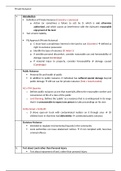
a. Introduction
Definition of Private Nuisance (Coventry v Lawrence)
o Action (or sometimes a failure to act) by D, which is not otherwise
authorised, and which causes an interference with the claimant's reasonable
enjoyment of his land
Tort of strict liability
PQ Approach (Private Nuisance)
o C must have a proprietary interest in the land to sue (Coventry) defined as
right to exclusive possession
o Identify the type of nuisance (St Helen’s)
o If sensible personal discomfort, consider reasonable use and foreseeability of
damage caused (Cambridge)
o If material injury to property, consider foreseeability of damage caused
(Cambridge)
Public Nuisance
Protects life and health of public
In addition to public nuisance, if individual has suffered special damage beyond
public damage still can sue for private nuisance (Tate v Great London)
AG v PYA Quarries
o Defines public nuisance as one that materially affects the reasonable comfort and
convenience of life of a class of the public
o Lord Denning: Defines the ‘public’ as a nuisance that is so widespread in its range
that it is unreasonable to expect one person to take proceedings on his own
Corby Group v Corby BC
o D drove open-air truck with contaminated matters on it through area 18
children born in that time had deformities constituted public nuisance
Statutory Nuisance
Intended to regulate environmental hazards in the community
Local authorities can issue abatement notices if not complied with, becomes
criminal offence
b. Tort about Land rather than Personal Injury
Tort about enjoyment of land, rather than personal injury
, Private Nuisance
Types of nuisance
Acts that produce material injury to property (St Helen’s Smelting Co v Tipping)
Acts that produce ‘sensible personal discomfort’ amenity harm (St Helen’s)
Encroachment on neighbour’s land (Hunter)
Hunter v Canary Wharf Ltd
o Held that only those with proprietary interests can bring claim
o Reason: Doctrinally, tort of nuisance is concerned with land should reflect this
o Lord Cooke (dissent): There are policy reasons to widen standing where
interference with an amenity of a home is concerned, anyone living there should
have a continuing right to enjoy that amenity
c. What Level of Interference Constitutes a Nuisance?
o D unreasonably used the land + there is harm
o Factors to consider
o Locality
o Malice
o Sensitive Claimant
Cambridge Water v Eastern
o Reasonableness is based on the principle of give and take between neighbours
under which ‘those acts necessary for the common and ordinary use and
occupation of land
o D is only liable for damages of the type that he can reasonably foresee
Walter v Selfe
o Apply an objective standard on whether D reasonably used the land
ci. Locality
Character of locality is relevant for amenity harm; eg. different levels of noise
expected when one lives in the city vs countryside
Sturges v Bridgman
Thesiger LJ: expectation of what constitutes ‘reasonable use’ differs based on the
nature of the place (eg. more refined, quiet place vs noisy, city place)
St Helen’s Smelting v Tipping
o Locality is only relevant in cases of amenity harm, not physical damage to
property
Coventry v Lawrence
a. Introduction
Definition of Private Nuisance (Coventry v Lawrence)
o Action (or sometimes a failure to act) by D, which is not otherwise
authorised, and which causes an interference with the claimant's reasonable
enjoyment of his land
Tort of strict liability
PQ Approach (Private Nuisance)
o C must have a proprietary interest in the land to sue (Coventry) defined as
right to exclusive possession
o Identify the type of nuisance (St Helen’s)
o If sensible personal discomfort, consider reasonable use and foreseeability of
damage caused (Cambridge)
o If material injury to property, consider foreseeability of damage caused
(Cambridge)
Public Nuisance
Protects life and health of public
In addition to public nuisance, if individual has suffered special damage beyond
public damage still can sue for private nuisance (Tate v Great London)
AG v PYA Quarries
o Defines public nuisance as one that materially affects the reasonable comfort and
convenience of life of a class of the public
o Lord Denning: Defines the ‘public’ as a nuisance that is so widespread in its range
that it is unreasonable to expect one person to take proceedings on his own
Corby Group v Corby BC
o D drove open-air truck with contaminated matters on it through area 18
children born in that time had deformities constituted public nuisance
Statutory Nuisance
Intended to regulate environmental hazards in the community
Local authorities can issue abatement notices if not complied with, becomes
criminal offence
b. Tort about Land rather than Personal Injury
Tort about enjoyment of land, rather than personal injury
, Private Nuisance
Types of nuisance
Acts that produce material injury to property (St Helen’s Smelting Co v Tipping)
Acts that produce ‘sensible personal discomfort’ amenity harm (St Helen’s)
Encroachment on neighbour’s land (Hunter)
Hunter v Canary Wharf Ltd
o Held that only those with proprietary interests can bring claim
o Reason: Doctrinally, tort of nuisance is concerned with land should reflect this
o Lord Cooke (dissent): There are policy reasons to widen standing where
interference with an amenity of a home is concerned, anyone living there should
have a continuing right to enjoy that amenity
c. What Level of Interference Constitutes a Nuisance?
o D unreasonably used the land + there is harm
o Factors to consider
o Locality
o Malice
o Sensitive Claimant
Cambridge Water v Eastern
o Reasonableness is based on the principle of give and take between neighbours
under which ‘those acts necessary for the common and ordinary use and
occupation of land
o D is only liable for damages of the type that he can reasonably foresee
Walter v Selfe
o Apply an objective standard on whether D reasonably used the land
ci. Locality
Character of locality is relevant for amenity harm; eg. different levels of noise
expected when one lives in the city vs countryside
Sturges v Bridgman
Thesiger LJ: expectation of what constitutes ‘reasonable use’ differs based on the
nature of the place (eg. more refined, quiet place vs noisy, city place)
St Helen’s Smelting v Tipping
o Locality is only relevant in cases of amenity harm, not physical damage to
property
Coventry v Lawrence