Death and Grief
KEY IDEAS:
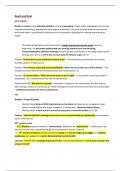
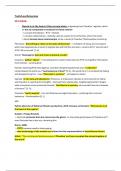
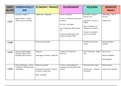
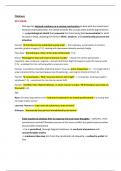
Death and grief as the ultimate inhibitor of acting/avenging - fragile state, habituated into turning
inwards/overthinking, propels him into illogical madness = can only revenge when he overcomes
this/faces death = grief/death contributes to his downfall in delaying his revenge/preventing his
death
- The death of his father puts Hamlet into a fragile emotional/mental state from the
beginning – he becomes habituated into turning inwards and overthinking,
incapacitating his ability to revenge (his grief greatly contributes to his tragic failure as the
revenge hero as he is not in the correct state of mind to cope with it)
Hamlet: ‘O that this too too solid flesh would melt’ -> first soliloquy, exclamation of emotion,
suicidal, graphic imagery [1.2]
Hamlet: ‘How weary, stale, flat and unprofitable / Seem to me all the uses of this world’ -> list
of adjectives/semantic field of worthlessness and melancholy [1.2]
Hamlet: ‘O cursed spite, / That I was ever born to set it right’ -> cursing fate, rhyming couplet =
emphasis [1.5] - resentment for his role he cannot fulfil
Hamlet [to R+G]: ‘Denmark’s a prison’ - metaphor - trapped in his conscience, his fate, duty to
take revenge, status as a prince [2.2] - feels entrapped in both his environment but his mental state
– inhibits/consumes him from acting faster
A05
Godwin / Paapa Essiedu
- Hamlet has a tattoo of Old King Hamlet on his chest vs Claudius on a magazine cover
(when comparing the two kings, instead of 2 miniatures) - loved his father dearly
- Hamlet wears a dark suit in contrast to everyone’s colourful outfits in A1, S2
Foakes: “Hamlet failed to revenge because he was incapacitated by melancholy or nauseated
by his environment”
20th century critic
-> A.C. Bradley explored Hamlet’s “melancholy” (defined it as “depression”) - partly due to the
fact that he can only respond to the ghost’s demands for action in words
-> a 17th century audience merely viewed his delay as a moral/religious struggle, but modern
audiences can explain it via grief, deteriorating mental health
Lennard: Hamlet has “revenge imposed on him”, not his own will and is “not a man of action but
a man of mind”
, - Death/grief escalating into real madness? An existential crisis about death as the great
leveller, questioning his role/existence
-> it seems death/grief leads to madness (also in Ophelia)
Gentleman: ‘Her [Ophelia’s] speech is nothing’ - she has gone mad and there is no logic in her
words – contrasts Hamlet’s methodological madness [4.5] - her role as a tragic victim merely
included to contrast Hamlet’s fake madness?
Hamlet: ‘To die, to sleep’ = ‘consummation’ - sleep as an extended metaphor of death as sleep
and a satisfactory conclusion, yet he fears ‘the dread of something after death’ - death may be
worse [3.1]
1st Clown: ‘Yorick’s skull, the King’s jester’
Hamlet: ‘I knew him’ ‘a fellow of infinite jest’ ‘Where be your gibes now?’ - death = great
leveller, made more poignant in that Hamlet knew this man [5.1]
Hamlet: ‘Alexander died, Alexander was buried, / Alexander returneth to dust’ - triple,
emphasising death as the great leveller [5.1]
[whilst fighting in Ophelia's grave with Laertes]: ‘Yet have I something in me dangerous’ -
mad/hysterical? - his previous meditations on Yorick have been escalated, made real by this
scene
Gertrude: ‘This is mere madness’
A05
Branagh, 1996
- Hamlet wears a skull mask – acts obviously mad in front of Polonius – visual
representation of his false madness but also his obsession with death (which perhaps
leads to his real madness?)
- When holding Yorick’s skull, it fades to a flashback of young Hamlet with him –
sentimental music, rising – poignant/turning point for him?
- Added scene whereby Ophelia is being restrained – devasted by Polonius’ death
- His reaction to Ophelia’s death/funeral makes him appear mad - hysterical
19th century
-> Exploration of the idea that perhaps his wit really was ‘diseased’ - enervated by the foul moral
climate in which his sensitive soul had its being
- Must come to terms with death and grief to succeed in avenging (supports its role as an
inhibitor of vengeance)
-> only after his meditations on death and seeing Ophelia’s dead body/funeral, can be
KEY IDEAS:
Death and grief as the ultimate inhibitor of acting/avenging - fragile state, habituated into turning
inwards/overthinking, propels him into illogical madness = can only revenge when he overcomes
this/faces death = grief/death contributes to his downfall in delaying his revenge/preventing his
death
- The death of his father puts Hamlet into a fragile emotional/mental state from the
beginning – he becomes habituated into turning inwards and overthinking,
incapacitating his ability to revenge (his grief greatly contributes to his tragic failure as the
revenge hero as he is not in the correct state of mind to cope with it)
Hamlet: ‘O that this too too solid flesh would melt’ -> first soliloquy, exclamation of emotion,
suicidal, graphic imagery [1.2]
Hamlet: ‘How weary, stale, flat and unprofitable / Seem to me all the uses of this world’ -> list
of adjectives/semantic field of worthlessness and melancholy [1.2]
Hamlet: ‘O cursed spite, / That I was ever born to set it right’ -> cursing fate, rhyming couplet =
emphasis [1.5] - resentment for his role he cannot fulfil
Hamlet [to R+G]: ‘Denmark’s a prison’ - metaphor - trapped in his conscience, his fate, duty to
take revenge, status as a prince [2.2] - feels entrapped in both his environment but his mental state
– inhibits/consumes him from acting faster
A05
Godwin / Paapa Essiedu
- Hamlet has a tattoo of Old King Hamlet on his chest vs Claudius on a magazine cover
(when comparing the two kings, instead of 2 miniatures) - loved his father dearly
- Hamlet wears a dark suit in contrast to everyone’s colourful outfits in A1, S2
Foakes: “Hamlet failed to revenge because he was incapacitated by melancholy or nauseated
by his environment”
20th century critic
-> A.C. Bradley explored Hamlet’s “melancholy” (defined it as “depression”) - partly due to the
fact that he can only respond to the ghost’s demands for action in words
-> a 17th century audience merely viewed his delay as a moral/religious struggle, but modern
audiences can explain it via grief, deteriorating mental health
Lennard: Hamlet has “revenge imposed on him”, not his own will and is “not a man of action but
a man of mind”
, - Death/grief escalating into real madness? An existential crisis about death as the great
leveller, questioning his role/existence
-> it seems death/grief leads to madness (also in Ophelia)
Gentleman: ‘Her [Ophelia’s] speech is nothing’ - she has gone mad and there is no logic in her
words – contrasts Hamlet’s methodological madness [4.5] - her role as a tragic victim merely
included to contrast Hamlet’s fake madness?
Hamlet: ‘To die, to sleep’ = ‘consummation’ - sleep as an extended metaphor of death as sleep
and a satisfactory conclusion, yet he fears ‘the dread of something after death’ - death may be
worse [3.1]
1st Clown: ‘Yorick’s skull, the King’s jester’
Hamlet: ‘I knew him’ ‘a fellow of infinite jest’ ‘Where be your gibes now?’ - death = great
leveller, made more poignant in that Hamlet knew this man [5.1]
Hamlet: ‘Alexander died, Alexander was buried, / Alexander returneth to dust’ - triple,
emphasising death as the great leveller [5.1]
[whilst fighting in Ophelia's grave with Laertes]: ‘Yet have I something in me dangerous’ -
mad/hysterical? - his previous meditations on Yorick have been escalated, made real by this
scene
Gertrude: ‘This is mere madness’
A05
Branagh, 1996
- Hamlet wears a skull mask – acts obviously mad in front of Polonius – visual
representation of his false madness but also his obsession with death (which perhaps
leads to his real madness?)
- When holding Yorick’s skull, it fades to a flashback of young Hamlet with him –
sentimental music, rising – poignant/turning point for him?
- Added scene whereby Ophelia is being restrained – devasted by Polonius’ death
- His reaction to Ophelia’s death/funeral makes him appear mad - hysterical
19th century
-> Exploration of the idea that perhaps his wit really was ‘diseased’ - enervated by the foul moral
climate in which his sensitive soul had its being
- Must come to terms with death and grief to succeed in avenging (supports its role as an
inhibitor of vengeance)
-> only after his meditations on death and seeing Ophelia’s dead body/funeral, can be